LISTEN TO THE PLACE
A story worth knowing
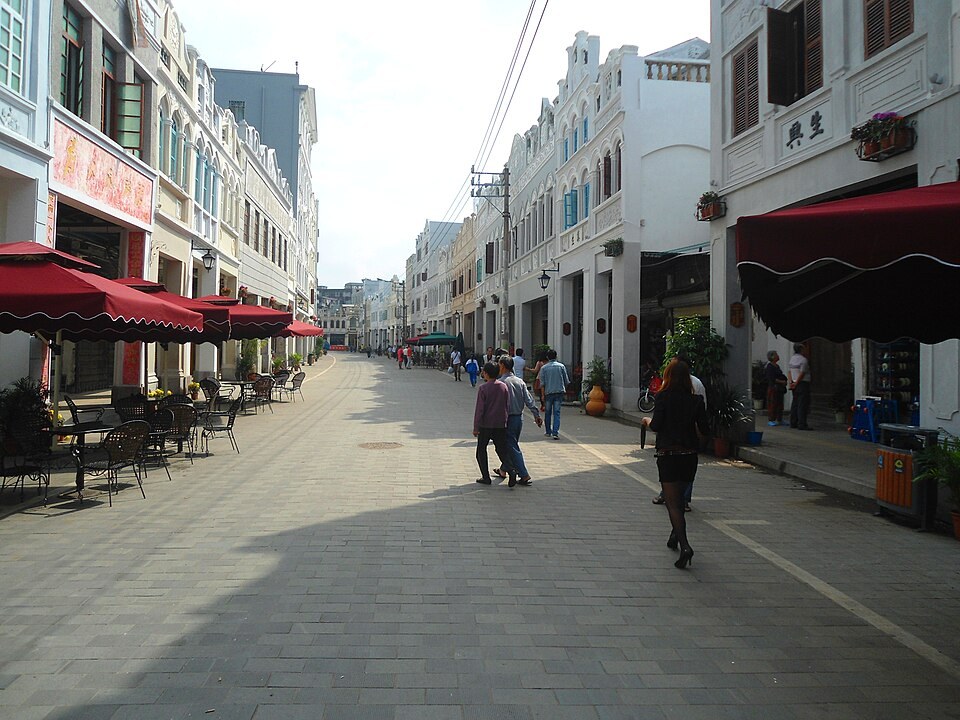
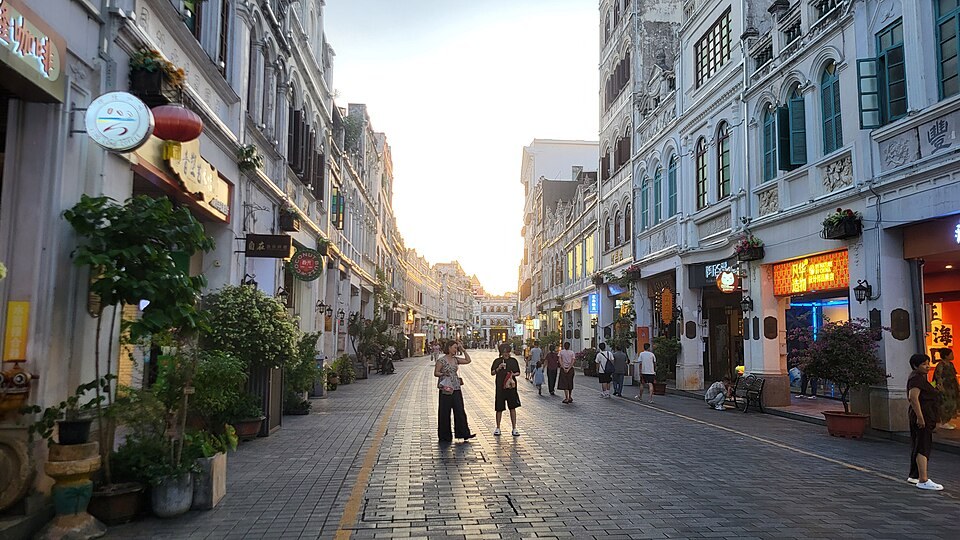
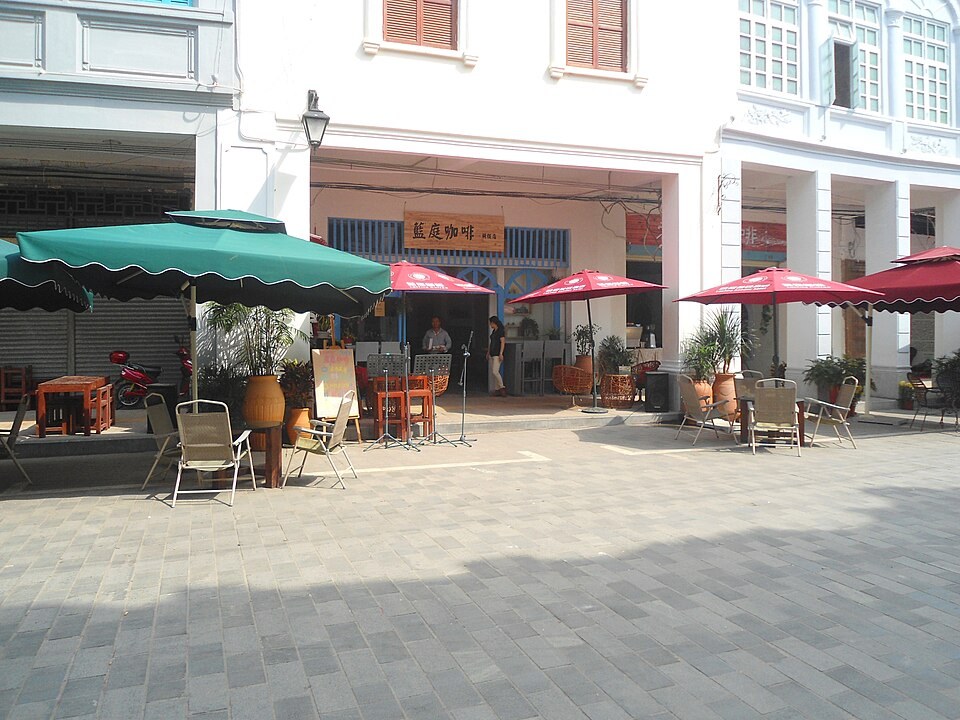
In Haikou’s old Qilou streets, look straight ahead as well as upwards at the façades. The most important architectural idea is at pedestrian level. The upper part of a building extends over a passage, creating a sheltered gallery along the street. In a hot, rainy climate, this is not merely decorative: it is a practical way of organising everyday life.
Qilou describes this type of arcade-fronted building. In Haikou’s historic centre, repeated examples create a distinctive commercial environment. The district includes several streets, not one isolated building or a single façade designed for photographs. Its character emerges through repetition: a shop, a column, a passage and another shop.
The buildings also reflect the island’s connections with a wider world. Local solutions coexist with decorative influences carried through maritime trade and the movement of people. There is no need to label every element as exclusively Chinese or European. More revealing is the way borrowed forms were adapted to the local climate and commercial life.
Walk a short distance beneath a gallery and compare it with an exposed part of the street. The light, the sound of footsteps and the sense of space will change. Upper floors establish a continuous urban edge, while the lower level remains permeable. The architecture both separates an interior from the street and connects the two. That relationship suits shopping, browsing and unexpected encounters.
Parts of the historic environment have been restored. A tidy façade does not necessarily mean that every detail has survived unchanged for centuries. Restoration belongs to the story too: it reveals what a contemporary city chooses to preserve and how it presents its past. Appreciating an old street includes recognising both inherited fabric and the work of maintaining it.
Choose three different details to follow: a window treatment, the top of a façade and the arrangement of the passage below. Your walk becomes a small architectural investigation. Remember, though, that ordinary life continues here. Leave entrances clear and avoid treating residents as scenery. The Qilou streets become most interesting when their attractive surfaces reveal a working urban environment, where trade, climate, memory and human movement are still connected by the same sheltered gallery. Looking at how a building is used can explain as much as looking at its ornament.
Learn more
A sheltered arcade is architecture understood first through the body. You do not need to know its style or construction date to appreciate it. Moving from sunlight into shade, or waiting out rain beneath a shared passage, explains its purpose. That practical value helps account for related forms in trading cities across warm climates.