LISTEN TO THE PLACE
A story worth knowing
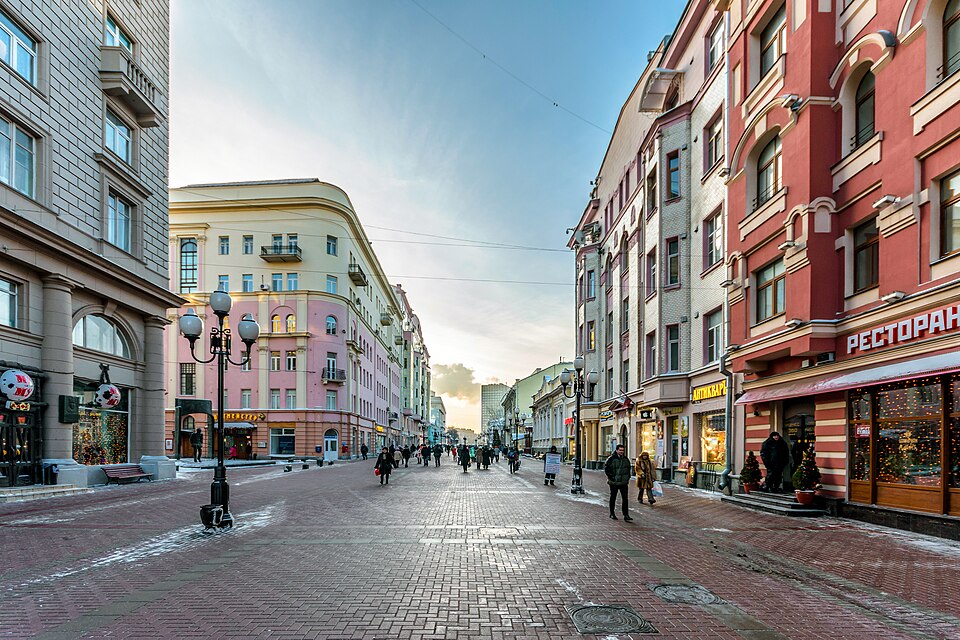
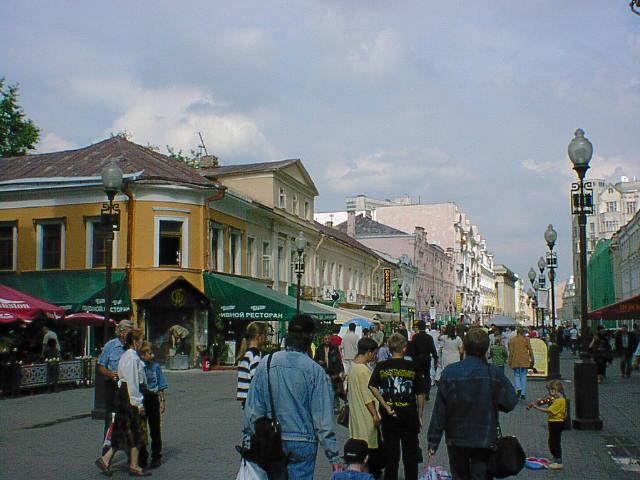
You are at Old Arbat Street. The theme of this stop is “A pedestrian street and urban stories”. It is a historical stop: its meaning lies not only in one building, monument or stretch of park, but also in the way it connects with the city around it.
A pedestrian street with historic houses, monuments and cultural landmarks. Old Arbat and New Arbat are different streets with very different atmospheres.
This is a place worth slowing down for. A few minutes outdoors reveal not only the landmark itself, but also its scale beside people, trees, neighbouring buildings and the line of the street.
Every such place has two kinds of time. One is its own history, described in sources and museum material. The other is the time of today’s walk: traffic, conversations, light in windows and wind across an open space. The guide does not confuse the two. It invites you to notice how the past remains in the city not merely as a date or plaque, but as form, scale and a habit of looking more carefully.
Do not try to exhaust Old Arbat Street in a few minutes. In Moscow, large ensembles often continue beyond the nearest crossing, while a small landmark can unexpectedly change the meaning of an entire street. If you want a photograph, look without a screen first: where does the landmark end, what stands behind it, and what route leads towards it? Those observations require no specialist knowledge and make the walk more personal.
One important boundary of this audio guide: the story is told from outdoors. Old Arbat Street can be enjoyed as a destination in its own right, but do not assume access inside, across grounds or to individual details. Visiting arrangements change, and a city walk works best when it does not depend on a fixed script.
Remember more than the name. Ask what impression Old Arbat Street leaves: ceremonial, intimate, businesslike or calm. Your answer connects “a pedestrian street and urban stories” with your own route through Moscow. When you are ready, continue on: the next stop will show another scale of the same city.
Learn more
There is another way to read Old Arbat Street: do not look for one final or “correct” meaning. A pedestrian street with historic houses, monuments and cultural landmarks. Old Arbat and New Arbat are different streets with very different atmospheres.
Context matters especially at a historical stop. The time of day, weather, passing people and nearby streets can change the impression more than expected. Walk a few steps away, look back, and compare the distant view with what you noticed up close.
That short pause also helps prevent a route from becoming a list of addresses. Often the quieter second impression is the one that stays with you.
That is how “a pedestrian street and urban stories” becomes more than a catalogue label and joins your own walk. Keep this stop in mind, then decide whether to linger or move on.