LISTEN TO THE PLACE
A story worth knowing
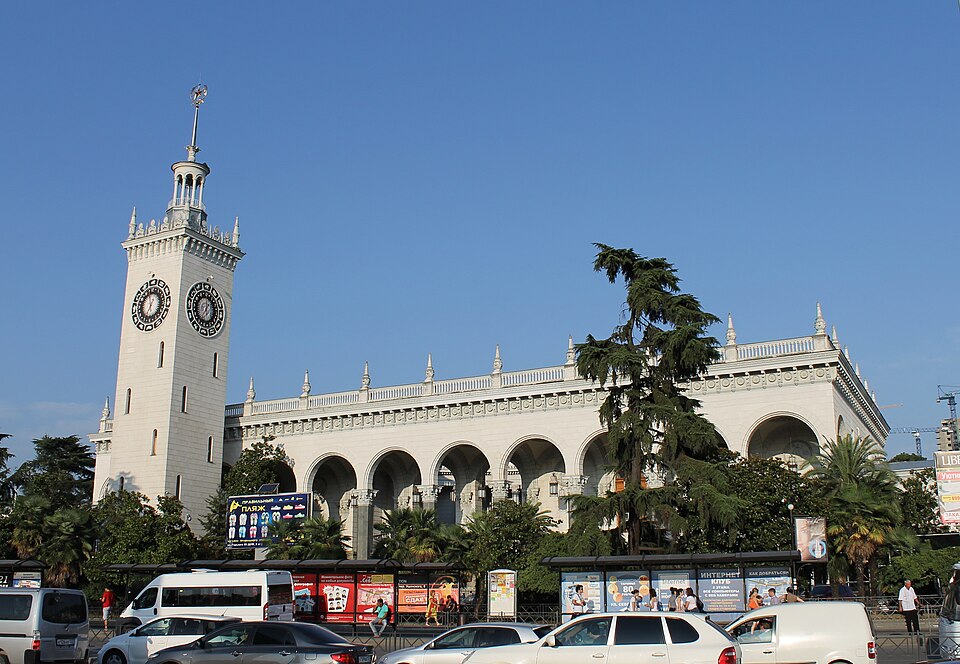
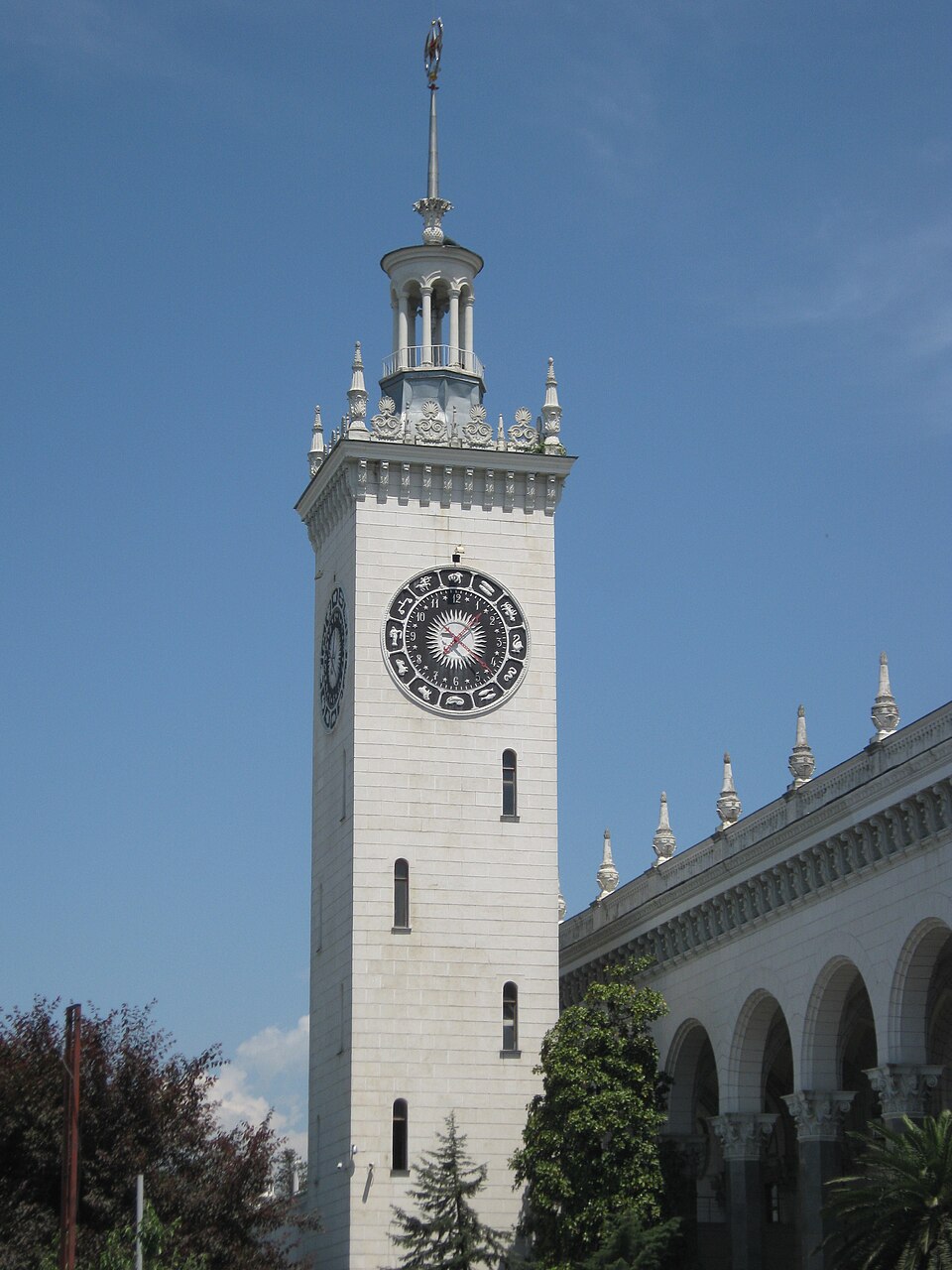
Here is another of Sochi’s gateways: its railway station. If you have already seen the Sea Terminal, compare the two ways of introducing the city to a visitor. There is a striking tower here too, but its clock immediately brings us back to railway time. Trains follow a timetable even when the rest of a resort seems in no particular hurry.
The station was built in 1952 to a design by Alexey Dushkin. Rather than a purely functional transport hub, it became an architectural ensemble. Arched galleries and interior courtyards suggest that a southern station can be more than an enclosed waiting room. Open space forms part of the experience of arriving.
Look at the facade from a comfortable position on the square. Find the clock tower first, then let your gaze move towards the lower sections. This is a simple way to read the composition. The vertical element provides a landmark, while the extended galleries connect it to the surrounding space. The details support the main outline rather than competing with it.
Imagine someone who has just spent many hours on a train. Their first few minutes in the city are made of ordinary things: light, air, the sounds of the square and the building behind them. Station architecture works with that brief moment of transition. The journey has not quite ended, yet the encounter with Sochi has already begun.
We will remain outside. Appreciating the design does not require going to the platforms, passing through security or obstructing passengers near the entrance. This is a working station, and travellers with luggage need to use it. A position slightly away from the main flow gives you a clearer view and leaves space for everyone else.
Notice how the clock changes your response to the tower. Without it, the tower might seem primarily decorative. With it, the architecture has an unmistakably practical role. That combination is one of the pleasures of a good city building: it helps people find their bearings while also creating a mood.
Before continuing, take in the whole square. The railway brings people to Sochi, but from here the city offers a different pace, one measured in footsteps. Let us leave the timetable to the trains and notice what we might otherwise hurry past with a suitcase.
Learn more
Stations are interesting to compare through the way they connect a journey with a city. Here the tower acts as a landmark, while the galleries ease the transition from a large building to a person on the square. Try finding the largest and smallest repeated elements. This simple exercise needs no specialist vocabulary. It reveals how a similar visual rule can work at different scales. Just keep the route clear for people who really do have a train to catch.