LISTEN TO THE PLACE
A story worth knowing
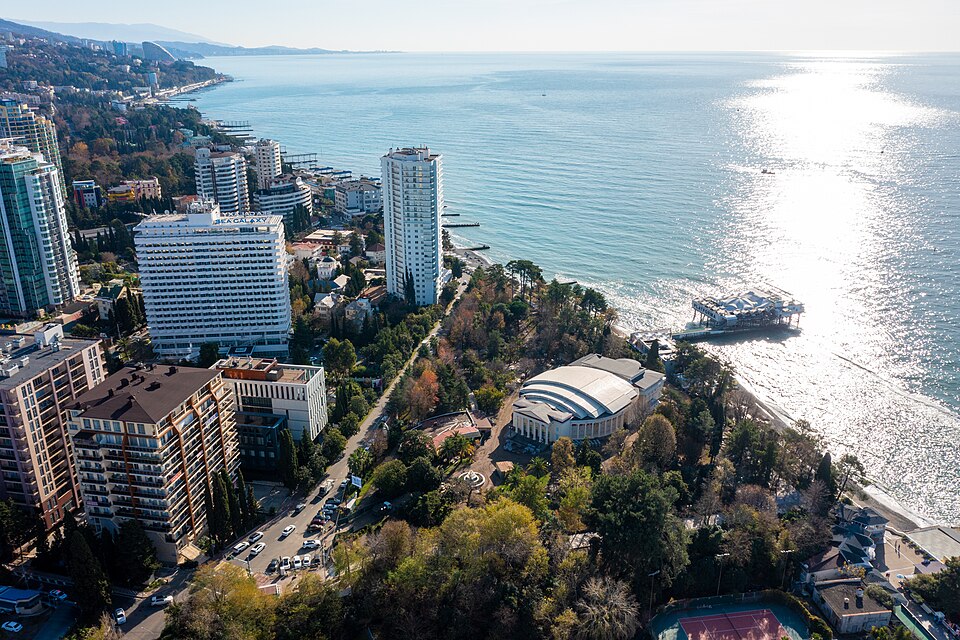
The Summer Theatre stands in Frunze Park near the sea. That setting creates a particular expectation: art meets a walk outdoors. If you have seen the Winter Theatre, you can compare more than their names. They offer different impressions of theatrical space within the same city.
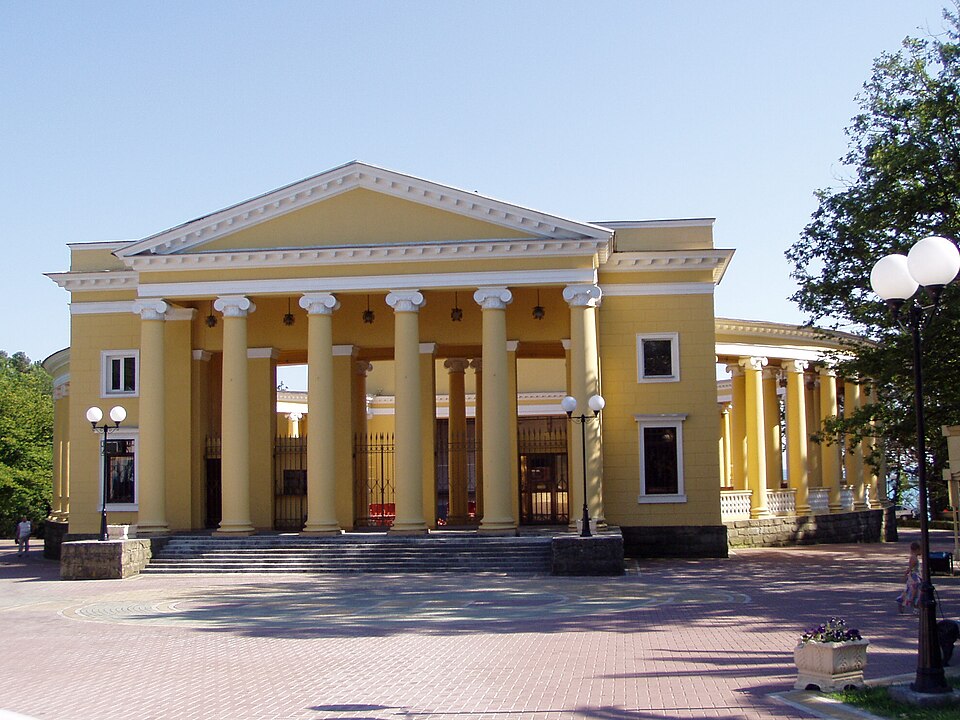
The building was constructed in 1937 to a design by Vyacheslav Krolevets. After restoration, the theatre resumed work in 2013. Between those dates lies the long life of a place that has not remained merely a historical name. Today’s programme should still be checked separately. A story about the building does not imply that a performance is happening now.
Look at the colonnade and the relationship between the theatre and the park. In a conventional enclosed theatre, the boundary between street and auditorium can feel quite sharp. Here, the idea of a summer stage encourages us to think about the transition between outdoor space and performance. Strolling and culture become neighbours in more than a geographical sense.
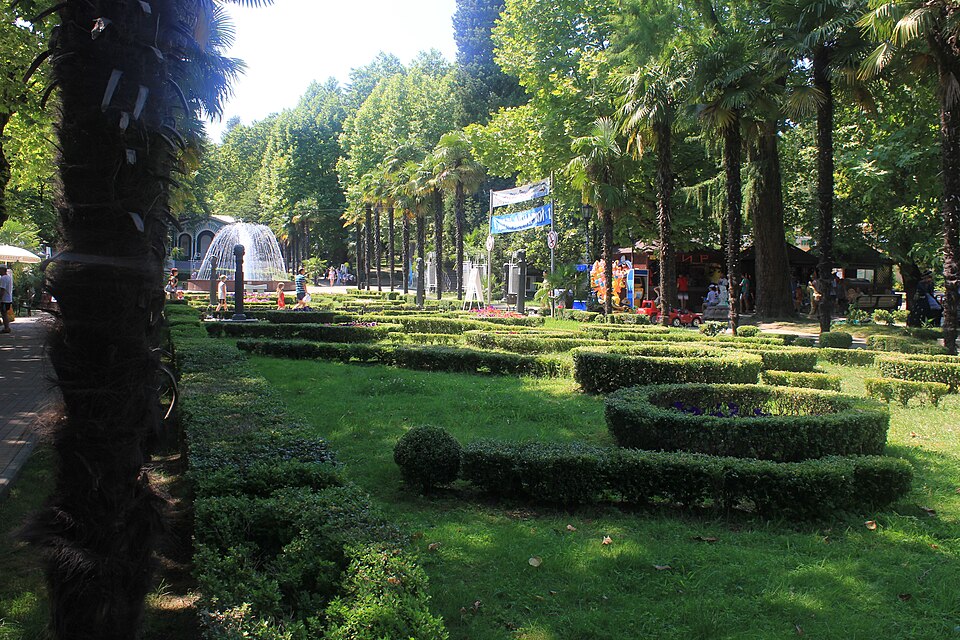
You do not have to enter to notice this character. Choose a position on a public path and see how the building appears among the greenery. Try viewing it as an isolated object first, then bring the park back into the picture. The second impression may be more revealing, because the setting helps explain the theatre’s place in the city.
Do not read the word “Summer” as a complete operating schedule. It describes the character of the venue, while current arrangements and events depend on its programme. If you would like to return for a performance, check with the venue and set aside an evening or another suitable part of your day.
For our walk, something else matters. Sochi can bring together activities that travellers often plan separately: going towards the sea, strolling in a park, looking at architecture and attending a cultural event. Here these possibilities are close to one another, although each deserves its own time and attention.
Before leaving, listen to the surrounding space without trying to imagine a concert that is not taking place. The sounds of the park and city belong to today’s experience too. Let the theatre remain a reason for another visit, now that you have a clearer sense of where you might return and why.
Learn more
Compare the Winter and Summer theatres through their settings rather than asking which is prettier. Where does the building feel more independent, and where more closely tied to a park? Does it make you want to pause, walk around it or view it from a distance? Different travellers may answer differently. This turns architecture into a personal experience rather than a competition between sights.