LISTEN TO THE PLACE
A story worth knowing
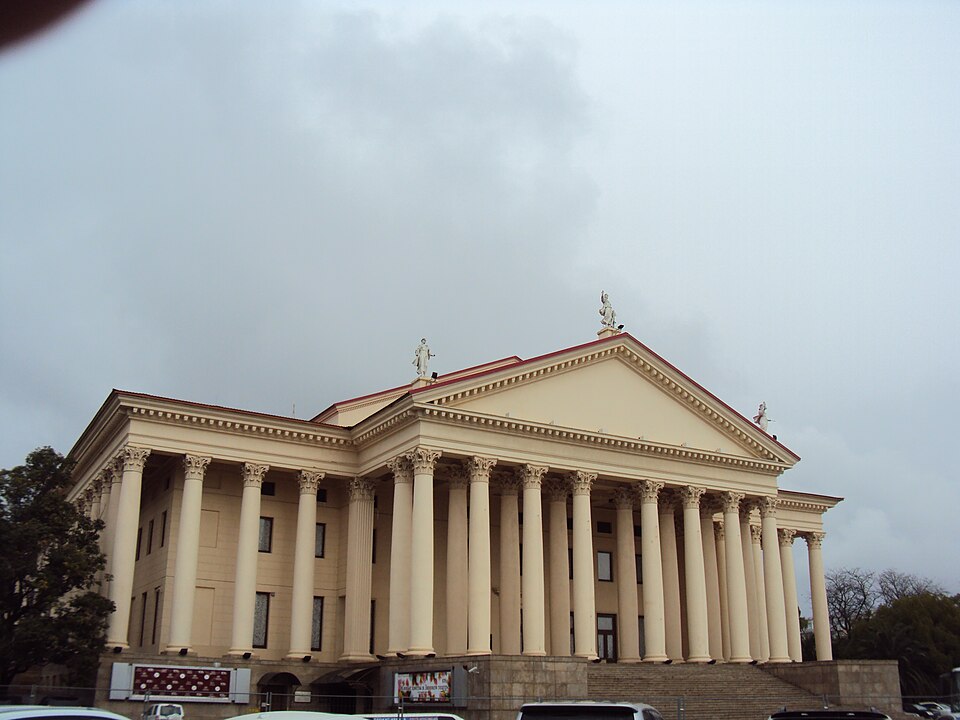
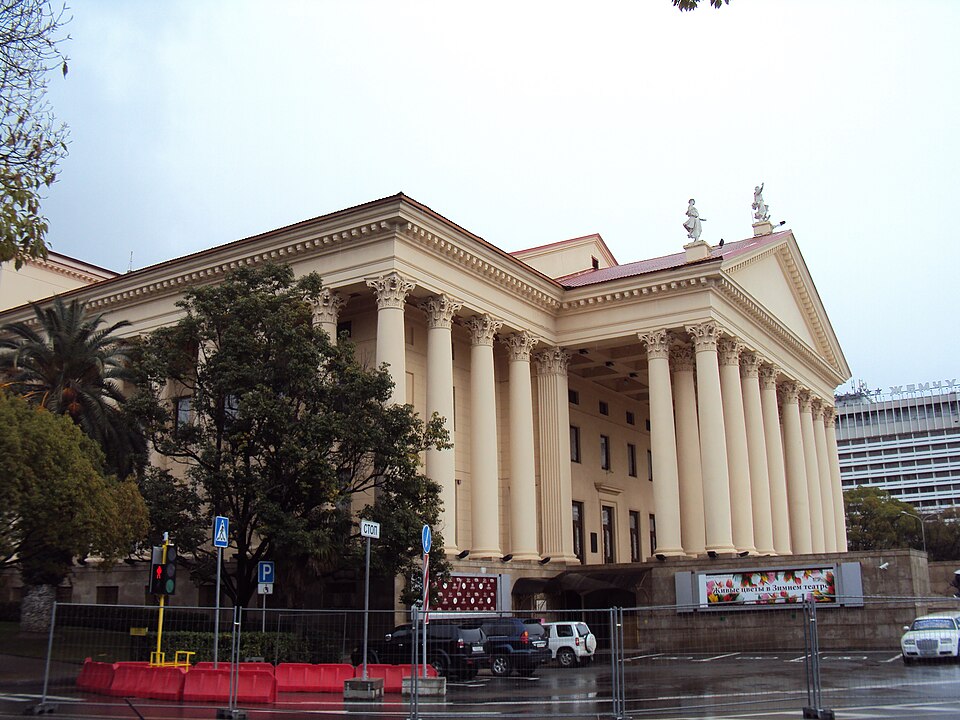
This is the Winter Theatre. Its name may seem unexpected in a city often imagined through summer and the sea. Yet it offers a useful reminder: resort life is not limited to the beach. Sochi has a stage, an audience and architecture that can turn an evening at the theatre into an urban occasion.
Construction began in 1934 and ended in 1937. The formal opening took place on 15 May 1938. Architect Konstantin Chernopyatov designed the building. These dates place it within a period when the resort’s appearance was changing and large public buildings were giving the city a new scale.
The most obvious feature is the colonnade. Try looking at the spaces between the columns rather than at a single column. Repetition creates a rhythm that holds the long facade together. Your eyes seem to acquire a route of their own, moving from one support to the next and from the foreground into the distance.
The theatre has facades facing the sea and the avenue. That is an important clue: the building does not exist only for one carefully positioned photograph. It has to work within the city and make sense from different directions. You do not need to walk all the way around it for this stop. It is enough to recognize that the familiar postcard view is only part of the design.
The experience of a theatre starts before the auditorium. People arrive, slow down, meet companions and look around. The space outside becomes a transition between ordinary activities and attention to a performance. Even without a ticket today, you can experience something of that transition outdoors.
If the sculptures above are visible from your position, take a look. We need not rush to name the figures, because interpretations of their symbolism differ. For now, notice how sculpture changes the outline and completes the composition. An attentive glance can be more useful than a confident but unverified legend.
Stay for a few more seconds and compare the theatre with the city around it. Its ceremonial arrangement establishes a pace of its own. This is a place that encourages a slightly slower step. That meeting between a resort walk and a space created for art may be the most lasting impression of this stop.
Learn more
Imagine removing everything except the columns, then bring back the walls, the upper facade and the sculptures. This helps reveal the role of each layer. The colonnade establishes order, the larger volumes organize space, and details hold your attention. You do not need to know the names of architectural orders. Simply notice what repeats, what stands out and where the composition encourages your eyes to rest.