LISTEN TO THE PLACE
A story worth knowing
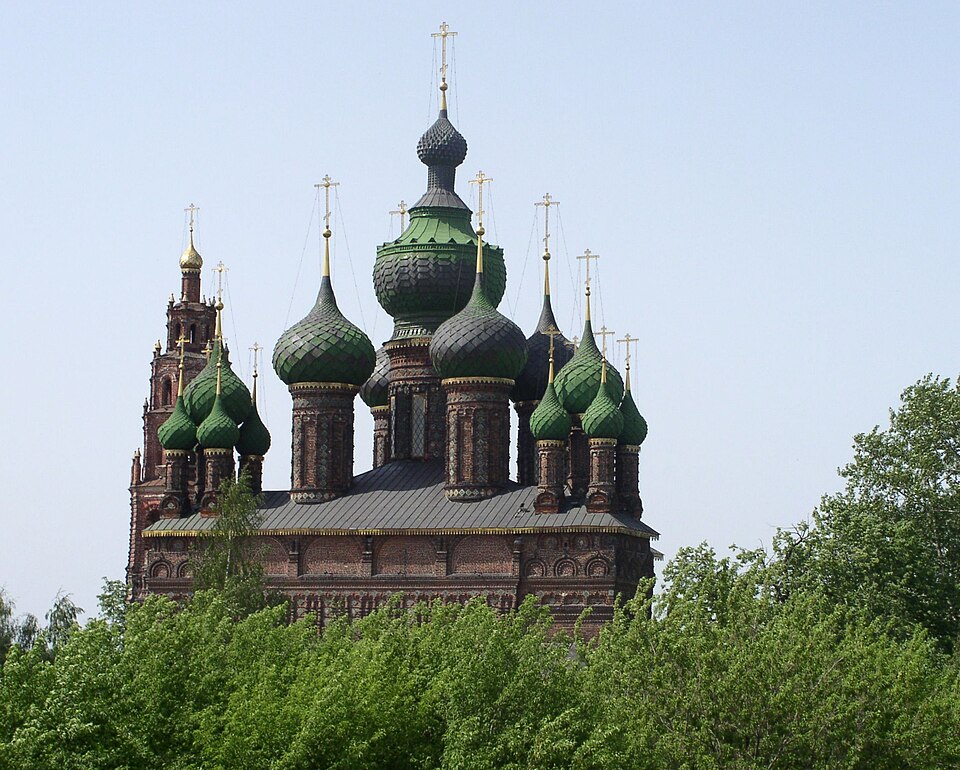
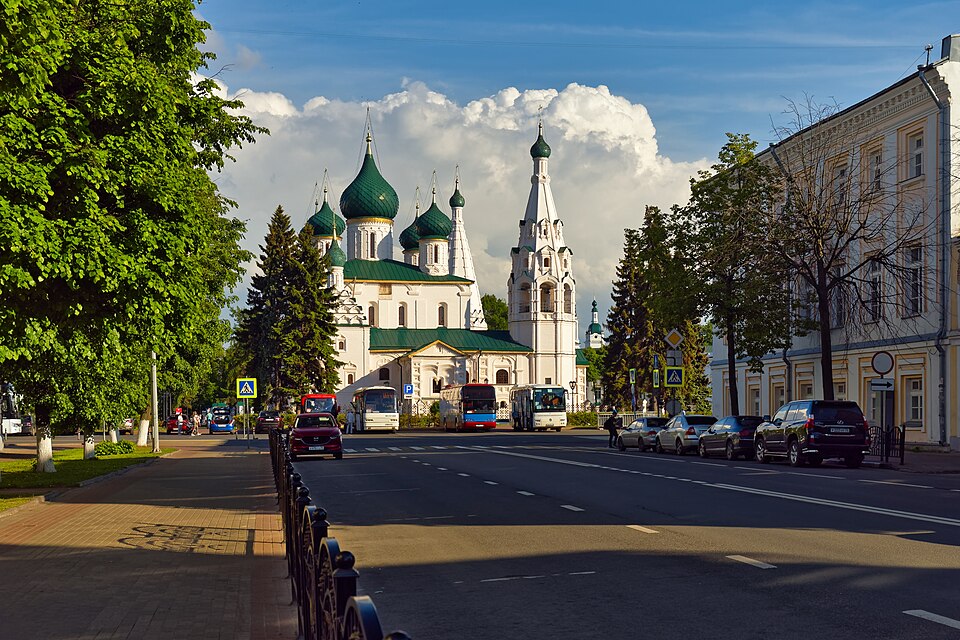
This church shows how a single building can organise an entire urban square. White walls, green domes and tented roofs over different parts create a silhouette far more complex than a simple rectangular block. Walk around it, and the familiar image keeps changing as new heights and projections come into view.
The Church of Elijah the Prophet was built between 1647 and 1650 with funds provided by the Skripin brothers, wealthy Yaroslavl merchants. Their role is central to the story. Commercial success became a substantial civic presence, while the family name remained attached to the building for centuries. The church shows how merchant patronage helped shape the artistic identity of the town.
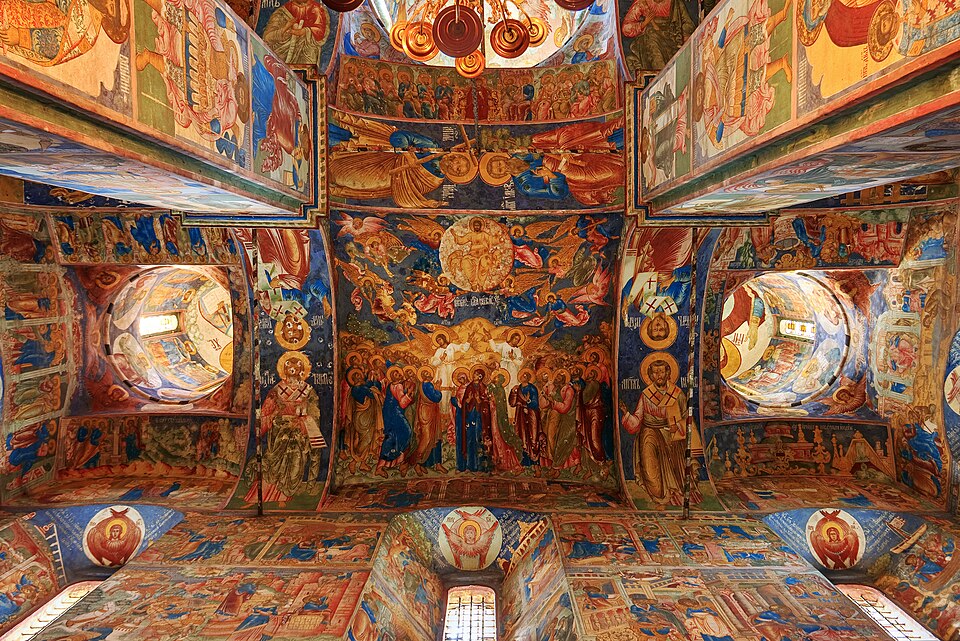
Its best-known treasure lies inside: seventeenth-century wall painting. In 1680, a team led by Gury Nikitin and Sila Savin painted the central church. It was collective work, even though the leaders' names are the easiest to remember. Imagine the challenge of covering a large interior with scenes that form a coherent visual world rather than competing with one another.
These paintings are not a collection of separate pictures casually hung on walls. They belong to the surfaces and height of the building. Architectural divisions frame sequences of stories. Your eyes travel across them somewhat as a reader follows a narrative, although you have to choose where to begin. First noticing the overall rhythm, then concentrating on one scene, is often more rewarding than trying to identify everything immediately.
One celebrated image is The Harvest, part of the cycle concerning the prophet Elisha. Figures at work, bodily movement and agricultural details attract close attention. A biblical story takes place within a recognisable world of labour. Such passages reveal an interest in gestures, objects and particular actions alongside the larger sacred narrative.
From outside, the church can appear comparatively calm beside the richness of its painted interior. That contrast offers a useful way into the visit. The building first meets you as a silhouette, then invites attention at the scale of an individual figure or a painted hand. If you cannot enter, a walk around the ensemble still reveals its intricate arrangement. The paintings deserve a separate, unhurried encounter. This is a place where one monument can absorb more attention than an entire street of handsome facades, because its stories operate at several different distances from the viewer.
Learn more
Pause at The Harvest for a change of scale rather than a count of details. A large church initially makes the visitor feel small. A scene of work in a field restores a familiar bodily experience: bending, lifting an arm, repeating a movement or shifting weight between the feet.
Monumental painting can become unexpectedly intimate in this way. The religious subject remains central, but the artists communicate through people acting within a space. We recognise effort and rhythm even before identifying every character.
Choose one figure and follow the direction of its movement. Then consider its relationship with the neighbouring figures. The scene begins to read as a sequence of actions rather than a motionless pattern. Apply the same method elsewhere in the church: instead of trying to absorb the entire painted world at once, follow one small story that the wall offers to a patient viewer.