LISTEN TO THE PLACE
A story worth knowing
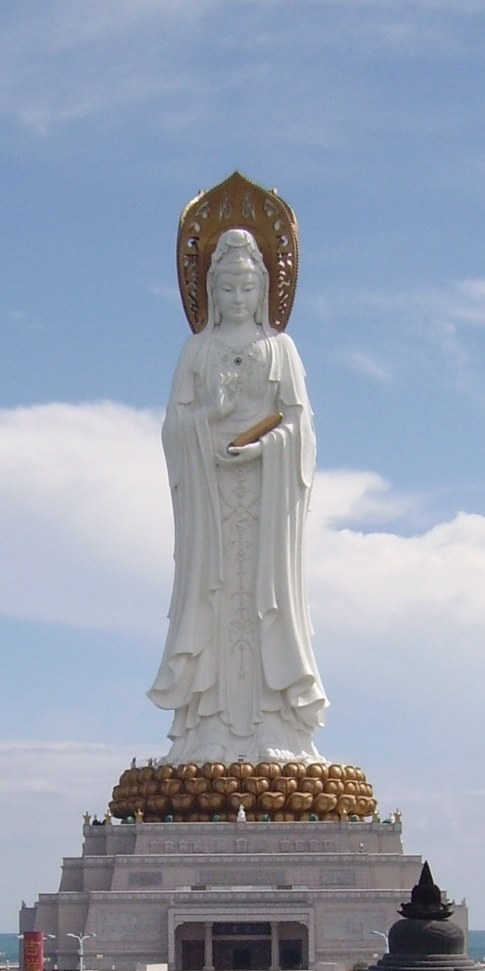
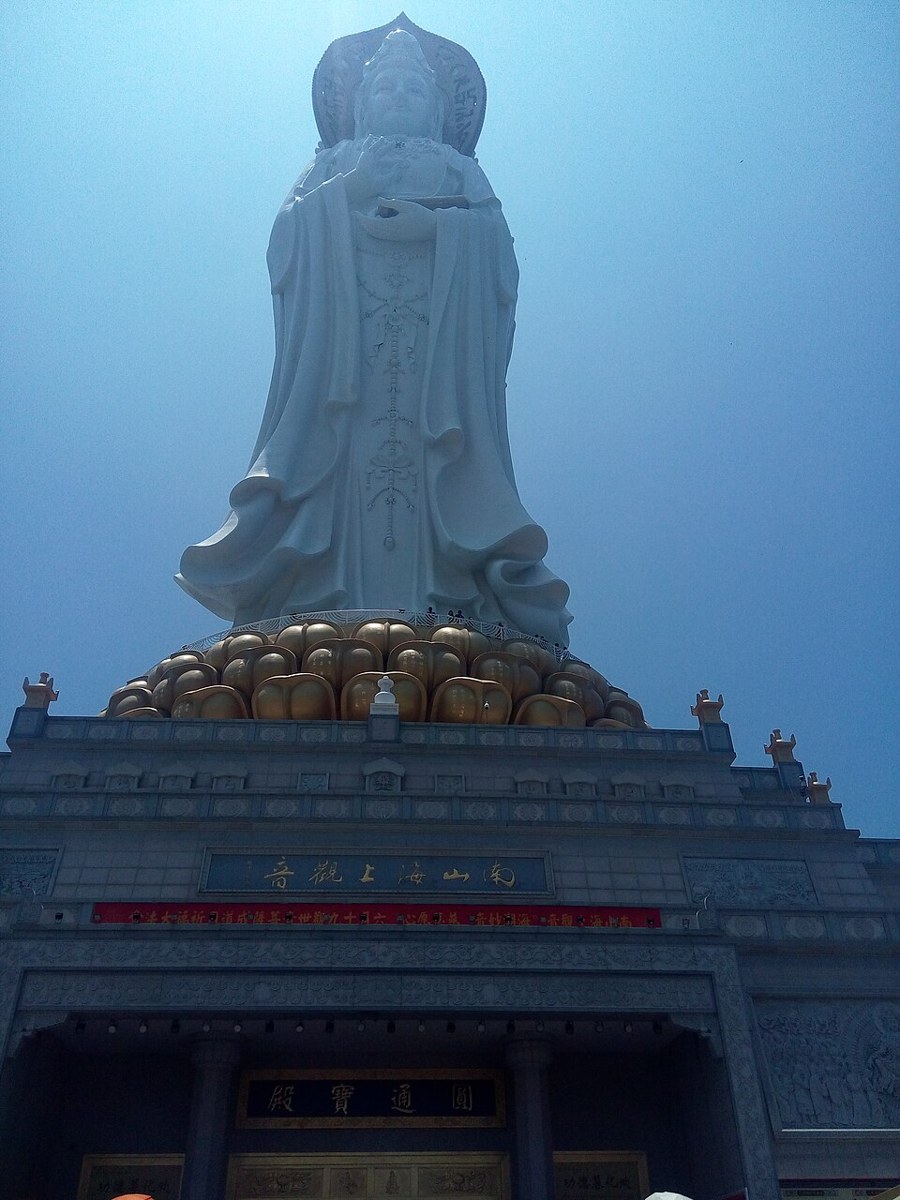
Begin by looking at the whole statue. The white figure rises above the sea, and the horizon helps you appreciate its scale more clearly than a neighbouring building would. The Guanyin monument at Nanshan is one hundred and eight metres high. Standing on an artificial islet beside the shore, it has become one of southern Hainan’s most recognisable images.
In East Asian Buddhism, Guanyin is associated with compassion. She is often described in English as the Goddess of Mercy, although bodhisattva is the more appropriate Buddhist term. For a worshipper, this is more than a beautiful figure. The image expresses the possibility of assistance for those who suffer. Understanding that association matters more than memorising every measurement of the structure.
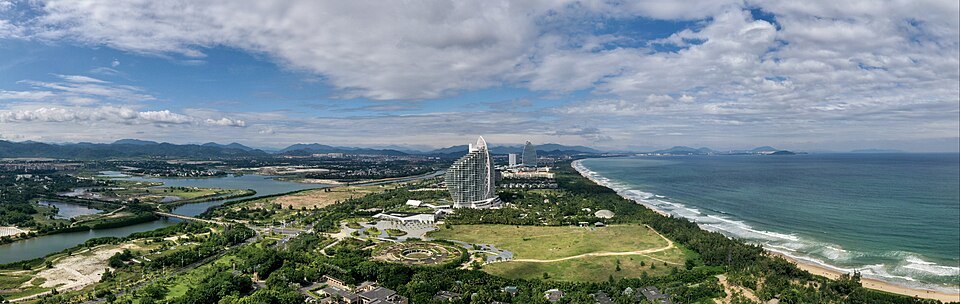
The sea intensifies the effect. There is a strong contrast between the substantial base and the pale figure, while the open setting removes many familiar clues to height. From a distance, the monument almost becomes part of the coastal silhouette. Moving closer reveals the scale of the human undertaking: its construction, platforms and connection to the mainland.
Remember that this is a modern religious monument, not an ancient statue that has somehow survived here unchanged. Its significance includes the way an established spiritual image has acquired a new and highly visible form. We can appreciate Buddhist tradition, contemporary engineering and the island’s tourism identity without merging them into an invented legend.
Watch other visitors respectfully. One person may be searching for a photograph, while another pauses to pray. They share a physical setting but experience it differently. You do not need to share someone’s beliefs to recognise the importance of this place to them.
For your own visit, consider making two pauses: one farther away, where the sea and the entire silhouette are visible, and another closer to the monument in an accessible area. Compare the impressions. At a distance, the statue seems to address a whole coastline. Nearby, the encounter becomes more personal. That movement between the enormous and the individual may be the most memorable part of Nanshan. Keep it alongside the sound of wind and water: a photograph records the structure, but cannot quite reproduce the setting that gives it its power.
Learn more
Guanyin is the Chinese name associated with Avalokiteshvara. Depictions can differ considerably across Buddhist cultures. The Hainan monument is therefore a useful reminder that a major religious tradition does not have a single, unchanging visual language. Compassion remains a shared theme, while its forms of expression vary.