LISTEN TO THE PLACE
A story worth knowing
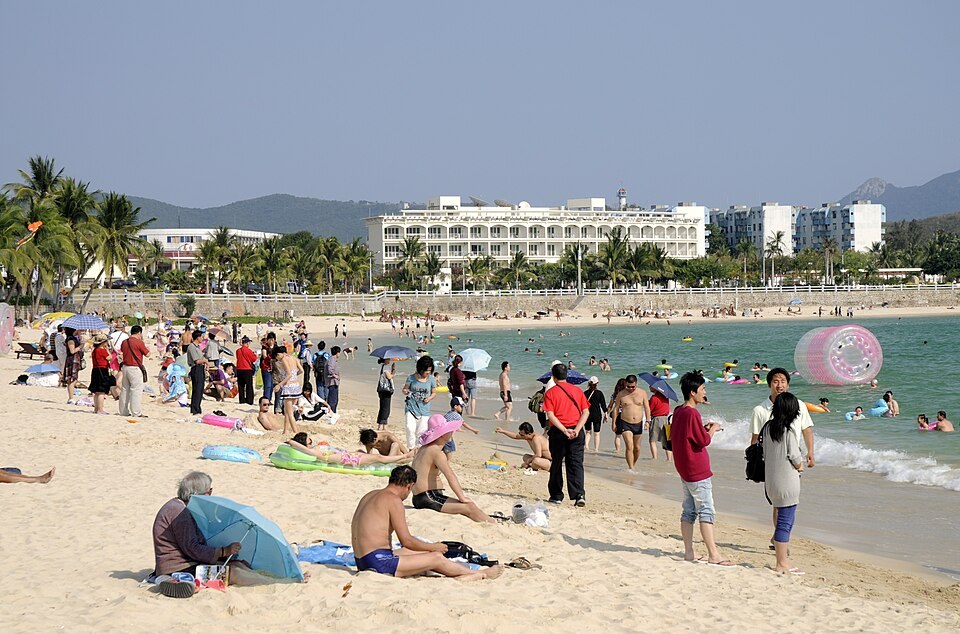
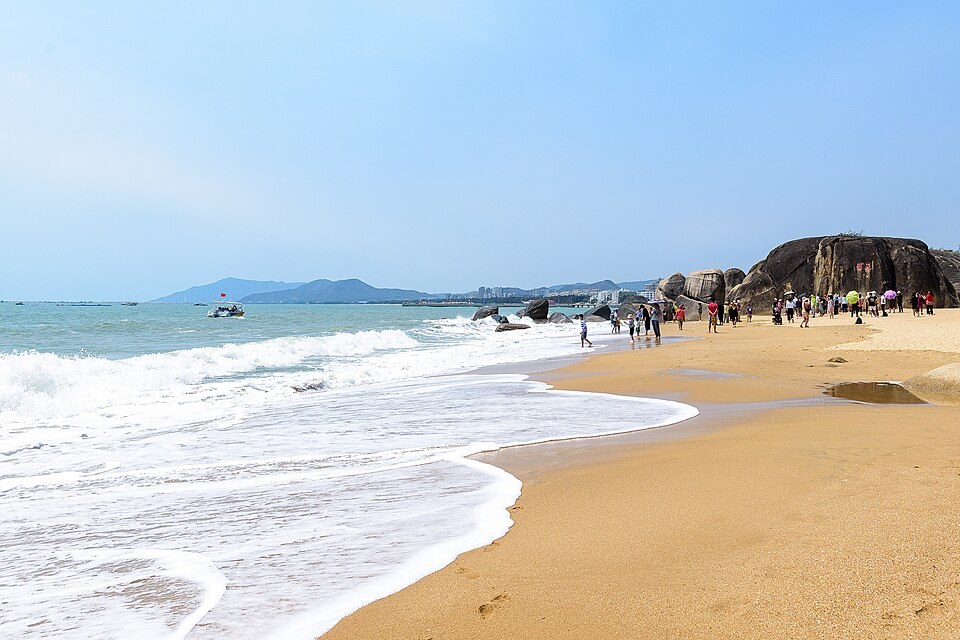
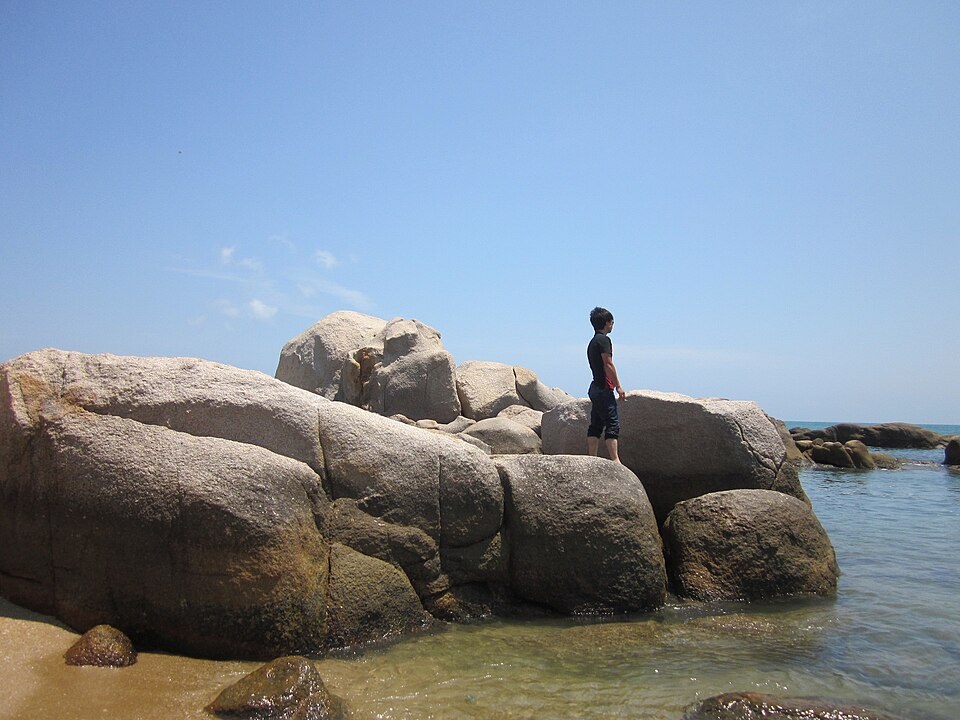
The name of this place sounds like a promise: the edge of the sky and the corner of the sea. Tianya Haijiao lies west of Sanya. There is no literal boundary to the world here. The shoreline continues, and shipping routes extend beyond the horizon. Yet put the map aside for a moment. Sea, sky and enormous rounded boulders can make familiar land seem to end in front of you.
For people living in imperial China, Hainan was a distant frontier. Crossing the strait meant a substantial journey. For officials who had fallen from favour, the island could become a place of exile. An expression about the ends of the earth might therefore suggest separation from home rather than a holiday. Today, that meaning has almost reversed. Visitors choose to come here to put everyday life at a distance.
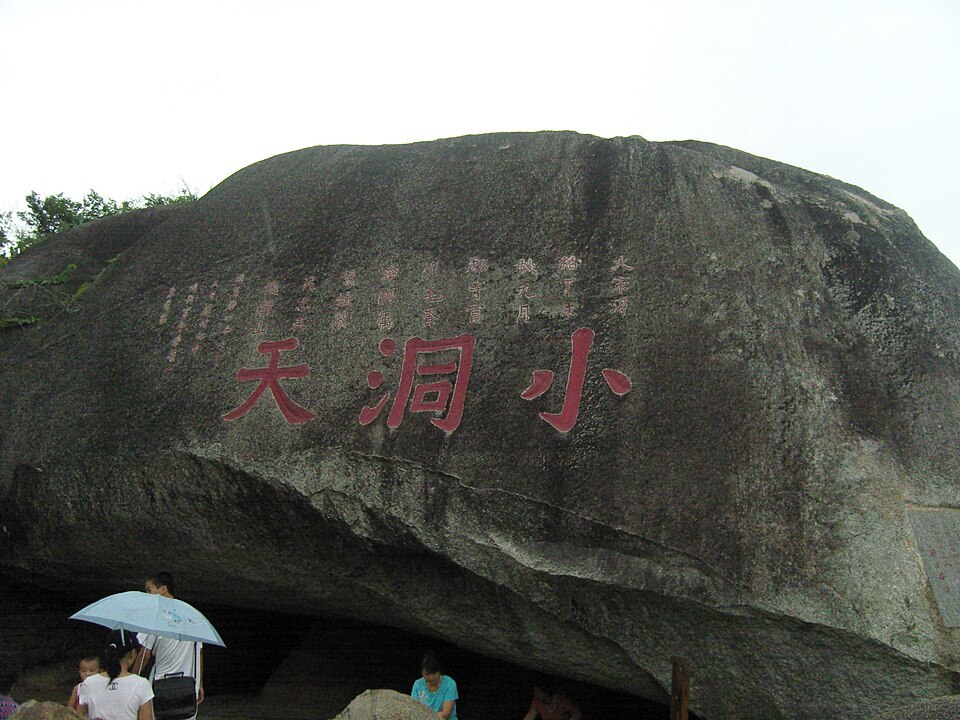
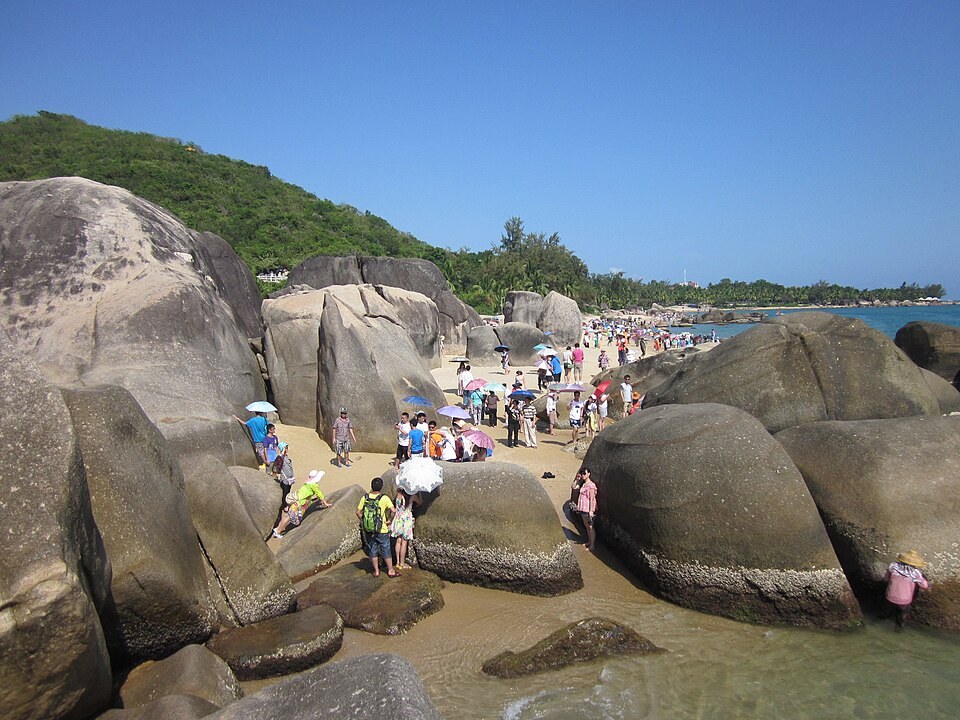
Look at the rocks beside the water. Their character comes from two different histories. Nature supplied the stone and gradually shaped its surface through weathering. People added large Chinese inscriptions. Those marks turn natural formations into places of memory. Even without reading Chinese, you can notice the contrast between the strokes of the characters and the rounded granite. A brief human statement changes the meaning of an entire landscape.
This coast also has a romantic reputation. In Chinese expression, the ends of the earth evoke a distance that should not separate people who love one another. The couples posing for photographs are part of that continuing association. Stories about particular lovers becoming rocks, however, belong to local legend, rather than an established geological or historical account.
Do not mistake the poetic name for a geographical record. This is not the southernmost point of China. Its appeal is more interesting than a claim on a map: the same shore can suggest a boundary, a refuge or a promise to return.
From a safe place on the path, try looking without a camera. Focus first on a nearby boulder, then the breaking water, and finally the horizon. The scale keeps expanding. A handful of rocks can help you sense a distance that no single glance can measure. Before leaving, invent your own short name for the view. You will be repeating the impulse of earlier travellers, without leaving a mark on the stone.
Learn more
Place names sometimes acquire a second life in language. Tianya Haijiao can evoke an immense distance without referring specifically to this park. A visitor therefore encounters both a destination and an expression that has acquired a visible address. Such places have a special power: their landscape may already exist in the imagination before the journey begins.