LISTEN TO THE PLACE
A story worth knowing
Dongshan Ridge near Wanning demonstrates that a hill’s impact does not depend entirely on its height. Rock formations, inscriptions and temple settings draw attention here. The climb becomes less a sporting objective than a sequence of small discoveries, best made at your own pace.
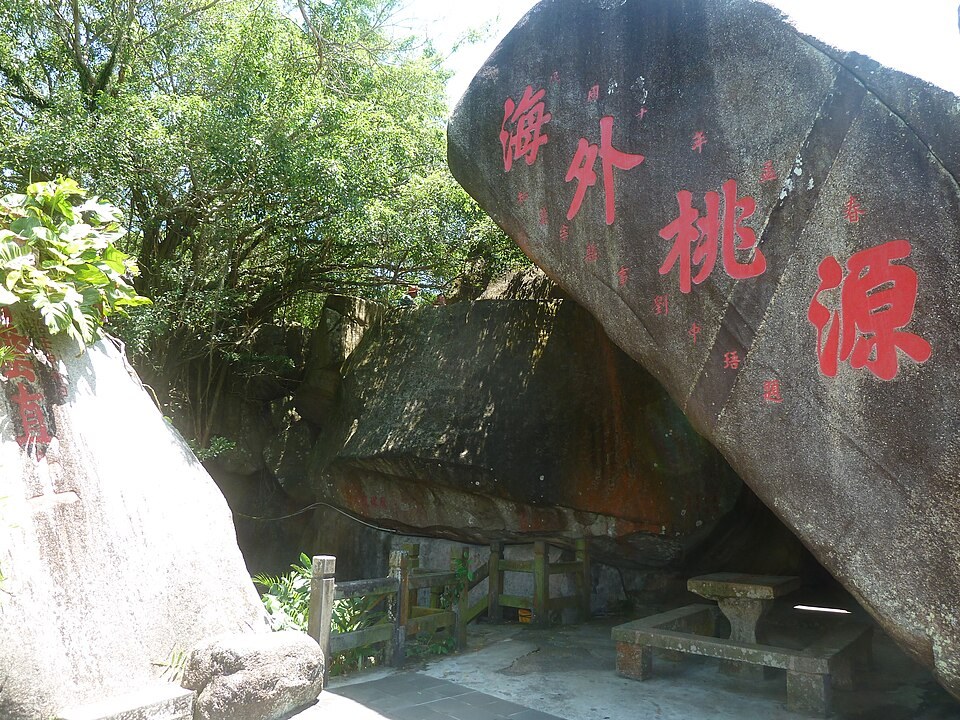
The name refers to an eastern mountain or ridge. This is a well-known cultural landscape around Wanning, distinct from the area’s beach image. Its stones exist as more than natural objects. Over time, people have attached names, religious associations and commemorative words to them. A walk therefore follows both the terrain and layers of human interpretation.
Begin by looking at a rock without reading an explanation. What form do you see? Then consult its local name or inscription if information is available. Afterwards, it may be difficult to return to a neutral view: a word has fixed a particular image. This helps explain why naming and calligraphy can matter so much within Chinese landscape traditions.
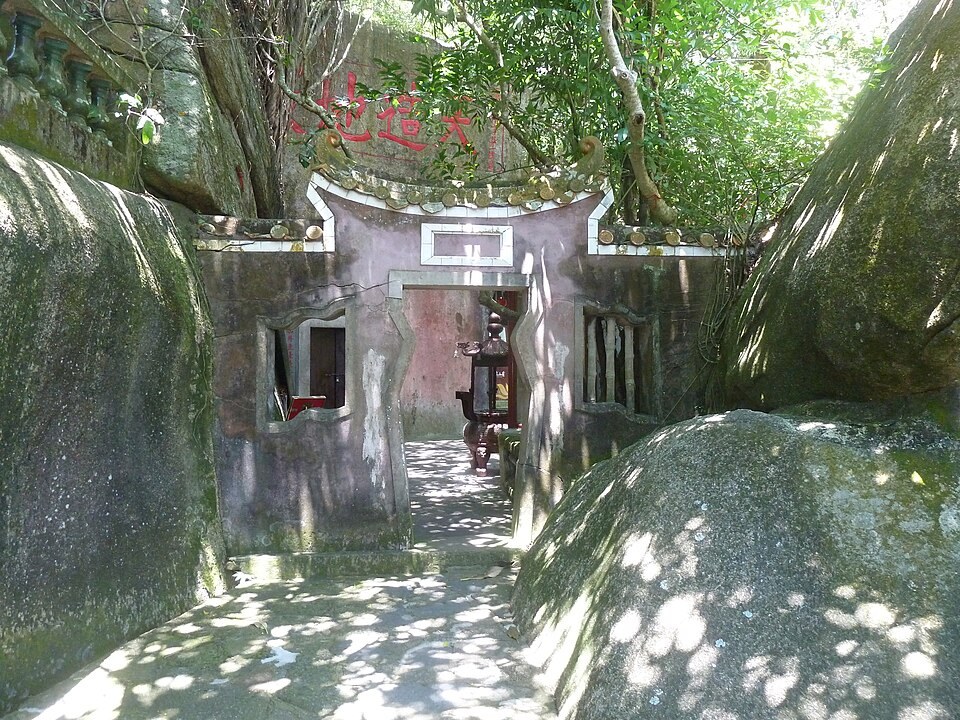
Temples introduce another scale. Beside a large rock formation, a building makes human presence especially clear. You do not need to understand every religious detail to notice the chosen position, the direction of approach and the way architecture adapts to uneven ground. Respect the visiting rules of active places of worship and give space to people who have come for a different purpose.
Dongshan also has a connection with the island’s everyday culture. Its name is familiar through a local goat dish counted among Hainan’s recognised culinary specialities. That link is a reminder that landscapes live not only through solemn monuments. They also enter conversations, tastes and the ways people recognise familiar places.
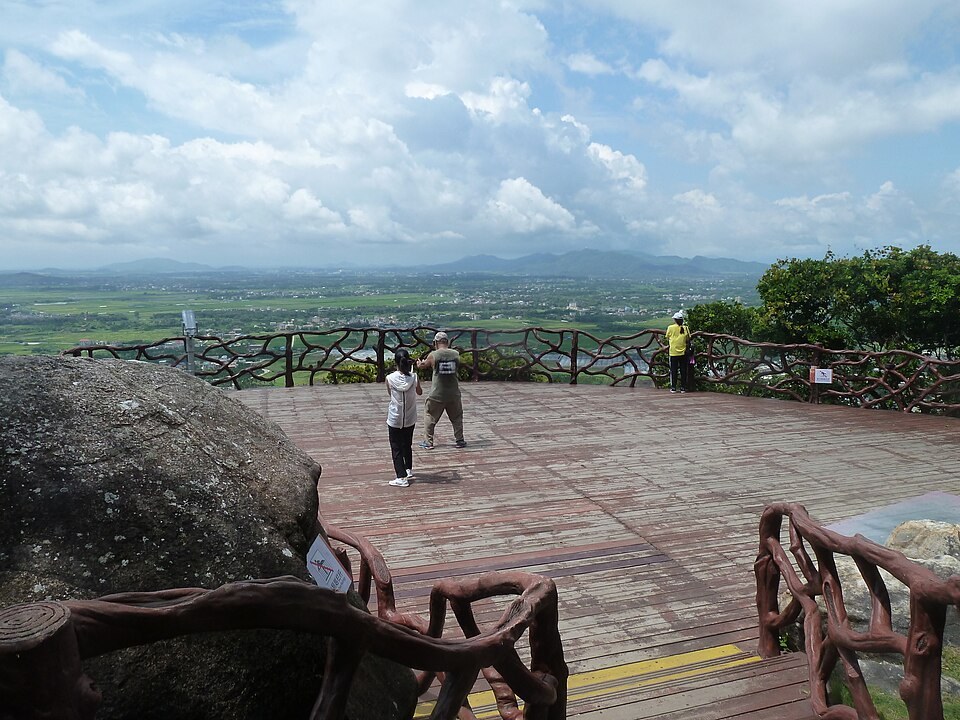
Keep your own rhythm during the visit. Steps and heat may make a short section feel more substantial than it looks on a map. Pause in safe areas and look back along the route already travelled, rather than only towards the next high point. Dongshan Ridge is memorable through combinations: stone and inscription, slope and roof, movement and stillness. Those pairings create a place that cannot be explained by a single altitude or panoramic photograph. Let the smaller observations remain part of the memory, even if the broadest view is the image you eventually choose to share.
Learn more
Local stories may connect springs and rock hollows with celestial figures or immortals. This is a folkloric interpretation of the landscape, not evidence for the water’s origin. Enjoy the story alongside observation of the actual terrain. A legend about a miraculous spring should never be taken to mean that its water is drinking water.