LISTEN TO THE PLACE
A story worth knowing
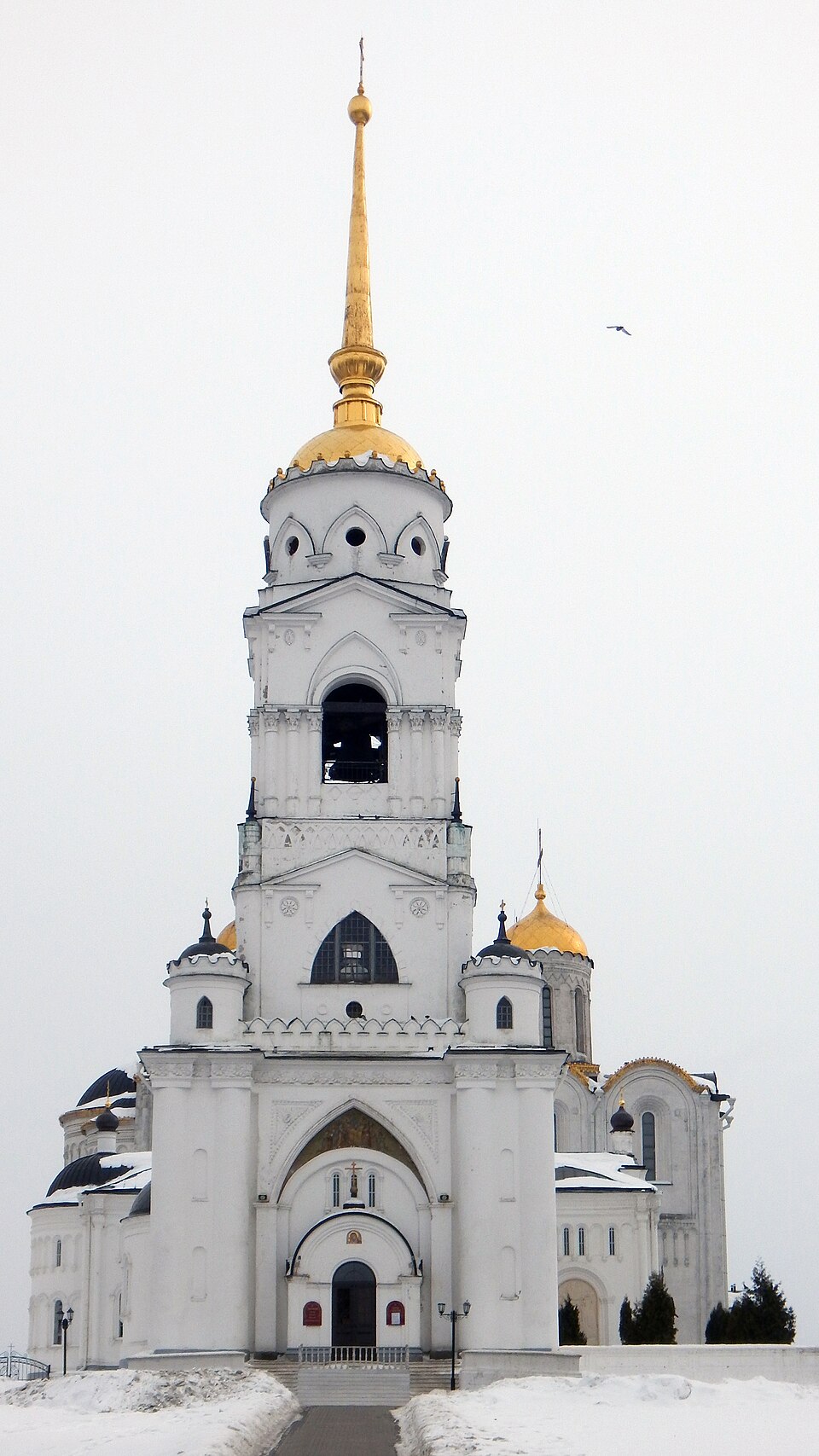
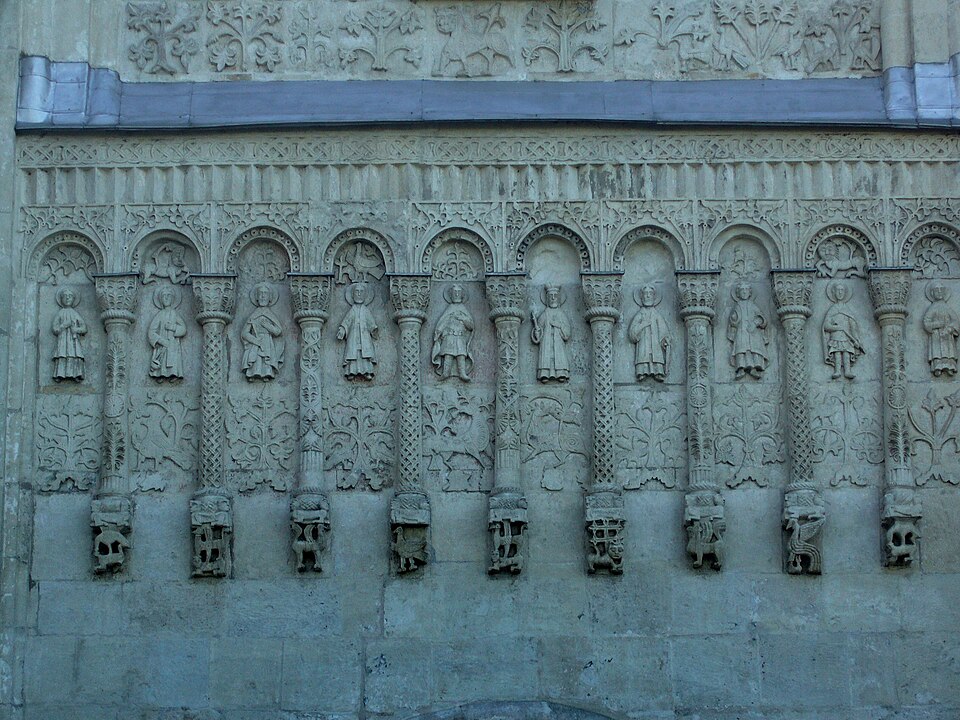
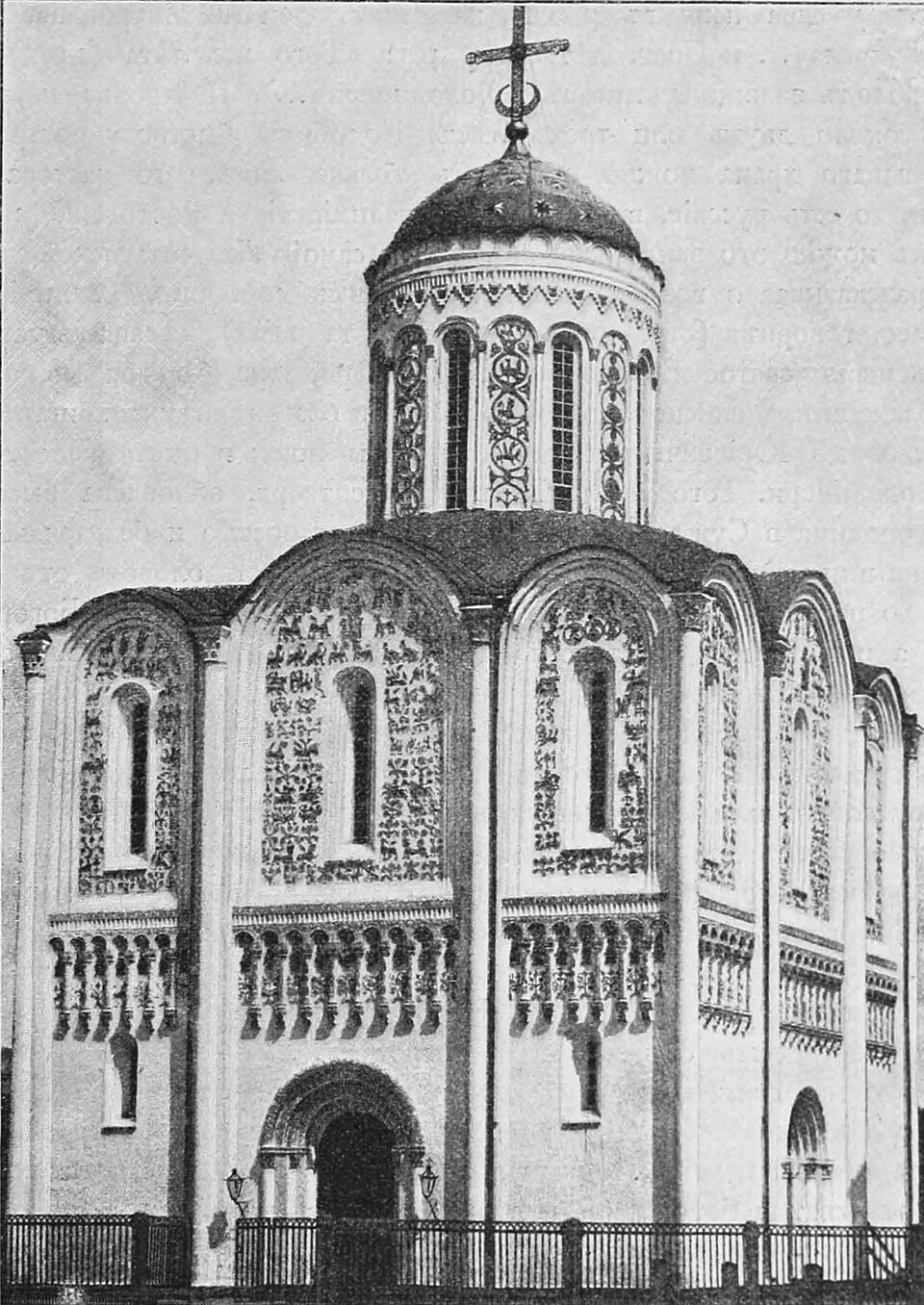
The Cathedral of Saint Demetrius makes two very different impressions. From a distance, it appears compact and clearly composed. Move closer and look up, however, and its upper walls become a world of images. People, birds, animals and plant forms gather across the stone surface.
Built in the late twelfth century for Vsevolod the Big Nest, the cathedral belonged to his princely court. Its dedication to Saint Demetrius of Thessaloniki relates to the ruler's baptismal name, Dmitry. We should therefore imagine a church within a larger residence, rather than an isolated monument standing in open space.
Galleries and stair towers once surrounded it, linking the church with that wider setting. They were removed during nineteenth-century work. The simplicity of today's outline partly results from the loss of those structures. What now looks complete and self-contained does not fully reproduce the original appearance.
The façades' principal treasure is their limestone carving, especially dense across the upper walls. Do not try to identify every figure immediately. Begin by noticing the arrangements: an isolated figure, a symmetrical group, repeated curls or animal bodies. The stone acts both as imagery and as ornament.
Biblical figures appear alongside motifs known to medieval culture through other traditions. These were more than a miscellaneous collection of curious pictures. They related to ideas about the world, authority and sanctity. Yet modern viewers cannot confidently assign a single definitive explanation to every carving. Recognising a subject and interpreting its meaning are different steps.
Watch what the light does. Illumination from the side makes the relief stand out through shadows; more even light can flatten the same figures into something resembling a drawing. If possible, change your viewpoint slightly and compare. Relatively shallow carving creates a remarkably animated surface.
The stone also has a history of preservation. Reliefs have been studied, moved, replaced and restored, so the present ensemble is not a completely untouched twelfth-century wall. That does not diminish its importance, but it makes our understanding more precise. We encounter both a medieval design and centuries of decisions about its care. After a few minutes of close looking, this small, restrained church can feel like one of the most densely illustrated pages in Vladimir's long history.
Learn more
Nineteenth-century work aimed to bring the cathedral closer to what was then understood as its original appearance. Surrounding galleries and stair towers were removed in the process. Later research demonstrated their importance to understanding the medieval ensemble.
The paradox is striking: an attempt to remove supposed later additions can destroy authentic historical evidence. This is why conservation requires investigation before intervention. A wish to make a monument more beautiful or more “ancient” does not by itself establish that a decision is correct.
Old drawings and plans are especially valuable here because they record features no longer present. As you look at the freestanding church, mentally restore the galleries around it. A different image emerges: a cathedral closely connected with a princely residence. Studying what was lost helps recover the building's earlier life, rather than only its familiar present-day outline.