LISTEN TO THE PLACE
A story worth knowing
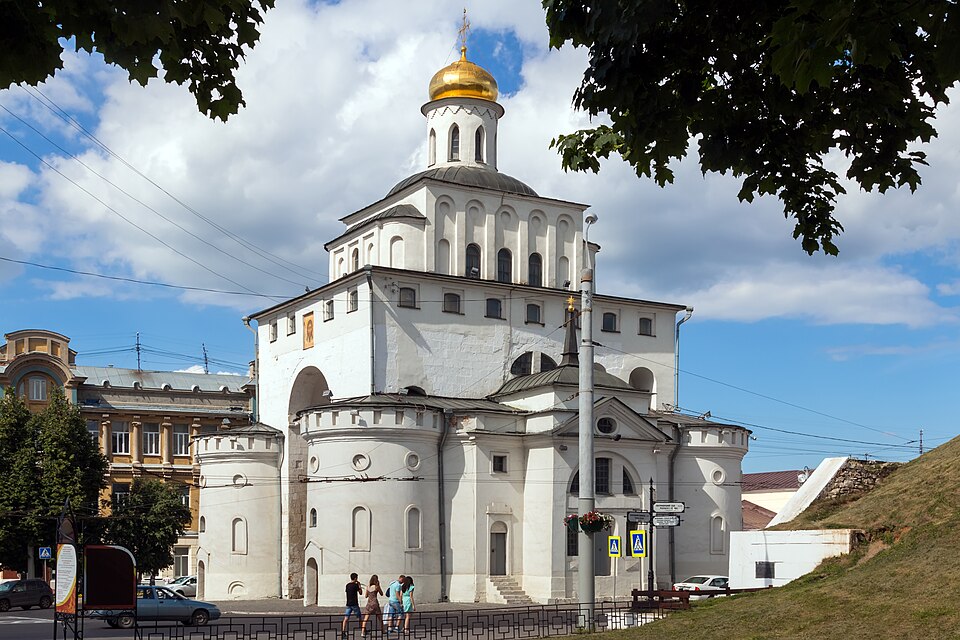
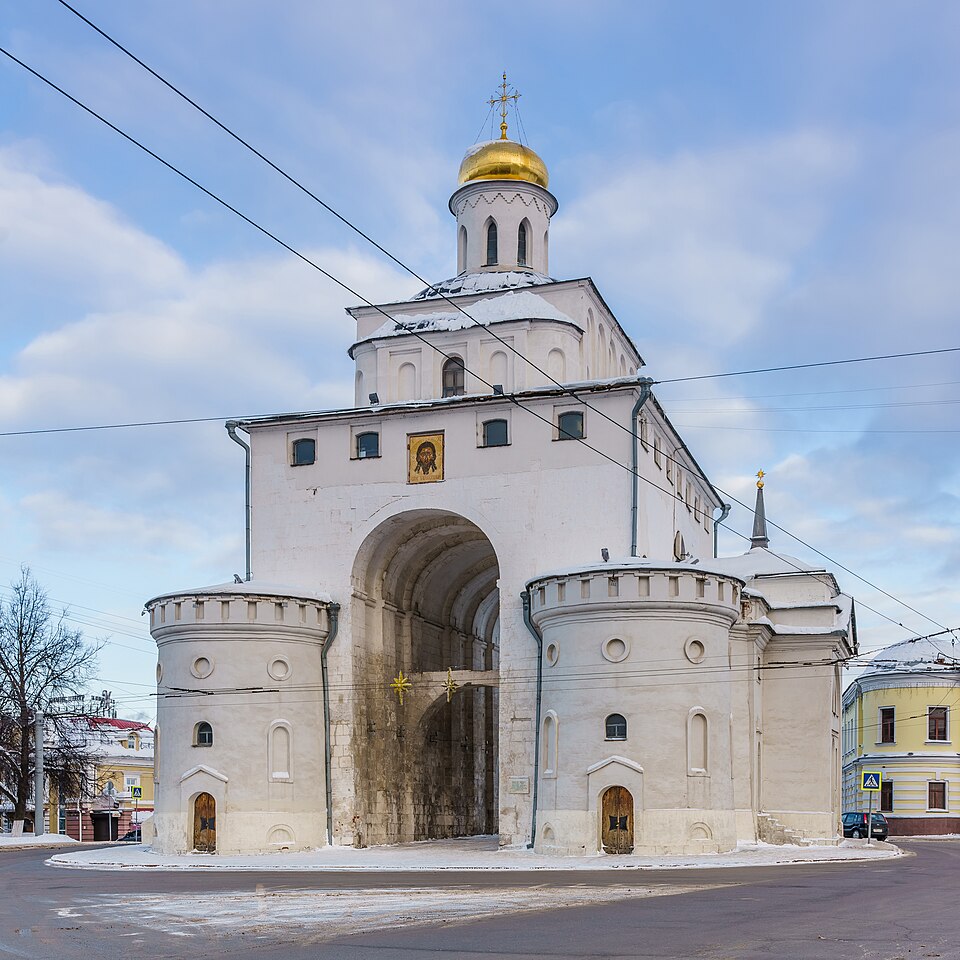
The gate stands in the city, but the wall it once closed is missing. That absence gives it a curious appearance. We tend to see the Golden Gate as a freestanding monument, almost a triumphal arch. In the twelfth century, earth ramparts and timber defences approached it from either side. This passage formed part of a real boundary between the protected town and the world outside.
The gate was completed in 1164 under Prince Andrei Bogolyubsky, during a period of ambitious construction and growing political importance for Vladimir. The principal entrance had to do more than resist an enemy. It also needed to impress peaceful arrivals. Architecture performed military work while presenting the prince's authority.
Why call a pale stone building golden? The name is associated with wooden gate leaves clad in gilded copper. Imagine a gleaming surface filling the arch rather than an entire golden building. The title also echoed the famous Golden Gates of Kyiv and Constantinople. Through its entrance, Vladimir placed itself within a much wider tradition of important cities.
Above the passage stands a church dedicated to the Deposition of the Robe of the Virgin. Its position is central to the design: entry into the town takes place beneath a sacred building. At ground level, people and carts moved through; above them were defensive functions and the church. A small footprint accommodated several kinds of authority and activity, arranged vertically.
The present appearance does not belong entirely to the twelfth century. Fires, repairs and major alterations in the late eighteenth century changed the structure. Supports enclosed within rounded corner additions strengthened it, while the vault and gate church were rebuilt. The familiar silhouette records a long life rather than an untouched moment in Prince Andrei's reign.
Look from both sides and mentally replace the missing ramparts. The gate stops resembling an isolated piece of street scenery. You begin to recognise the depth of the passage, the weight of the barrier and the need to enter through a particular point. For a medieval traveller, the edge of the town was a physical experience. Today, traffic passes around the monument, while the old entrance has become a destination in itself. A structure once used to reach somewhere else now makes visitors pause and examine it. That reversal is one of the most memorable things to notice here.
Learn more
A local legend claims that Catherine the Great's carriage became stuck in the passage and that she ordered routes opened around the gate. Treat this as a story, not a documented explanation for the rebuilding.
It neatly illustrates how people explain unusual urban arrangements. An old narrow gateway stands between roads that bypass it, so an engaging tale supplies a famous traveller and a decisive command. That is easier to remember than a long account of changing traffic, weakened defences and urban planning.
You can enjoy the legend while reading the building separately. Its arch, corner additions and church have a history investigated through masonry, drawings and documents. The carriage story belongs to the way people imagine the monument. Both can accompany a visit, provided the distinction remains clear. A good city story need not become a historical fact to be worth hearing.