LISTEN TO THE PLACE
A story worth knowing
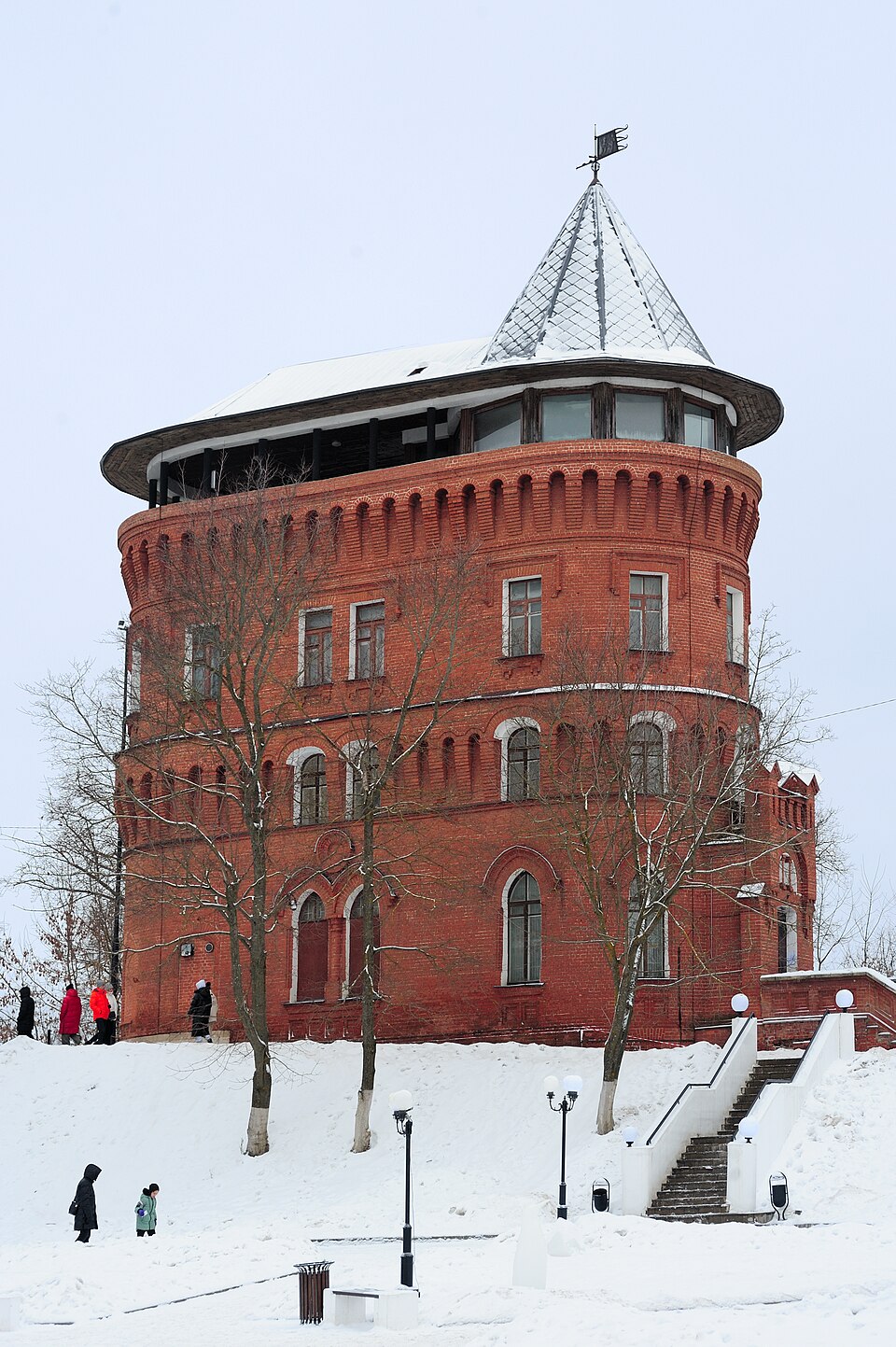
This tower once had a job that is easy to overlook when admiring it as a landmark: supplying the town with water. Beside ancient gateways and cathedrals, that sounds almost mundane. Yet a water system changed everyday life in ways that a ceremonial monument could not, affecting households, businesses and public institutions.
The first tower here was connected with Vladimir's waterworks in 1868. It was rebuilt in 1912 to a design by the municipal architect Sergei Zharov. The resulting brick structure shows that practical infrastructure could possess a strong architectural identity. Usefulness did not require an anonymous exterior.
Its height had a physical purpose. Water raised into an elevated reservoir could produce pressure through the difference in levels. The vertical form was therefore part of the engineering solution. A bell tower uses height to carry sound, a lighthouse to establish a visible reference; this tower used it to help move water through the town.
After its original function became redundant, the building acquired another life. The Old Vladimir museum opened here in 1975. Its subject is largely the town of the late nineteenth and early twentieth centuries: residents, occupations, domestic objects and habits, rather than only medieval princes and famous churches. After visiting the white-stone monuments, it offers a welcome change of historical scale.
Printed voices from the period help tell that story. Newspaper advertisements and notices reveal concerns that rarely dominate textbooks. Someone needed a service, announced an event or offered goods for sale. A town was made of many such small exchanges, each immediately significant to the person involved. These fragments make everyday life less abstract.
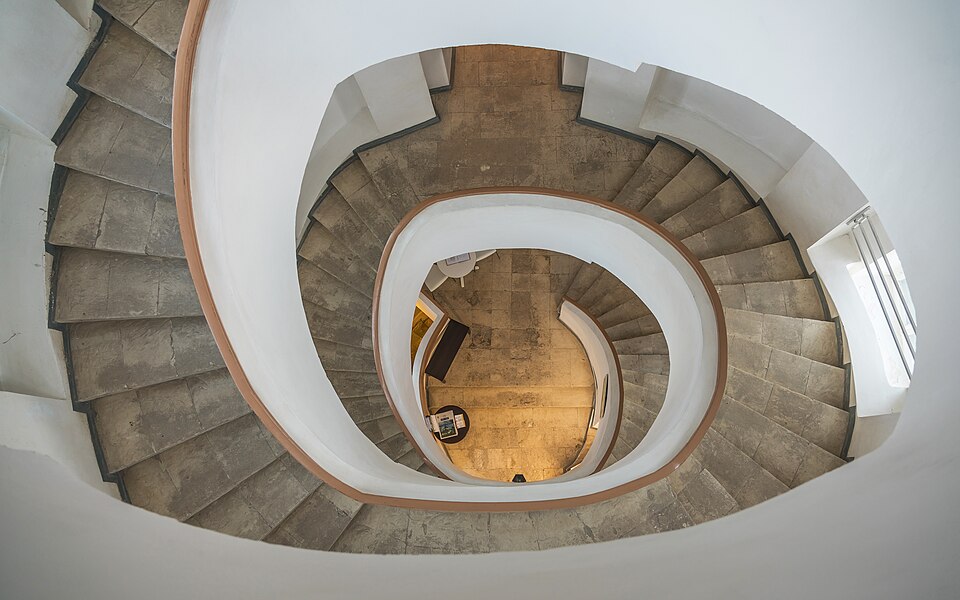
An observation level at the top links two ways of seeing Vladimir. Lower down, you encounter individual objects and testimony; above, you look across their wider urban setting. Notice whether the view feels different after the exhibition. Behind the roofs, it becomes easier to imagine rooms, working days, conversations and household tasks. The tower first supported that life through water and later began preserving its memory. Its story joins the physical organisation of a town to the people who made a home within it. Here, Vladimir can be understood as an ordinary inhabited place as well as an ancient and ceremonial one.
Learn more
A newspaper advertisement is a small source containing a surprising amount of information. It may identify a trade, an address, a service or a way of contacting someone. Even its tone suggests how a person addressed unknown readers in the town.
At Old Vladimir, printed voices complement material objects. Choose one notice and ask who might have needed it. Who could have read those lines and changed a plan as a result? You do not need a complete biography of the advertiser to recognise a functioning urban community behind the words.
Major events usually receive dates and titles. Everyday life depends on repetition: shopping, meetings, work and household concerns. Newspapers catch that flow. A brief notice can bring us close to people who did not yet think of themselves as history. They were simply dealing with the practical business of their own present.