LISTEN TO THE PLACE
A story worth knowing
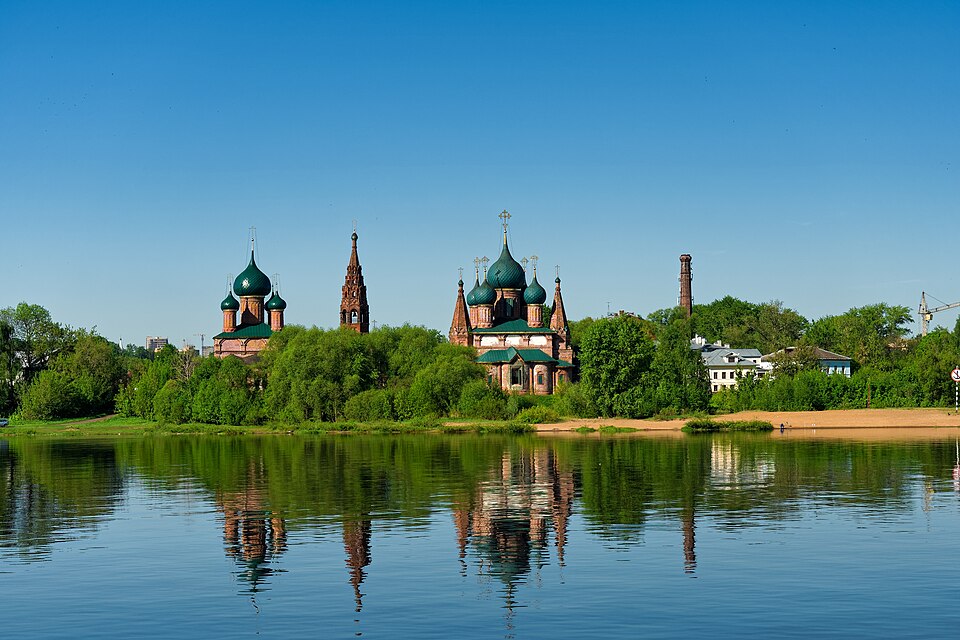
Korovniki shows that Yaroslavl's splendid architecture was not confined to the centre. Across the Kotorosl, the resources of a trading and working settlement found expression in a church ensemble. It is best understood as the achievement of a community.
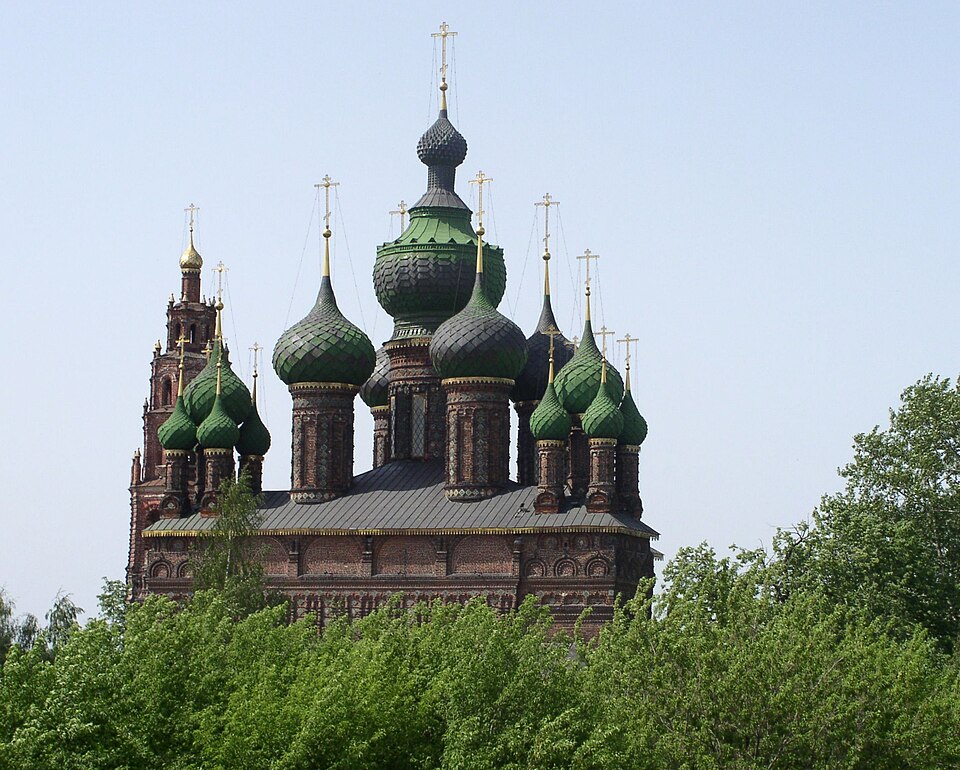
The Church of Saint John Chrysostom was built in the middle of the seventeenth century. Together with the Church of the Vladimir Icon and the bell tower, it forms a distinctive composition. Different buildings served different needs while creating a coordinated silhouette.
At closer range, look for the glazed tiles. Coloured ceramics turn parts of the architecture into something almost jewel-like. The large decorated window surround on the eastern side of the Chrysostom church is especially striking. You need not identify every motif to notice how colour and relief change between distant and close views.
The settlement was connected with trade, crafts and practical work. Its richly decorated churches required patrons, skilled builders and a community that used them as a parish centre. They did not emerge in isolation from everyday economic life.
Compare the lower surrounding landscape with the tall upper forms. Near the water, the ensemble could be seen across a broad area. It was designed for the view from the opposite bank as well as for someone standing beside a wall.
Begin with the whole composition, then select one ceramic detail. That change of scale reveals two strengths of Yaroslavl architecture: a confident overall arrangement and delight in carefully made ornament.
Learn more
Parish ensembles could contain both summer and winter churches. A large unheated interior suited the warmer months, while a smaller heated church served winter worship. Two neighbouring churches therefore did not necessarily compete with each other. They could be complementary parts of the same parish's practical life.