LISTEN TO THE PLACE
A story worth knowing
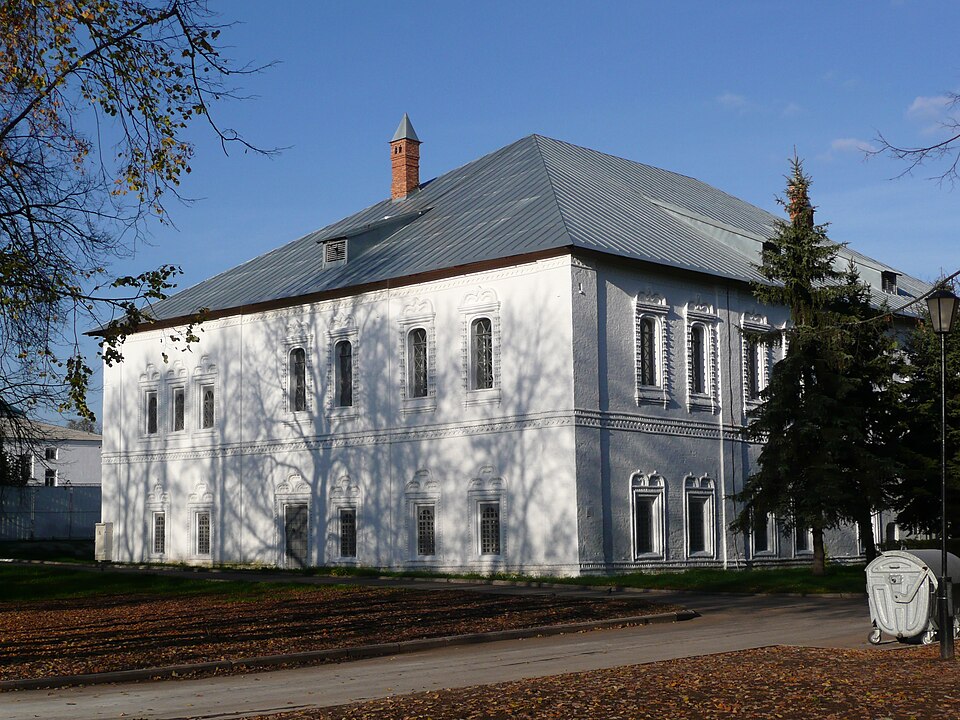
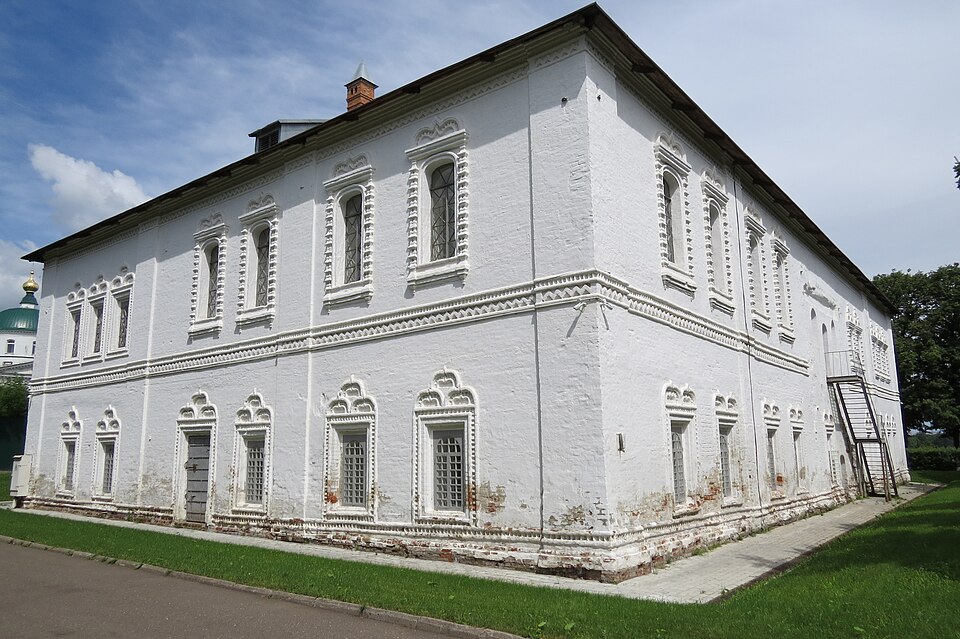
The Metropolitan's Chambers reveal seventeenth-century Yaroslavl without its familiar concentration of church domes. This is a rare surviving example of secular architecture, although its patron was a church leader: Metropolitan Iona Sysoevich, also associated with the Rostov Kremlin.
The chambers were built in the late seventeenth century as a formal residence. Reception rooms, living quarters and service spaces organised a way of life quite different from a modern apartment.
Notice the deep window openings and the impression of substantial walls. The building feels remarkably solid, but it did not survive unchanged. Later alterations affected its height and decoration, while restoration recovered features of an earlier appearance.
Catherine the Second stayed here. More revealing than a list of famous visitors, however, is the sequence of uses: ecclesiastical residence, administrative accommodation and museum. Each function adapted older rooms to new requirements.
Today the building is associated with the Yaroslavl Art Museum and early Russian art. The setting is particularly effective: objects created for religious environments are displayed in architecture belonging to the same broad cultural world, though under very different museum conditions.
Imagine the chambers with the vanished parts of their estate: enclosure, service structures and approaches. The building becomes more than an isolated old block. It emerges as the centre of an organised household where visitors were received and substantial affairs managed.
Learn more
A restored façade may represent a selected period rather than every stage of a building's life at once. Comparing old images with the present appearance can reveal additions that were later removed. The chambers retain a history of several eras even when their exterior appears unified. Restoration is itself one chapter in that history.