LISTEN TO THE PLACE
A story worth knowing
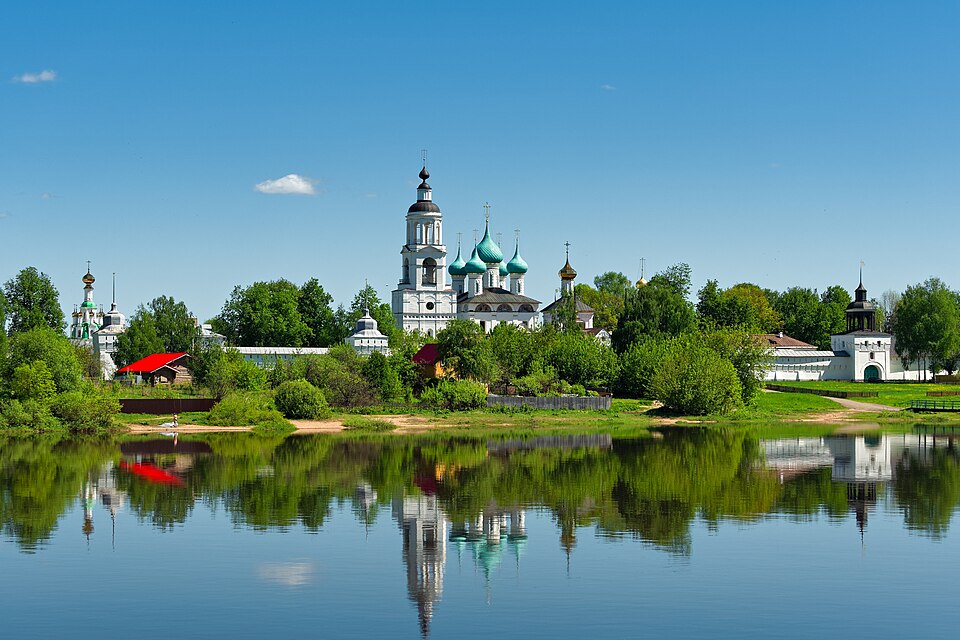
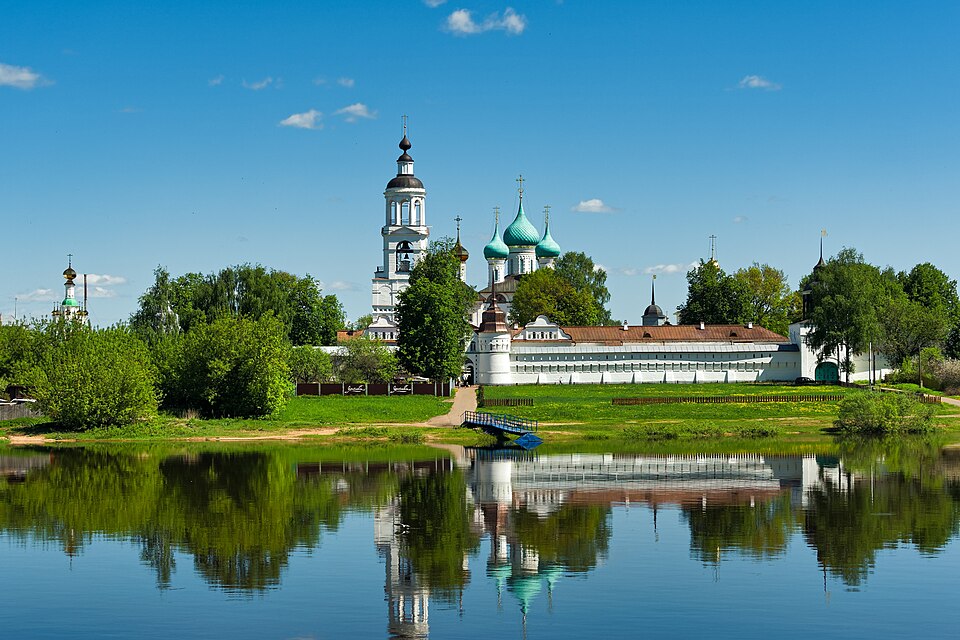
Tolga Convent deserves a separate allocation of time. It stands on the left bank of the Volga beyond a short walk through the historic centre. Here the connection between religious life, river and landscape is particularly clear.
The foundation is traditionally dated to 1314. According to Church tradition, it followed the miraculous discovery of the Tolga Icon of the Mother of God. This account belongs to a religious tradition and should be presented as such rather than as an ordinary documentary record.
The surviving architectural ensemble developed much later. Destruction, construction and restoration all shaped the monastery. The date when a community began is therefore not the age of every building within its walls.
Notice the organisation of the enclosed world: churches, passages, courtyards and service areas. The relationships between them matter as much as any single monument. Monastic life needed space for worship, work and daily necessities.
After a long Soviet closure, the community reopened as a women's convent in 1987. Its present appearance reflects subsequent restoration and the work of the religious community.
Respect the visitor rules and do not assume that every area is open for unrestricted exploration. Allow enough time for the journey and an unhurried visit. Tolga is better experienced as a place with its own rhythm than as one more hurried entry on a sightseeing list.
Learn more
A monastery can have several important dates: its foundation, the construction of surviving buildings and the revival of its religious community. Those dates may be centuries apart. Tolga makes the distinction particularly clear, bringing together a medieval foundation tradition, later architecture and a renewed modern community.