LISTEN TO THE PLACE
A story worth knowing
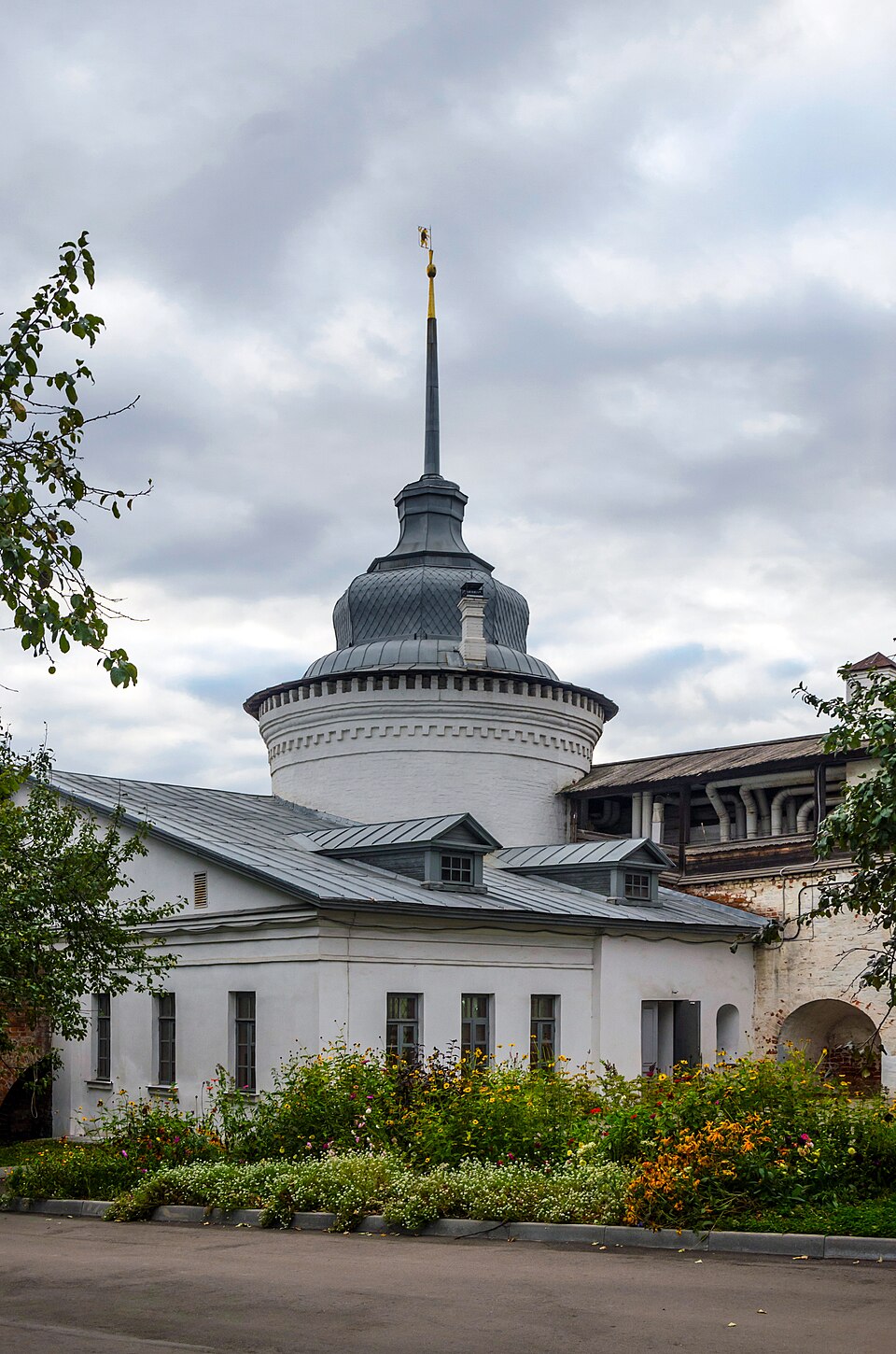
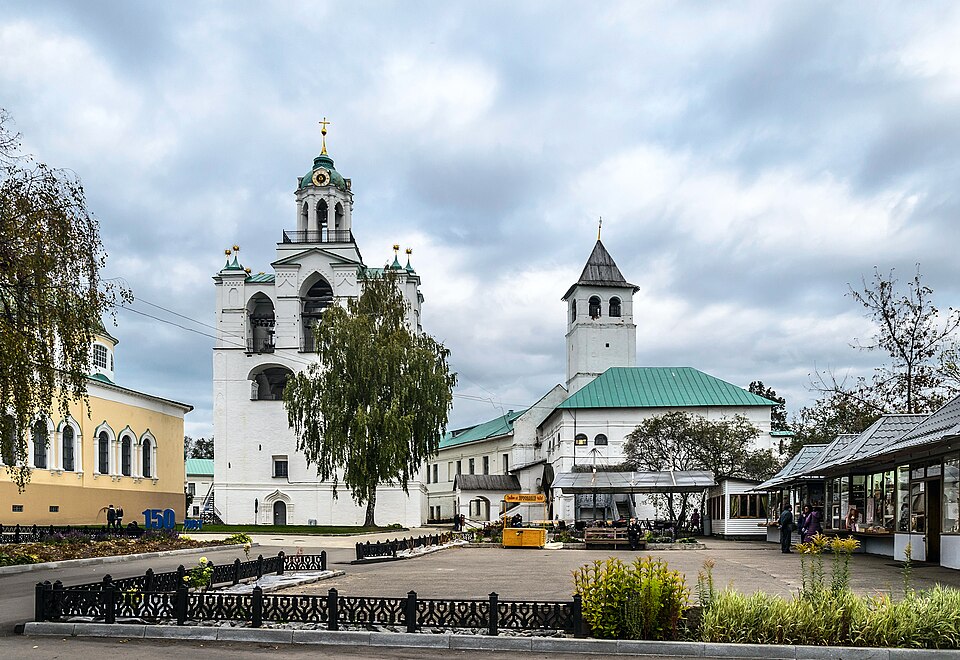
White walls and towers make it tempting to call this a kremlin. The complex is actually the former Monastery of the Transfiguration, not Yaroslavl's historic citadel. That distinction matters. Its fortified appearance belongs to a religious community that could also provide protection. Events inside these walls reached far beyond the monastery's spiritual life.
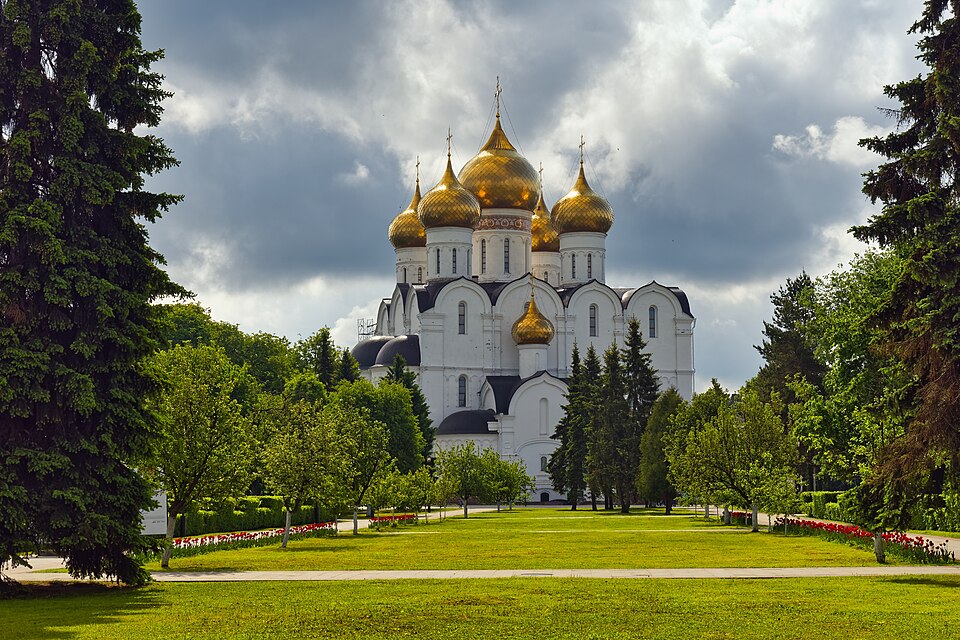
At the centre stands the Transfiguration Cathedral, built between 1506 and 1516 after a major fire destroyed its predecessor. It is Yaroslavl's oldest surviving stone building. Look at its comparatively restrained form. This is a different architectural moment from the city's exuberant seventeenth-century churches. The contrast represents a century of change as well as a difference in ornament.
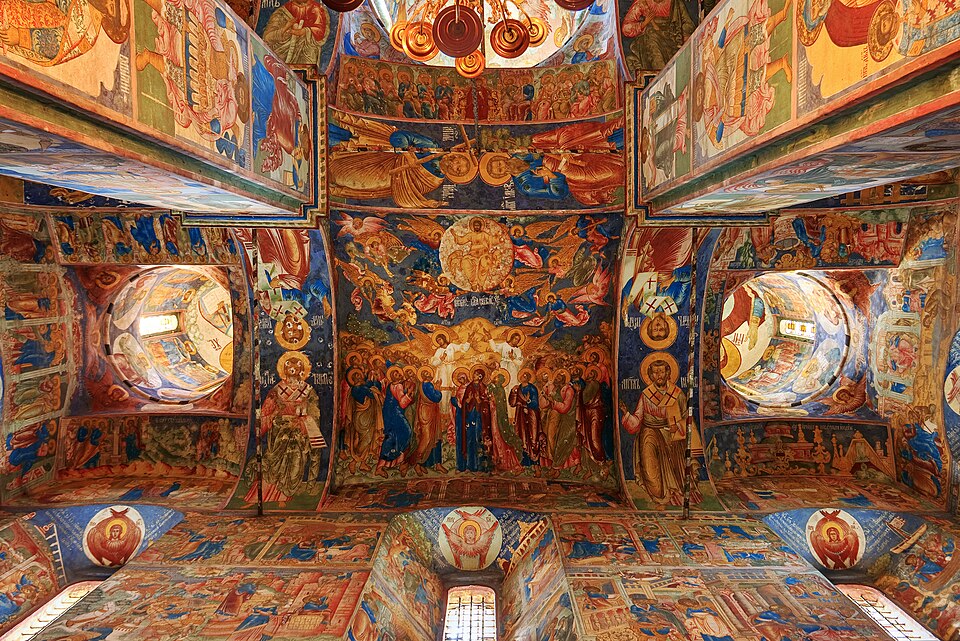
Inside are wall paintings made in 1563 and 1564 by artists from Moscow and Yaroslavl. You cannot see them from outside, but knowing they exist changes the way you read the building. Behind the pale exterior lies an interior in which painted scenes surround the viewer. Architecture establishes the space; painting fills it with stories. The two work together rather than competing for attention.
In 1612, Yaroslavl became a crucial centre for the militia associated with Kuzma Minin and Prince Dmitry Pozharsky, during Russia's Time of Troubles. The monastery forms part of the memory of that national crisis. Imagine the gates as part of a town receiving people, instructions and urgent news, rather than as the entrance to a museum. The walls begin to look less like scenery and more like participants in events.
The monastery has another claim to fame: a book. According to the collector Alexei Musin-Pushkin, a manuscript volume he acquired here contained The Tale of Igor's Campaign, a medieval poem about a prince's unsuccessful expedition. Its connection to Yaroslavl concerns the poem's later survival and rediscovery. One of the site's most significant stories therefore rests on fragile written pages rather than massive masonry.
During your visit, separate these impressions for a moment. First examine the walls and cathedral as buildings. Then consider the different activities associated with the enclosure: worship, administration, military preparation and the keeping of books. The same courtyard belongs to all of those histories. That combination makes the monastery more than a collection of attractive monuments. It reveals how closely faith, authority and learning could be connected in an old Russian town, and how a written work could ultimately outlive the physical manuscript that preserved it.
Learn more
The manuscript's story resembles a detective plot, but it does not need invented scenes. Musin-Pushkin connected his acquisition with Ioil Bykovsky, the monastery's last abbot. The first printed edition of The Tale of Igor's Campaign appeared in Moscow in 1800. Twelve years later, the manuscript was lost in the Moscow fire along with much of the collector's library.
This creates a remarkable chain of survival: a medieval work preserved in a later handwritten copy, acquired by a collector and printed before that copy disappeared. Between a modern reader and the poem's author stand generations of scribes, keepers and editors.
Do not expect to find the lost manuscript in a display case. The evidence now takes other forms, including early printed copies and documents about its history. A museum can tell a substantial story about an object that no longer exists, without pretending the missing original has somehow survived.