LISTEN TO THE PLACE
A story worth knowing
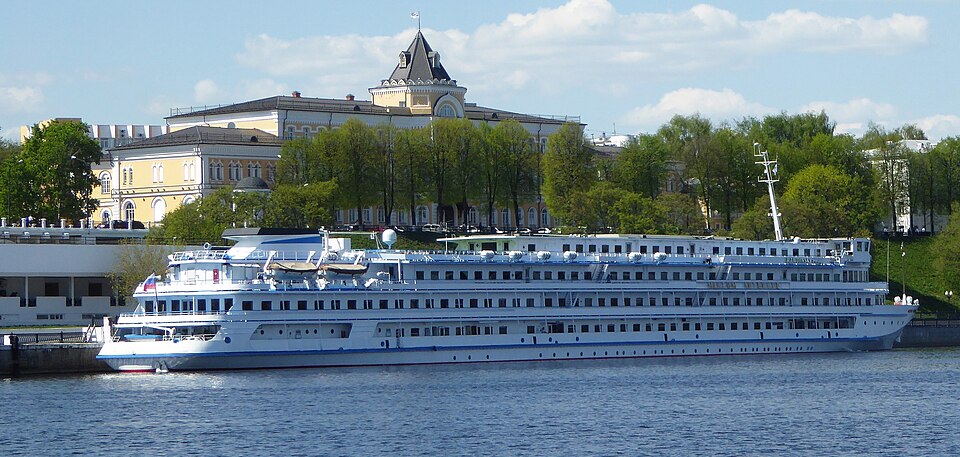
The Volga Embankment invites you to look at Yaroslavl in two directions. On one side lies the broad river; on the other, buildings turn their façades towards it. The city seems to offer several versions of itself along the shore: fortified, commercial, administrative and leisurely. They emerge gradually as you walk.
Begin with a simple distinction: a natural riverbank is not the same as a landscaped embankment. The Volga eroded the slopes, while the city needed stronger banks and usable descents. Substantial improvements took place in the nineteenth century. Alexander I's visit in 1823 helped secure funding for strengthening the shore. Today's easy stroll depends on considerable engineering work beneath its pleasant appearance.
Some buildings recall an earlier city. The seventeenth-century Metropolitan's Chambers belonged to an ecclesiastical residence. The Volga Tower, also called the Arsenal Tower, had a defensive purpose. Together, these very different structures suggest the waterfront before its development into a fashionable promenade.
The embankment later became a prestigious address. The Governor's House, associated with nineteenth-century administration, now forms part of the art museum. Uses change, but the position remains expressive. A house overlooking the river occupied a prominent place in the city's public life as well as its landscape.
Another familiar feature is the round pavilion near Myakushkinsky Descent, built in the 1840s. Its purpose is beautifully straightforward: to provide a place to pause and look into the distance. Columns frame the view like a deliberately composed picture. Seen from elsewhere, the pavilion becomes part of that picture itself.
As you walk, alternate between a wide view and a close one. First take in the high bank's outline, then examine a façade, railing or staircase. The broad panorama shows the city's relationship with the Volga; details reveal the decisions of particular builders. The embankment becomes more than a convenient path between named sights.
Continuing towards the Strelka brings you to the meeting of the Volga and Kotorosl, but there is no need to hurry there. This street has a rhythm of its own: buildings from different periods, openings towards the water and places to stop. Its interest lies partly in how a working riverbank became a space where people wanted to spend time simply enjoying their city.
Learn more
The pavilion near Myakushkinsky Descent is often called the Governor's Pavilion. A local story claims that governors drank tea here from a samovar and offered refreshments to passers-by. It is an appealing legend, rather than a reliably documented Sunday routine.
Another popular name is the Pavilion of Love, associated with couples and wedding photographs. A small structure can acquire different stories while retaining the same basic function: providing a meeting place and a view over the Volga.
Notice how it works. Its circular plan avoids imposing a single direction of vision, while the gaps between columns divide the panorama into separate scenes. Even without a legend, it is a small device for contemplating the city. The stories add imagined company: people who may, or may not, have enjoyed the same pause before us.