LISTEN TO THE PLACE
A story worth knowing
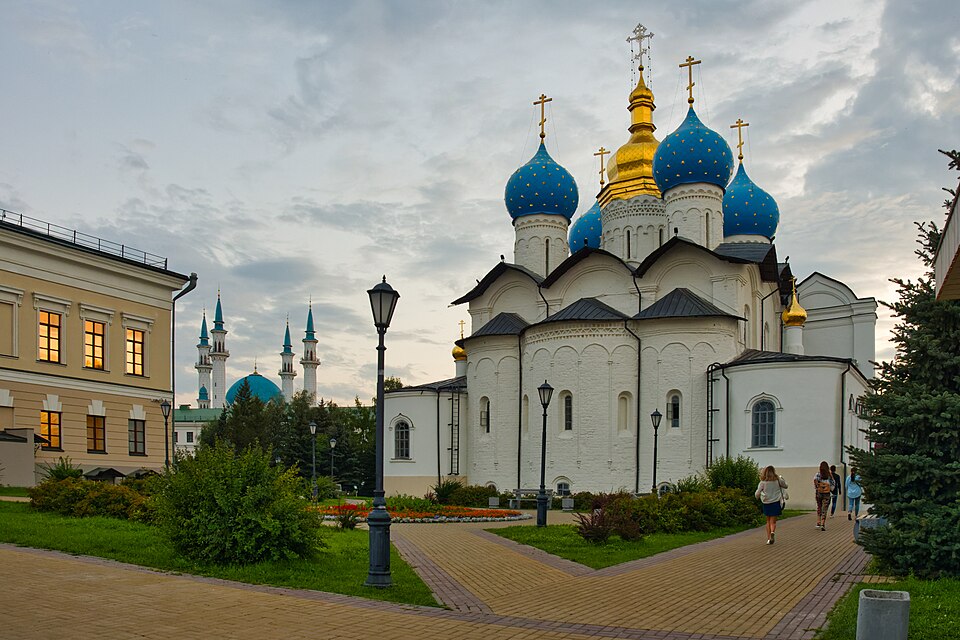
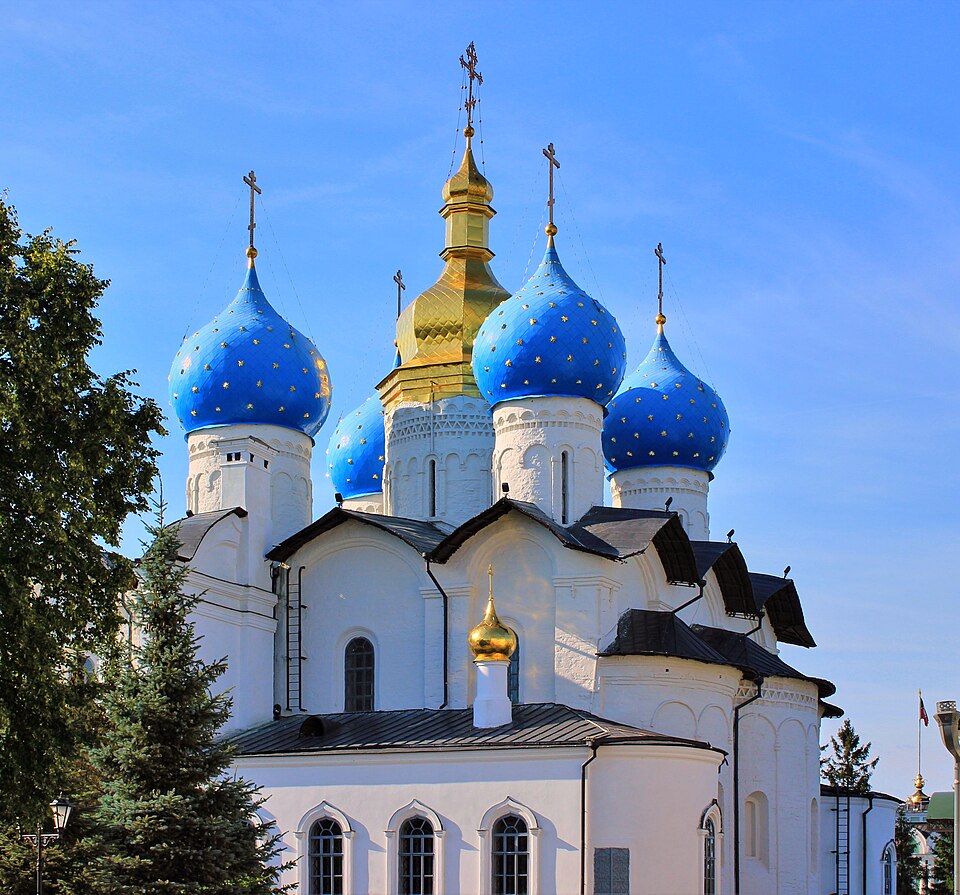
For a moment, forget the dates and look at how the Annunciation Cathedral occupies its space. Pale walls, domes and broad, settled forms give it a different presence from the slender minarets elsewhere in the Kremlin. Your eyes linger on the body of the building before travelling upwards.
The stone cathedral was built in the sixteenth century, after Ivan the Terrible's army captured Kazan. Its construction is associated with the Pskov craftsmen Postnik Yakovlev and Ivan Shiryai. They helped reshape the Kremlin as fortifications and religious buildings became part of a changed political and urban order.
It is tempting to imagine an ancient church as something built once and carefully preserved ever since. This cathedral had a more complicated life. Fires, rebuilding, changes to its interior and restoration all altered its appearance. What stands before you is not a frozen picture of the sixteenth century, but a building with a long biography.
Try seeing it as several connected parts. Where is the main mass? Which sections seem to have been added? How do the windows change in size? You do not have to guess every date correctly. Simply noticing the different parts turns a photographic backdrop into a set of interesting questions.
During the Soviet period the cathedral was closed and put to other uses. Restoration followed later. For a monument like this, restoration involves more than repairing walls: surviving details, documents and traces of earlier work all help specialists decide what can responsibly be recovered.
If Soyembika Tower is visible from your position, compare its brickwork with the cathedral's pale surfaces. Colour and material influence our impression as much as height. The spaces between the buildings allow each to be understood separately, like distinct voices in a conversation.
This is an active church, so any indoor visit should respect services and the people attending them. The museum of the cathedral's history offers another way to investigate its past.
One idea is enough to take away: the age of a monument is not the age of every detail. Changes, losses and recoveries are part of what makes it a witness to the city's history.
Learn more
The Annunciation is the Christian event in which the Archangel Gabriel brings his message to the Virgin Mary. The cathedral's name refers to that event. A cathedral's importance is connected to its role in church life, rather than simply to its size.
A visit can follow two complementary paths. One concerns worship and religious tradition; the other concerns documents, architecture, objects and the lives of people associated with the building. You do not need to choose between them permanently. Even a short stop outside can suggest a subject to return to later, when there is more time to explore the interior or museum.