LISTEN TO THE PLACE
A story worth knowing
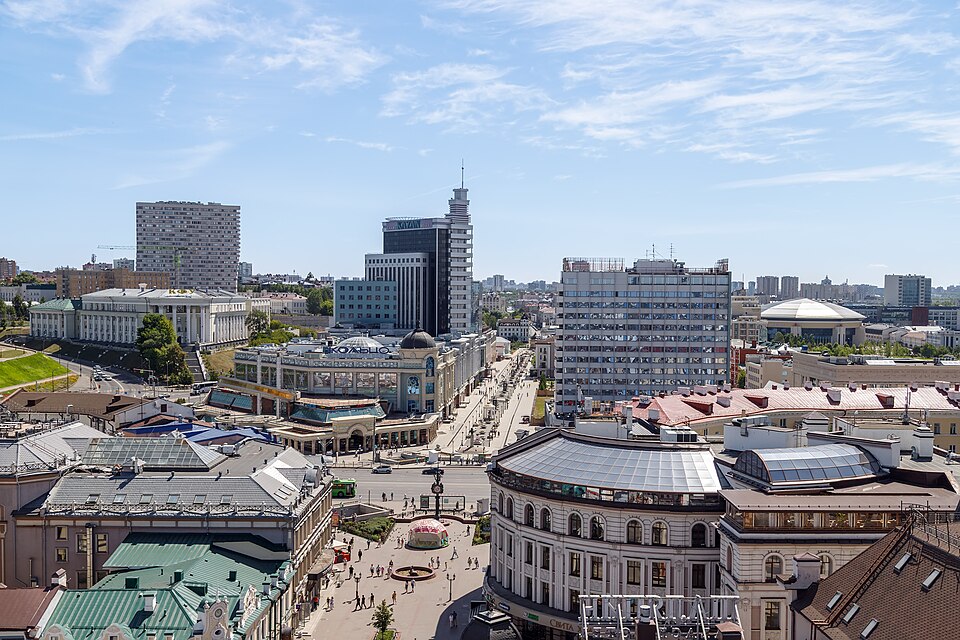
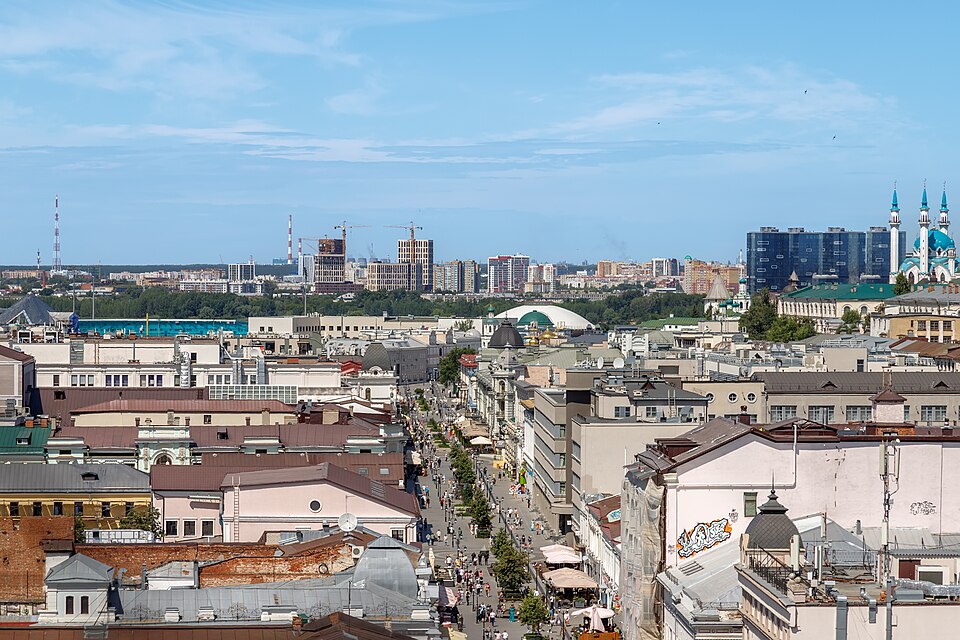
On Bauman Street it is hard to look only straight ahead. A sign catches your eye, an old facade draws it upwards, and a sculpture appears among the passers-by. This is one of Kazan's main pedestrian streets, where sightseeing and ordinary urban life continually overlap.
For a few steps, look above the shop windows. Ground floors change with their shops and cafes, while upper floors often preserve another rhythm of windows, cornices and decoration. You can see the present and traces of an earlier city at the same time, without entering a museum.
The street was once called Bolshaya Prolomnaya. That name is associated with a breach in the fortifications during the sixteenth-century capture of Kazan. Its current name was adopted in nineteen thirty in honour of the revolutionary Nikolai Bauman. Two names for one road show how successive periods select different events and people to remember.
Buildings of different ages share the street. The brick bell tower of the Epiphany Cathedral supplies a tall landmark. The House of Press represents another period and the architecture of Constructivism. Between the large buildings, smaller objects invite a pause: Catherine the Second's carriage replica, sculptures, clocks and fountains.
You need not turn the walk into a checklist. Choose one way of looking. Follow the shapes of windows, or compare the widths of neighbouring facades. One occupies a small plot; another extends along a substantial part of the street. These details reveal the working city behind the visitor attractions.
Bauman Street links the Kremlin area with Tukay Square. But the pleasure is not simply in getting between those points. You can vary your pace, stop near a musician, look more closely at a building or make a short detour and rejoin the flow.
Listen as well. On a pedestrian street, voices, footsteps and music share the space differently. If conditions are quiet enough, distinguish the nearest sound from the most distant one you can hear. A photograph cannot preserve that part of the experience.
As you continue, find one detail this guide has not mentioned. It need not be famous. A window, a railing or a reflection can make an unfamiliar city feel a little more your own.
Learn more
The age of a building and the age of its current use are different things. A modern shop can operate behind a historic facade, while an old urban activity moves into new premises. The sign tells you about the present; the architecture usually has a longer story.
Compare the ground floors of two neighbouring buildings, then look at their upper storeys. It may feel like two different streets stacked one above the other. Commercial life and the architectural shell change at different speeds. Bauman Street is a good place to notice this because you can pause in the pedestrian area and let your attention move between the two levels.