LISTEN TO THE PLACE
A story worth knowing
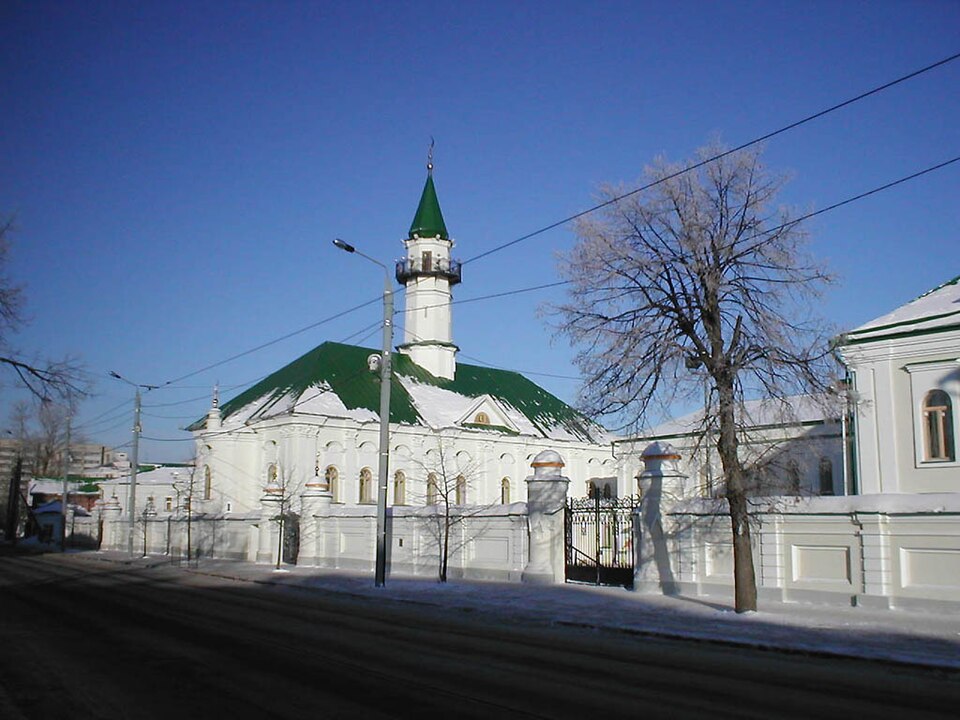
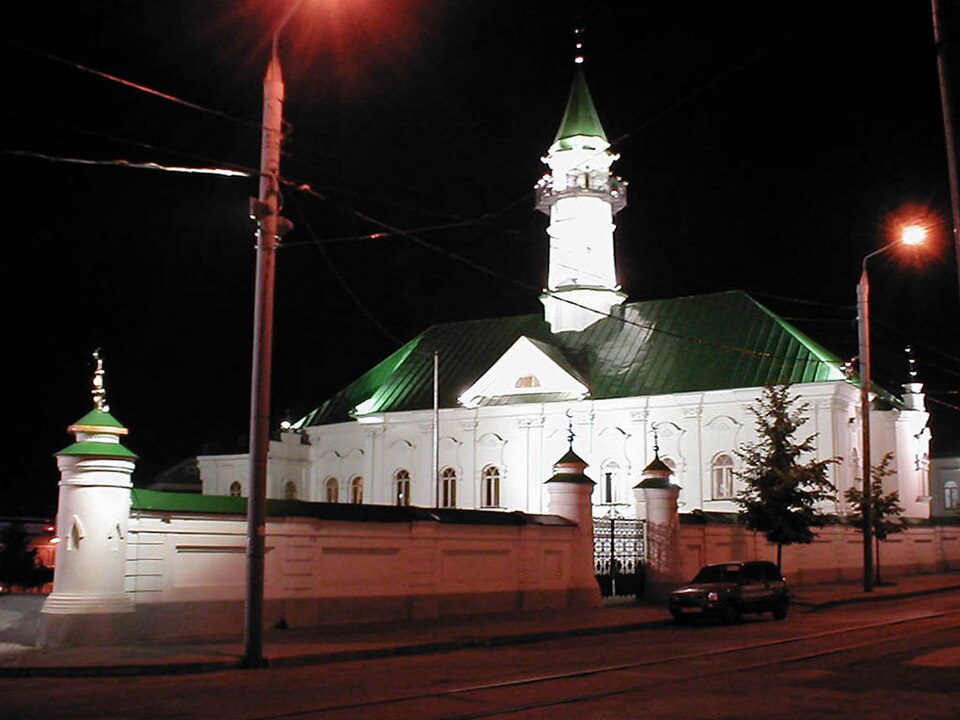
Al-Marjani Mosque has a different presence from the enormous Kul Sharif Mosque in the Kremlin. Here in the Old Tatar Quarter, it belongs closely to the scale of the surrounding streets. You may notice the minaret first, then gradually make out the main building and its position among neighbouring houses.
It is one of the first stone mosques built in Kazan after the sixteenth century. The congregation funded it in the second half of the eighteenth century. Its history is linked to permission for mosque construction obtained during Catherine the Second's visit. For the community, a permanent stone building represented stability and the opportunity to develop religious life openly.
Look at the composition. The minaret rises from the roof of the main volume instead of standing as a separate tall structure to one side. Building and vertical accent form a single silhouette. It is a useful detail to compare with mosque architecture you may know from other regions.
The current name honours Shigabutdin Marjani, a theologian, historian and educator who worked here in the nineteenth century. His connection reminds us that a mosque's history extends beyond prayer. Education, the exchange of knowledge and community life developed around religious institutions. In this quarter, those activities were closely connected.
Kazan merchants helped enlarge and alter the building over time. Its present appearance is therefore the result of successive contributions, rather than one moment of construction. Even when those changes are not obvious from outside, remembering them helps us see the mosque as a continuing shared undertaking.
Al-Marjani remained active during the Soviet years. Its relationship with worship is not simply a story of a function recently restored. A living congregation continued to use the place.
As you look around, remember that this is an active mosque. Leave entrances clear and distinguish an outdoor architectural stop from a visit inside. Each has its own rhythm and requirements.
Before moving on, include the neighbouring houses in your view. The mosque is interesting both as a silhouette and as part of the quarter around it. This is a stop about a community: people who built, taught, supported one another and left their mark on the architecture of Kazan.
Learn more
The mosque has also been known by other names, including the First Congregational Mosque and the Yunusov Mosque. These names emphasise different things: a role in religious life, a connection with benefactors or the work of a notable individual.
That is useful when reading older accounts. A different name does not necessarily mean a different building. What changes may be the part of its history people choose to emphasise. After looking around, imagine your own descriptive name, based on the rooftop minaret, the neighbouring houses or the feel of the street. Compare it with the historical names: each captures only one aspect of a much larger story.