LISTEN TO THE PLACE
A story worth knowing
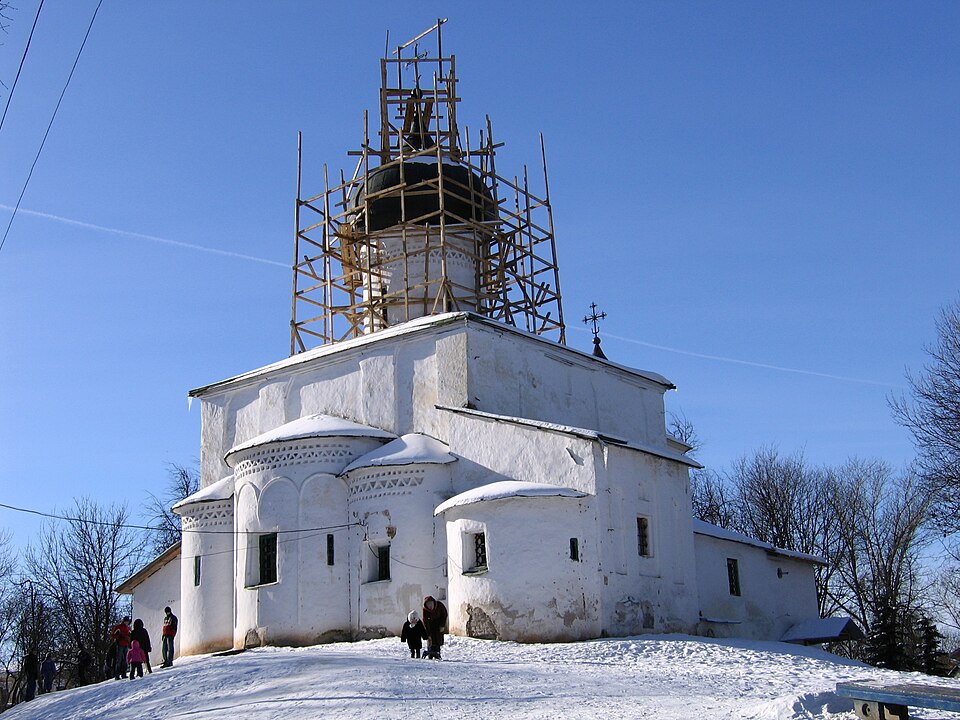
The Church of Saint Basil on the Hill occupies the slight rise preserved in its name. Modern streets make the setting familiar, but terrain and water once defined it more strongly. The elevated ground helped the church stand out.
The stone church is traditionally associated with 1413, while its appearance developed through the fifteenth and sixteenth centuries and later alterations. A foundation date does not mean that every visible part was built at once. Side chapels, roofing and the bell tower belong to different phases.
Look at the compact central mass and projecting sanctuary apses. Decorative bands enliven the walls without overwhelming their clarity. Pskov's church architecture can be expressive without enormous size. Move around the exterior and notice how adjoining volumes alternately disappear and emerge in the silhouette.
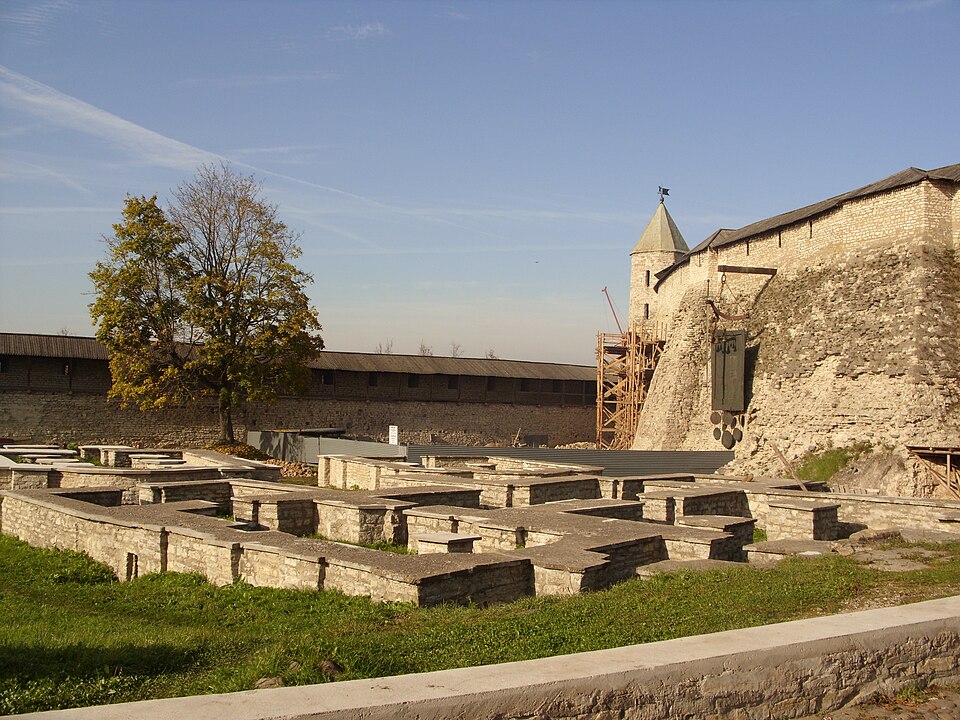
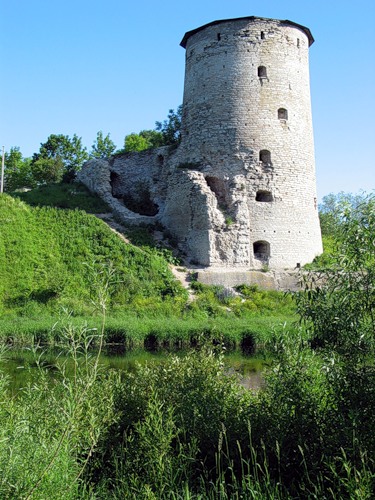
The location also connects with the city's defences. The Middle Town fortifications ran nearby, and bells could sound an alarm as well as summon worshippers. A small church therefore belonged to a much larger system of civic life.
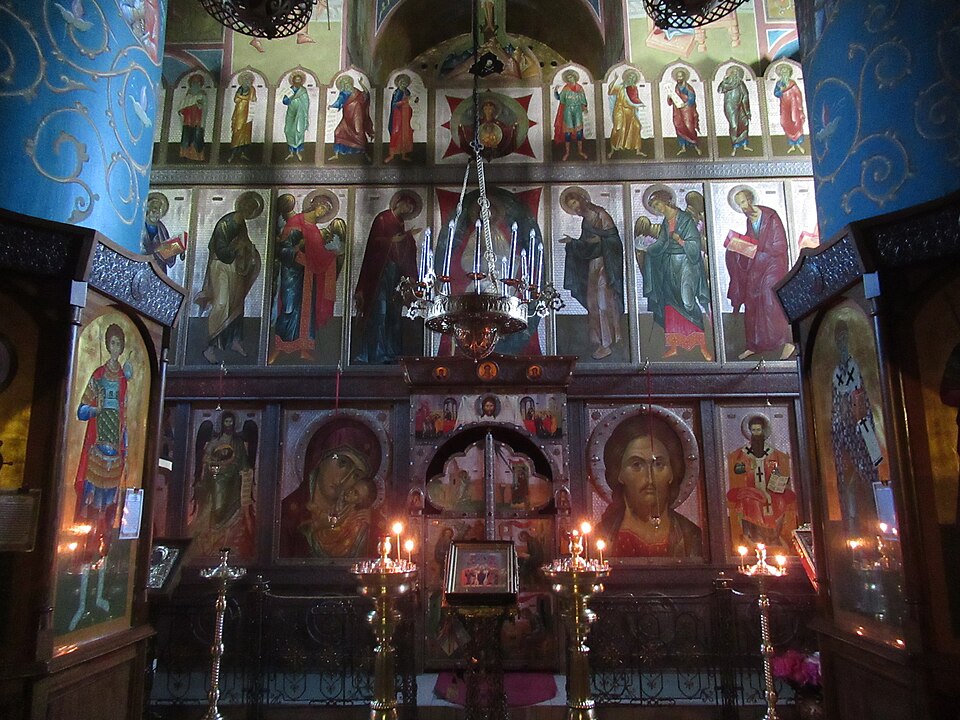
In the twentieth century the building was closed, used for storage and archives, and damaged during wartime. Restoration and the return of worship added further chapters. This is an active church, so take services into account when visiting. Spend a few minutes outside: the phrase on the Hill becomes clearer when you examine the ground as well as the architecture.
Learn more
Old photographs may show different roofs or additions. Conservation sometimes reveals an earlier form instead of reproducing the appearance familiar from a century-old image. The question of what a building looked like before therefore needs a second question: before, in which century?