LISTEN TO THE PLACE
A story worth knowing
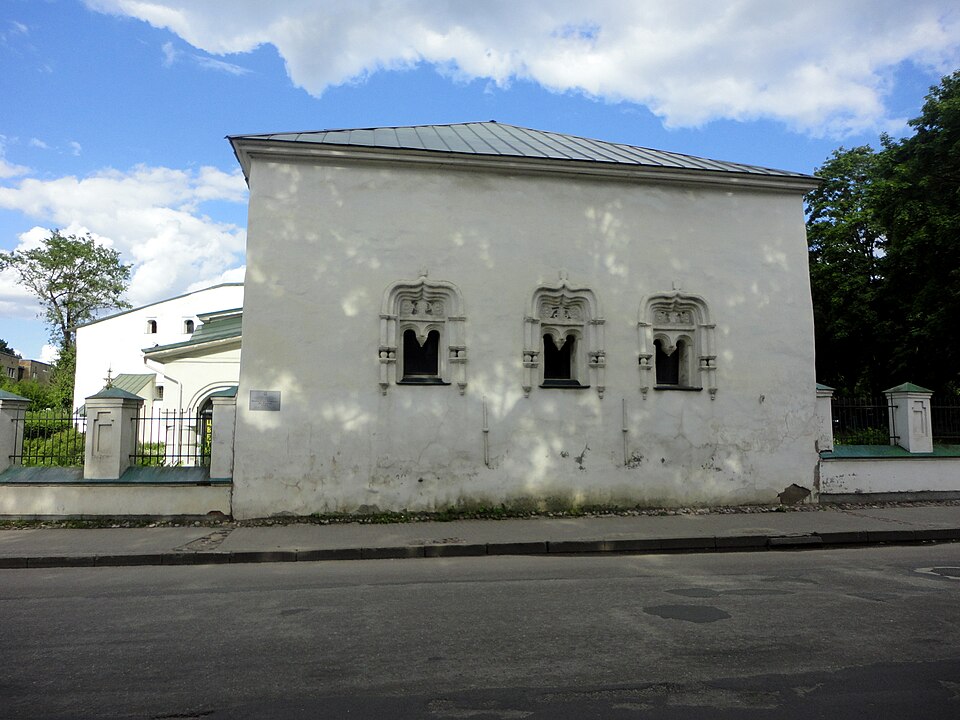
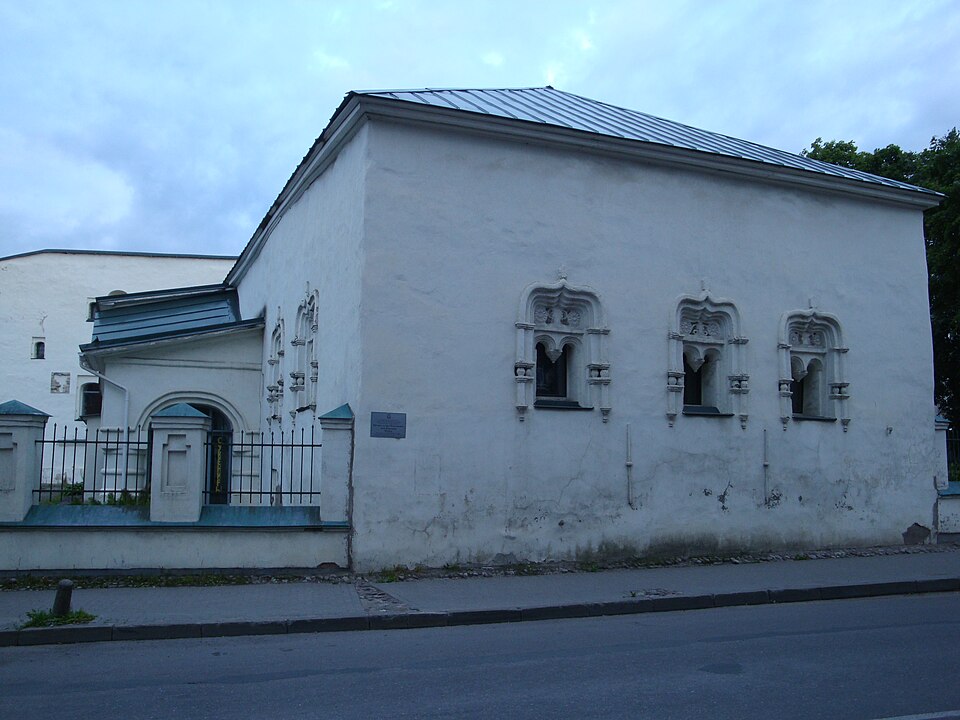
The Menshikov Chambers reveal Pskov's mercantile side. Their central story concerns a family whose standing was expressed through substantial stone buildings. Do not confuse these Pskov merchants with Alexander Menshikov, Peter the Great's famous associate: a similar surname does not establish the same history.
The complex belongs to the seventeenth-century merchant architecture of Romanova Gorka, in the historical Polonishche district. The Russian word palaty denotes substantial chambers or a stone house. Buildings of this kind advertised prosperity and the durability of a trading household.
Study the walls, openings and proportions of the storeys. A merchant property combined storage, business, receiving visitors and family life. Not every room was ceremonial, and a restrained exterior did not imply modest means.
Compare the chambers with ordinary neighbouring houses. Their expression depends on mass and proportion rather than an endless supply of ornament. Stone conveys reliability, a quality with both practical and social meaning in a trading city.
Changes of ownership, alterations and losses have affected the buildings. The visible complex should not be mistaken for an entire estate preserved from one moment in time. Conservation and museum use continue to evolve, so check access to the particular building you intend to visit. Even an exterior stop reveals a vital aspect of Pskov: alongside war and worship, the city depended on commerce, stores, work and families planning for the future.
Learn more
The name Menshikov Chambers covers several related historical structures. Individual buildings may have different addresses and access arrangements. Check the specific building as well as the general complex name when planning a visit. This also prevents architectural details of one house being mistakenly attributed to another.