LISTEN TO THE PLACE
A story worth knowing
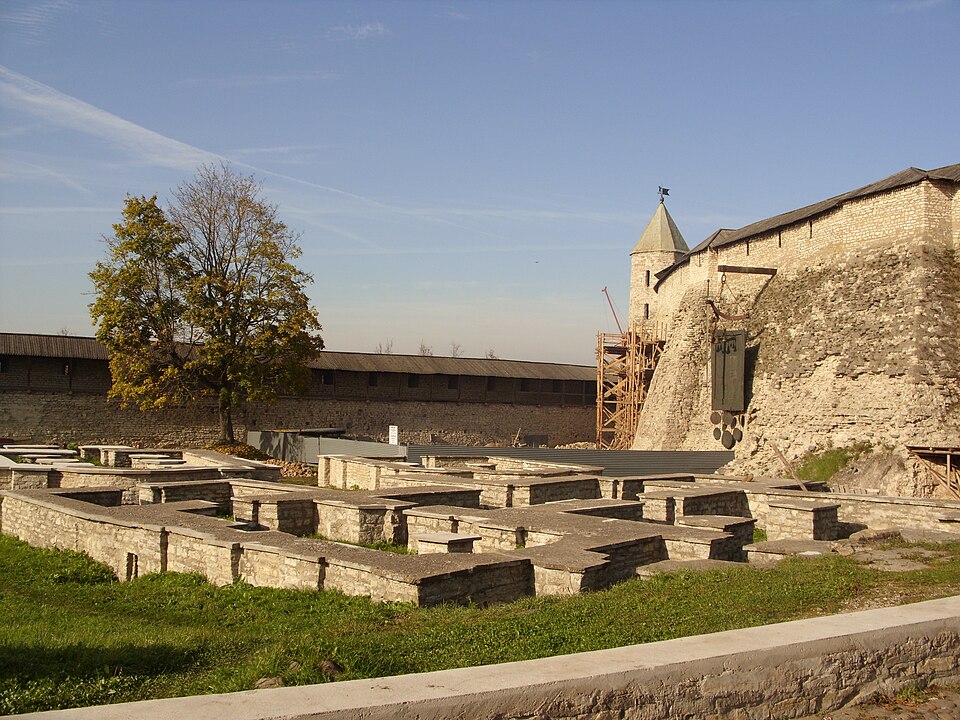
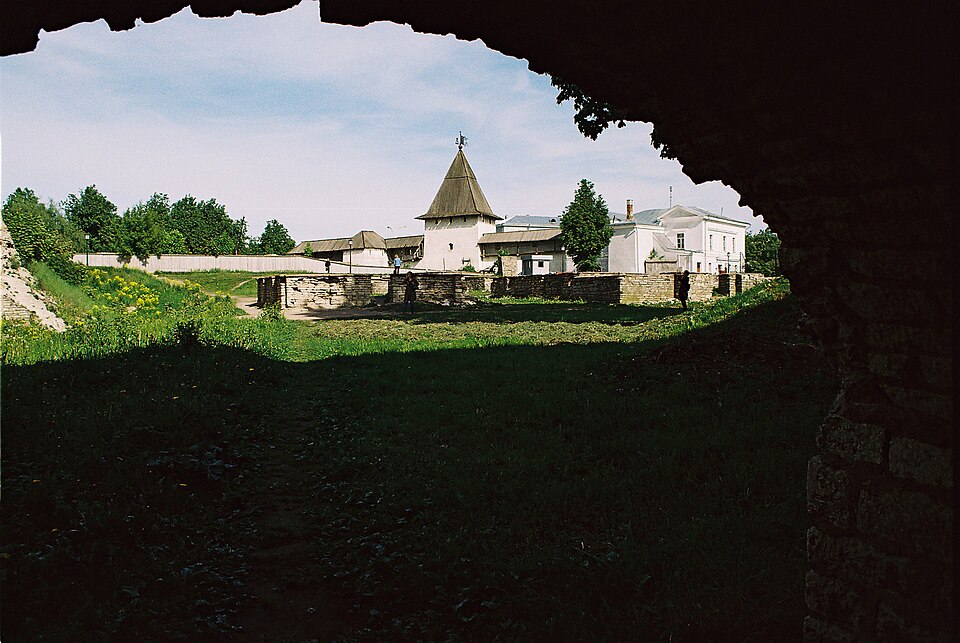
In front of Pskov's Kremlin walls lies a place whose most important evidence is almost underfoot. Dovmont's Town is now recognised by the outlines of ancient foundations. Look down at the stone plans as well as up at the towers.
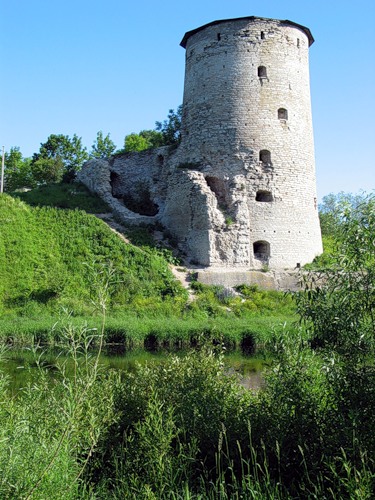
Its name recalls Prince Dovmont, who ruled Pskov in the later thirteenth century. This fortified area strengthened the Kremlin's defences and became an administrative and religious centre. Town here means an enclosed historical precinct, not a separate modern settlement.
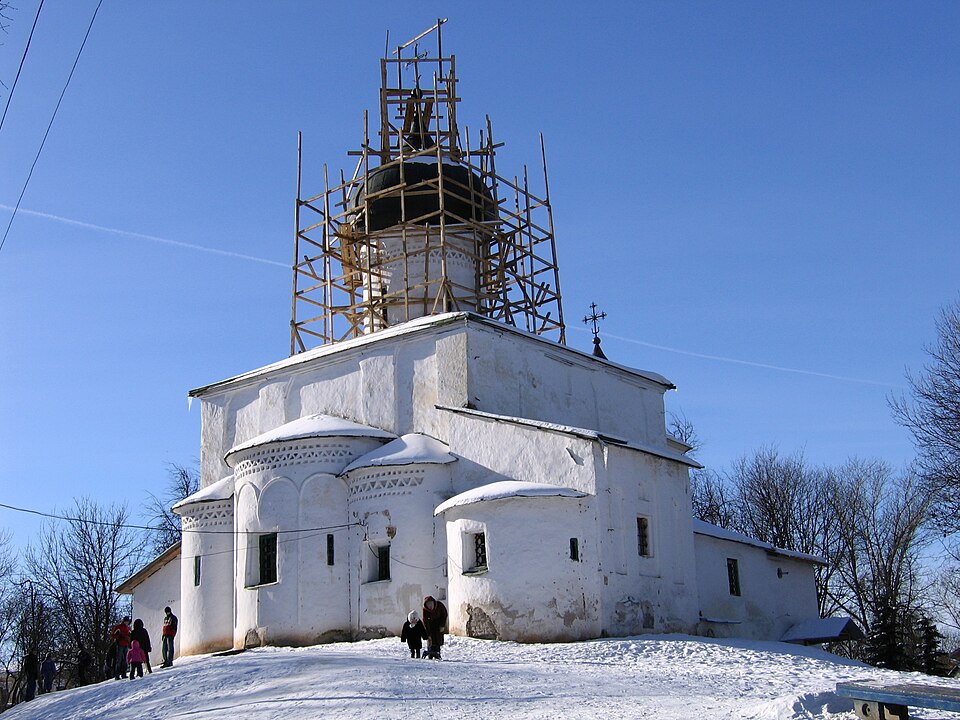
By the fifteenth and sixteenth centuries numerous churches occupied this small space. Their density can seem surprising. Medieval churches represented communities and relationships as well as providing room for worship; their purposes cannot be measured simply by seating capacity.
The area later changed function. During preparations for the Great Northern War, church buildings were adapted to military uses, and parts of the old fabric disappeared. Twentieth-century archaeology made this buried chapter of Pskov readable again.
The exposed foundations are not random piles of stone. They have been studied and conserved. Find the curved sanctuary end of one church plan, then imagine walls and a roof rising around it. A few low lines become a building. Yet avoid imagining every church as identical: each had its own history.
Keep to permitted paths. Surviving masonry needs protection just as much as an object behind museum glass. This place shows how a city's memory can persist in traces, even when complete buildings have vanished.
Learn more
Excavations recovered wall-painting fragments as well as foundations. A fresco fragment removed from its building needs different protection from outdoor masonry. Some finds are therefore preserved in museum collections away from the excavation site. An object absent from the ground where it was discovered is not necessarily lost.