LISTEN TO THE PLACE
A story worth knowing
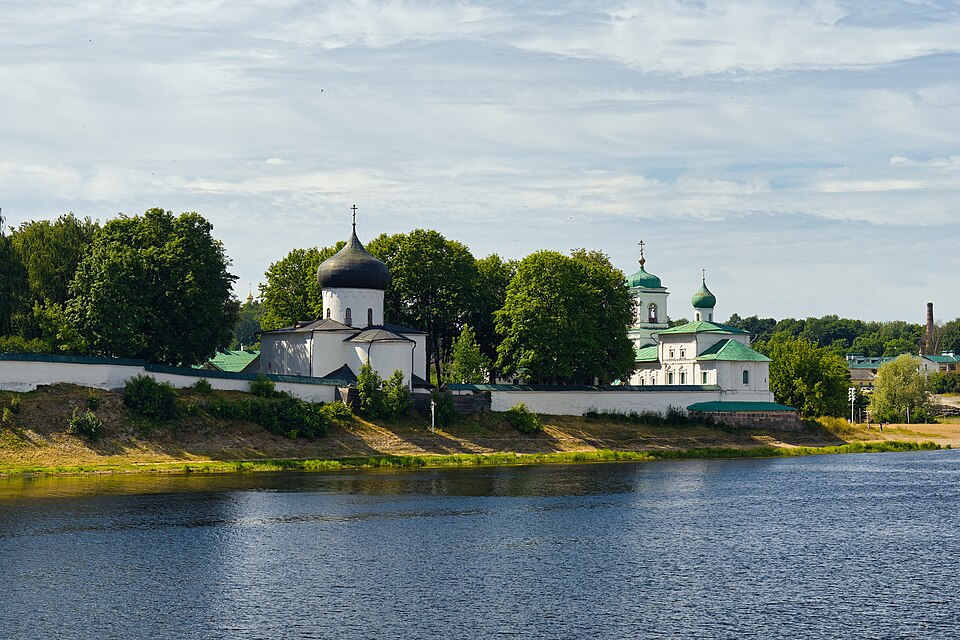
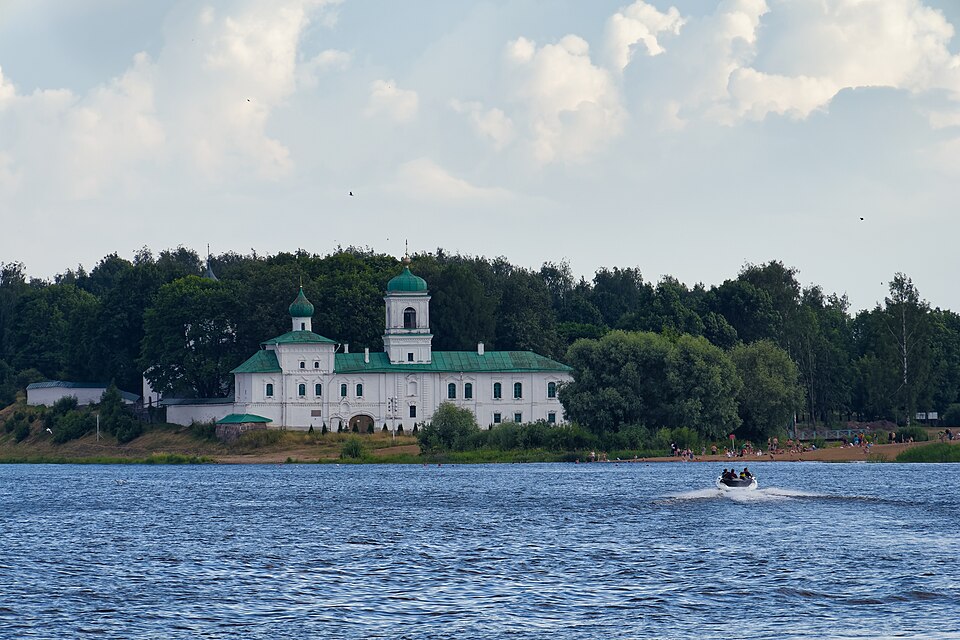
Mirozhsky Monastery stands where the small Mirozha River meets the Velikaya, across the water from Pskov's kremlin. Here, shift your expectations from defensive walls to painting. The restrained exterior of the Transfiguration Cathedral contains one of the most significant surviving ensembles of twelfth-century frescoes.
The monastery's exact foundation date is unknown. Its stone cathedral was commissioned in the second quarter of the twelfth century by Nifont, Archbishop of Novgorod. Architecture and painting bring us into contact with a period earlier than many familiar Pskov churches, before the Mongol invasion.
Greek painters were invited to create the murals, making the connection with Byzantine art particularly tangible. This is not a much later attempt to imitate medieval examples. It is ancient work made for this very space.
The paintings were conceived in relation to the architecture. Scenes occupy walls, vaults and the dome, so they are more than independent pictures collected in a room. Their placement directs attention and relates one part of the interior to another. The Ascension appears in the dome, while other sections unfold events from the Gospels.
The frescoes have not remained visible throughout their history. Darkened paintings were whitewashed and later uncovered and studied again. Their recovery was a lengthy process. Encountering them today depends on generations of conservators as well as the original artists.
The riverside location is beautiful but also challenging. Floods have threatened the cathedral, and high humidity can endanger the paintings. Access therefore depends on conservation conditions and museum arrangements. A closed door on a damp day may be an essential part of caring for the monument.
If entry is available, let your eyes adjust before trying to take in everything. Choose several figures, then see how they relate to the wider composition. Avoid touching the walls: the surface matters as original material, not merely as the carrier of an image.
If the interior cannot be visited today, look at the closeness of the water and the modest scale of the ancient church. Behind its quiet appearance lies nearly nine centuries of survival for exceptionally fragile art. Mirozha makes the contrast especially clear: a stone building may seem enduring, yet a thin layer of painting within it requires constant attention from the people responsible for its care.
Learn more
The spring flood of 2011 showed how practical the protection of art can be. Water rose quickly across the low ground between the Velikaya and Mirozha, threatening the cathedral. Museum staff and emergency workers responded, followed by specialists monitoring the walls and interior conditions.
Danger does not disappear as soon as floodwater recedes. Building materials can retain moisture for a long time, allowing it to travel through masonry. Drying an ancient church is therefore not simply a matter of making it warmer. Abrupt changes can create further problems; conditions need careful control.
The museum's record describes ordinary-sounding work: cleaning, removing damp materials, observation and specialist intervention. Yet such actions make the survival of the paintings possible. Alongside the original artists, remember the people who watch over the building during rain, floods and unremarkable working days.