LISTEN TO THE PLACE
A story worth knowing
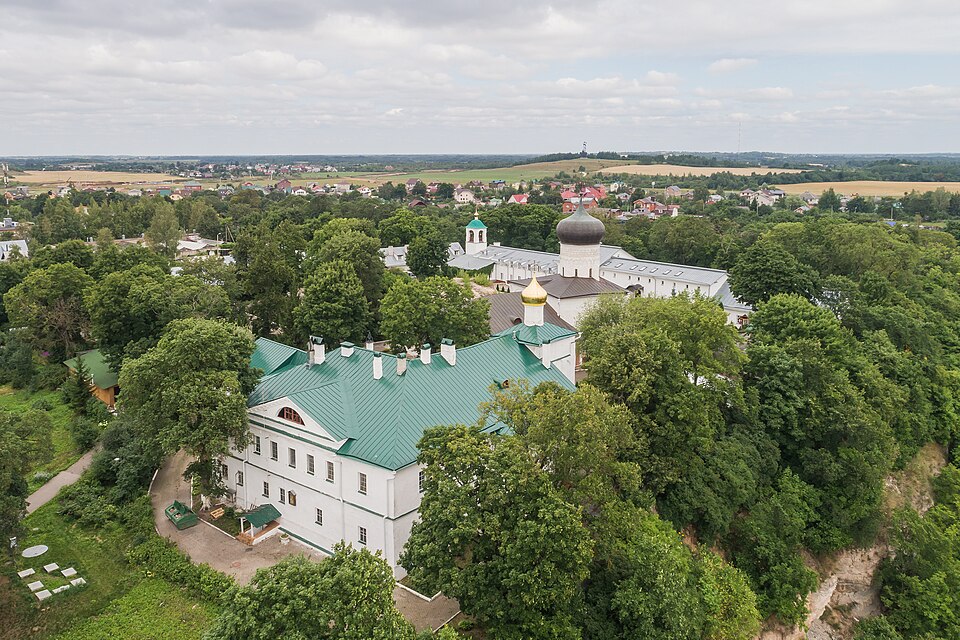
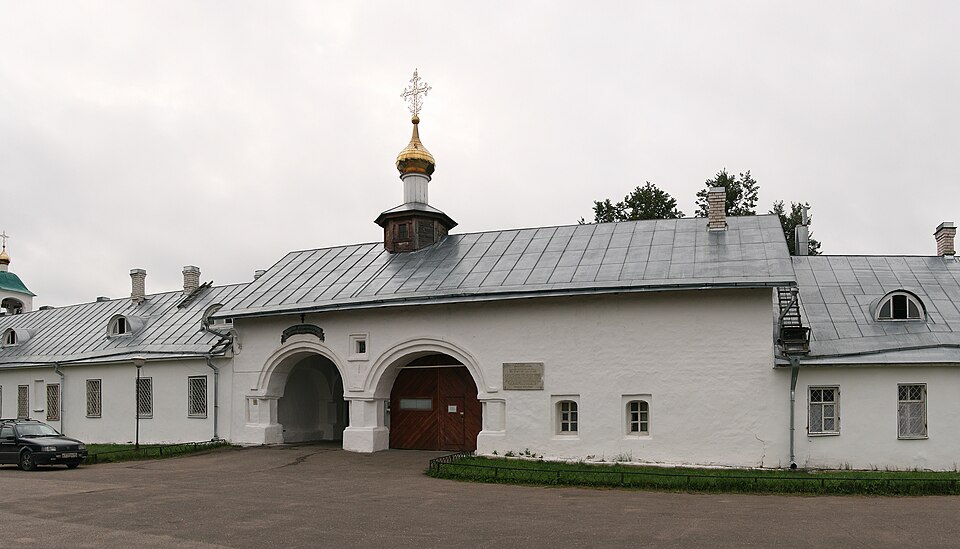
Snetogorsky Monastery stands on a high bank of the Velikaya River, away from Pskov's Kremlin. Plan it as a separate excursion or a substantial walk rather than the next short stop in the centre. Its position above the river bend matters as much as its buildings.
The exact foundation date is unknown. The first chronicle reference concerns an attack in 1299, when the monastery already existed. Traditions about its founders should be understood as traditions, not substitutes for a documented foundation date.
The principal artistic treasure is associated with the Cathedral of the Nativity of the Virgin and its medieval wall paintings. Early-fourteenth-century murals hold an important place in the history of Pskov art. They have not survived as an untouched interior: time, damage and alterations have left their marks.
Even when access to the old cathedral is restricted, the setting explains much. The high bank made the monastery a prominent river landmark. It participated in economic as well as spiritual life, maintaining connections with Pskov and its trading world.
Today it is an active convent, although historically it was a male monastery. Respect visiting and photography rules, and ask specifically about access to the frescoes: conservation arrangements may differ from general access to the grounds.
Look at the relationship between buildings and river. History here becomes more than dates. The high ground, working connections and desire for retreat together shaped monastic life over centuries.
Learn more
Ancient wall paintings need a stable environment. Permission to enter the monastery does not automatically provide access to every cathedral interior. Enquire specifically about viewing the frescoes. If they are unavailable, museum photographs can extend the visit, provided copies are clearly distinguished from surviving medieval surfaces.