LISTEN TO THE PLACE
A story worth knowing
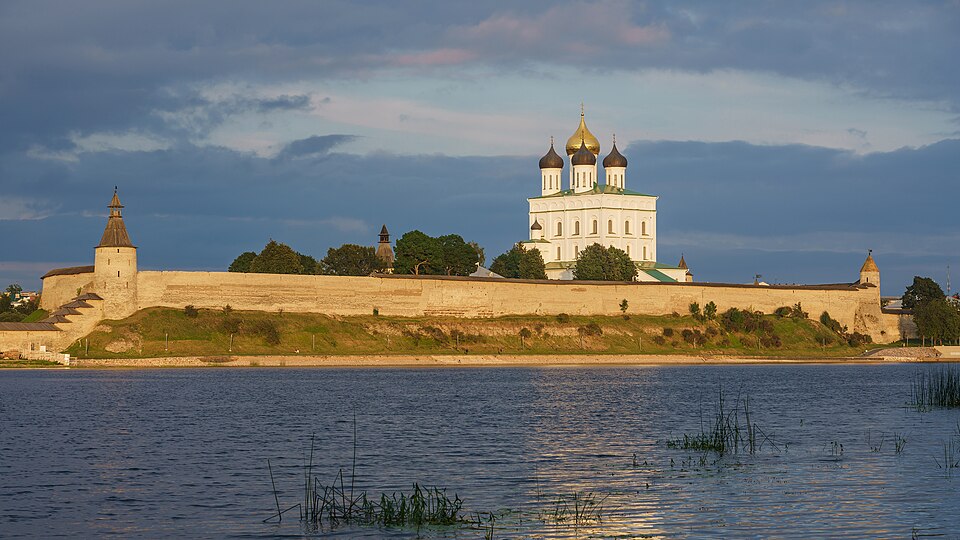
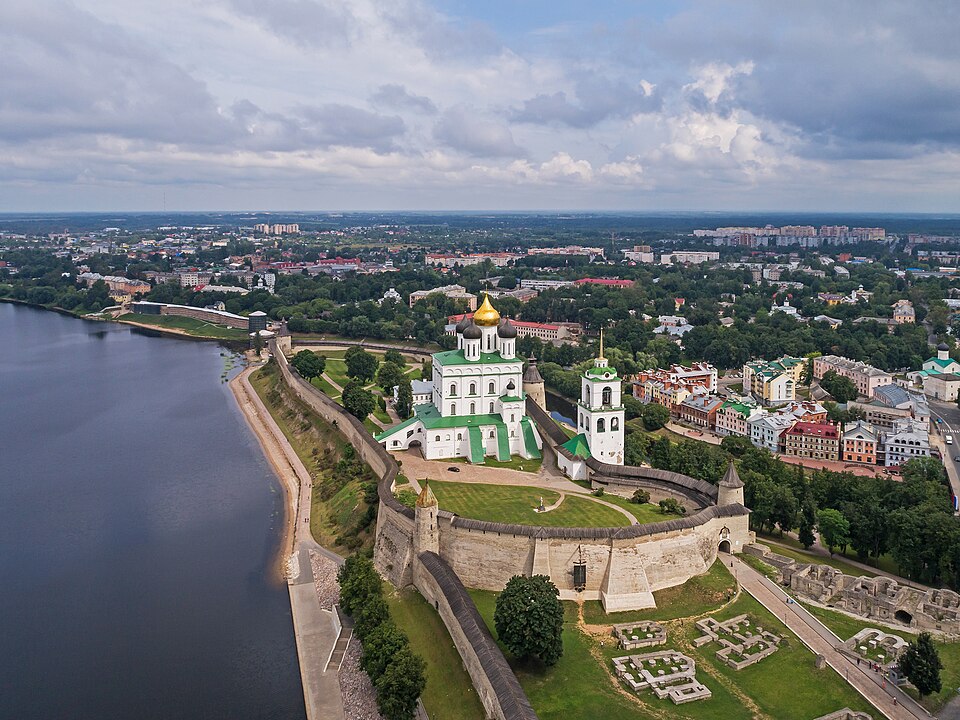
Trinity Cathedral gives the Pskov kremlin its dominant vertical line. The fortress walls follow the rivers, while the church rises above them and holds the panorama together. Even when restoration scaffolding covers part of it, its position remains clear: this is the principal landmark within the fortified heart of the city.
The present cathedral is not as old as the earliest Pskov. It was built in the late seventeenth century on the site of earlier churches. We need to distinguish the age of a sacred place from that of the building currently occupying it. The city's association with the Trinity reaches much further back than these walls.
Stories about medieval princes and events should therefore not automatically be imagined within today's interior. They concern earlier churches and the history of the site. A familiar name can continue for centuries even when the structure carrying it changes.
The existing cathedral is deliberately tall and monumental. Five domes crown a substantial volume above lower spaces. Compared with many smaller Pskov churches, it expresses a particularly strong ambition to form a civic centre. Compare the entrance, walls and upper silhouette: your eye moves from the scale of a person at the doorway to a building visible from far away.
Inside, the tall carved iconostasis is a major feature. Several tiers combine individual icons into a larger composition. Rather than trying to identify every image immediately, follow the arrangement as a whole. Lower icons relate closely to the standing viewer, while the upper levels draw attention higher, with gilded carving connecting the parts.
Such a monument requires continuing care. Conservation involves masonry, moisture, timber and paint, as well as outward appearance. If some areas are inaccessible during your visit, that is also a reminder of the building's real age. Its survival depends on people's work, rather than strength alone.
Older images of Pskov preserve evidence of the previous cathedral. The museum icon known as the Vision of Elder Dorofey includes its predecessor. This is neither a photograph nor an exact architectural drawing, but it is an important witness to civic memory.
Afterwards, look back towards the cathedral from the river. Its recognisable outline now contains a longer sequence of earlier churches, architectural change, worship, art and preservation. It makes sense as a place the city returned to across centuries, rather than a monument belonging to one fixed date.
Learn more
A legend associates the choice of this site with Princess Olga. She is said to have seen three bright rays above the headland where the Pskova and Velikaya meet, interpreting them as a sign to build a church dedicated to the Holy Trinity.
This is a tradition, not a securely documented eyewitness account or evidence for the age of today's walls. Its importance lies in how it connects the city's religious centre with a revered figure and a striking geographical setting.
Memories of Olga appear in names, monuments and stories across the Pskov region. Here, notice how expressive the headland between two rivers is in its own right. The legend adds an image of light to that visible landscape, helping explain why generations regarded this particular place as specially chosen.