LISTEN TO THE PLACE
A story worth knowing
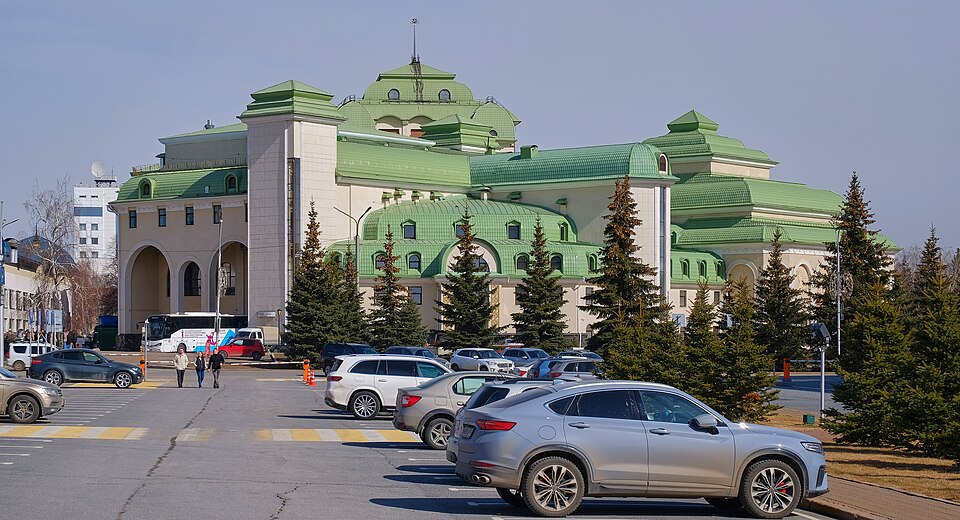
This theater did not begin in Ufa. The Bashkir State Academic Drama Theater named after Majit Gafuri was founded in December 1919 in Sterlitamak. That detail matters: its story starts not with a building, but with a company — a troupe formed in motion, before it settled into the city we see around us now.
In 1922, the company was transferred to Ufa, where it merged with a local troupe. That move helps explain the theater’s character. Its history is not built around a single ceremonial date, but around a joining of forces, stage languages, audiences, and literary traditions. Standing here today, it is easy to read the address as something fixed and permanent. In fact, the beginning was more restless: a young republic, a relocation, a new structure, and the search for its own audience.
By 1935, the theater had received academic status. In the Soviet cultural system, that title meant more than prestige on a signboard; it marked the company as a serious artistic institution. Another key date is 1971, when the theater was named after Majit Gafuri. With that, the link between the stage and literature became part of the official identity of the place — not abstract literature, but writing rooted in the cultural landscape of Bashkortostan.
The theater’s own history also describes its repertoire through four main directions: national classics, Russian plays, world drama, and contemporary domestic writing. That may be the clearest way to understand the institution without leaning on slogans. It does not lock itself into one canon, and it does not pretend tradition exists separately from the present.
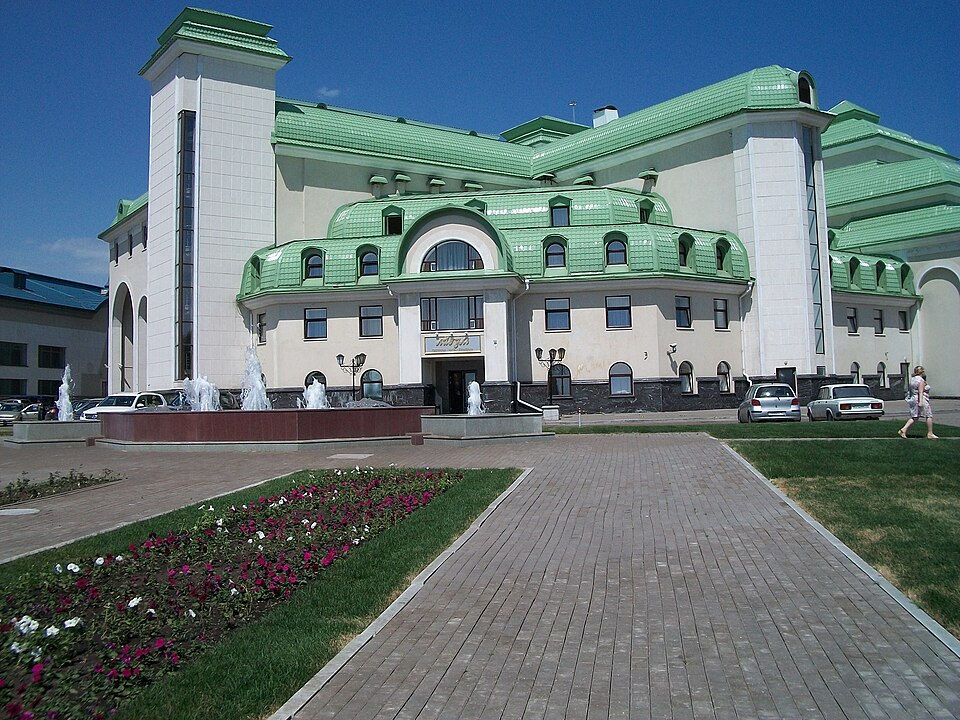
There is another detail worth noticing on a city walk: this theater does not live only for evening performances. According to profile sources, the company tours across the republic, throughout Russia, and abroad. So what stands before us is not only an address on Zaki Validi Street, but a point of departure.
If you have time to step inside, notice more than the current playbill. The most interesting thing about a theater with this kind of age is the coexistence of several layers of time at once: the founding in 1919, the move in 1922, the academic title of 1935, the name added in 1971, and the present-day stage, which still has to prove itself to the city every night.
Learn more
This theater has a quieter second layer: its museum exhibition on the fourth floor. Most visitors come for the performance itself, but upstairs the focus shifts. Instead of applause and stage light, you get photographs, posters, documents, and costumes — the working material from which a theater’s public memory is made.
It is a useful counterpoint to the main story. Onstage, you see the finished result; in the museum, you see traces of process: who performed here, how different eras left their mark, which titles stayed in the repertoire, and which belonged to their own moment and then faded. For anyone exploring the city through places rather than monuments alone, that upper floor can say as much as the entrance outside.
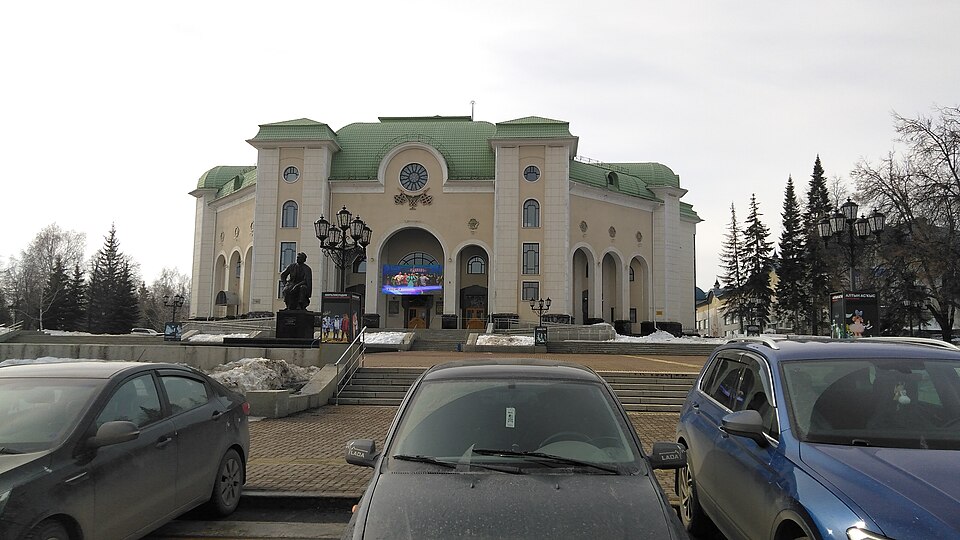
There is also the framing effect of Majit Gafuri’s name and the monument placed before the building. Together they set up a simple contrast: outside, a sign of remembrance; inside, an active stage. If the main story of the theater is carried by the dates 1919, 1922, 1935, and 1971, the extra story begins with a smaller observation — here, history is not sealed off in an archive but folded into an ordinary visitor’s route. Check museum visiting arrangements with the theatre; the walking route does not include admission.