LISTEN TO THE PLACE
A story worth knowing
At 38 Sverdlova Street stands the Bashkir Choreographic College named after Rudolf Nureyev. On a city walk, the famous name may attract your attention first. But the purpose of the place deserves a pause too: this is a school where stage art becomes daily work.
The decision to establish the college dates from the end of 1985, and the institution traces its history to 1986. Those dates concern the college, not the beginning of Nureyev’s dancing career. His name connects the school with his legacy; it does not mean he studied at an institution founded at that time. This is a useful distinction between a person’s biography and the history of an organisation named in their honour.
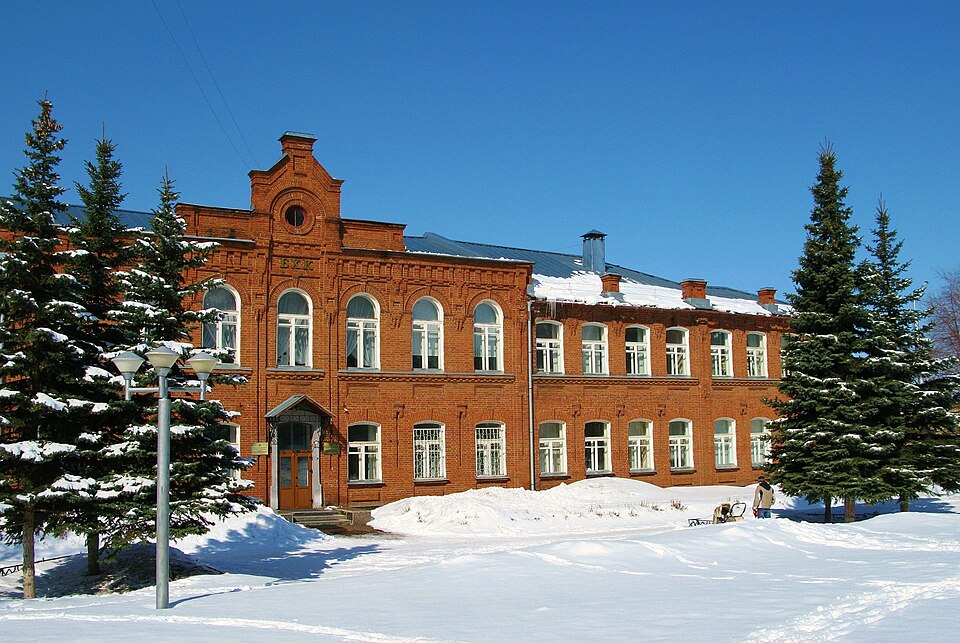
Part of the complex occupies an older two-storey red-brick building protected as a regional heritage site. Teaching facilities and a boarding section belong to the same working complex. Their relationship shows how historic architecture can remain involved in everyday life rather than becoming only an object to admire from outside.
Think about the difference between a performance and a lesson. An audience usually encounters a finished movement that appears effortless. A school suggests repetition, attention to the body and work that happens beyond the stage. This is not a description of a particular lesson behind today’s windows, but a way to reconsider what a dance school represents.
The college has ballet studios and a teaching theatre. They offer different conditions: a place to examine movement in parts, and a place to bring it together for an audience. Because these are active teaching premises, our stop remains outside and does not assume unrestricted admission.
Look at the older and newer parts as neighbours. They may differ in material and scale while contributing to the same task. That is what makes this address worth noticing: the city’s memory remains connected to ongoing education. Ordinary pedestrians pass the school, while inside, future performers develop the experience that audiences will later encounter on stage.
Learn more
At this stop, look beyond the famous name to the combination of spaces. Teaching rooms, boarding accommodation and a theatre support different aspects of one profession. Their proximity reminds us that training a performer involves more than appearing onstage.
An older building gains a practical continuation within that complex. Its role is not only to retain an appearance, but to participate in the school’s work. Past and present meet through lessons and everyday movement between rooms.
For someone observing from the street, this is a useful distinction: a historic address is not necessarily a museum, and a famous name does not always identify the place where that person studied. Sometimes the sign names a cultural reference point, while the building serves people whose own careers are just beginning.