LISTEN TO THE PLACE
A story worth knowing
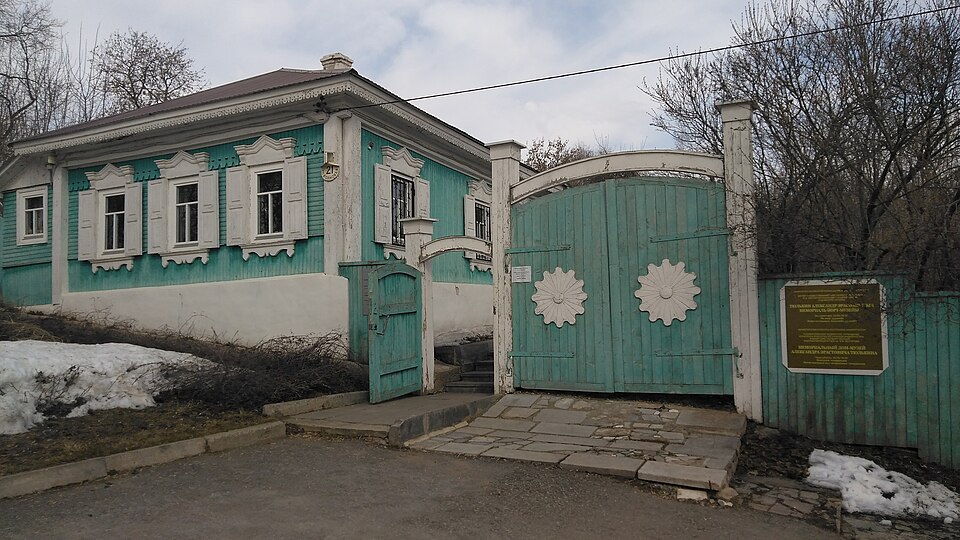
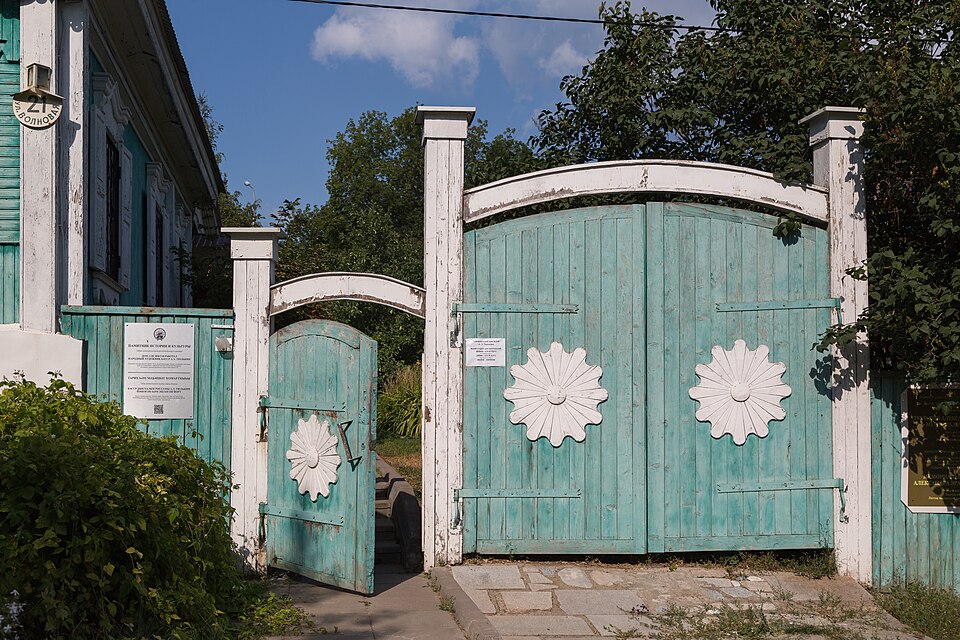
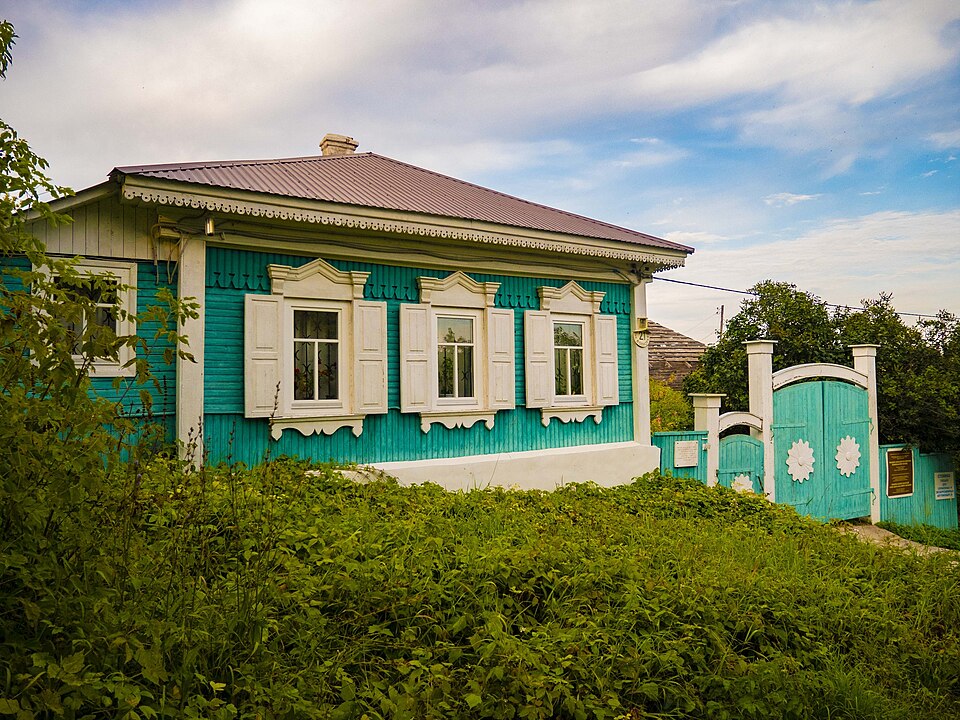
On Volnovaya Street, away from Ufa’s busier routes, this house matters less for its size than for the life once concentrated inside it. This is the memorial house museum of Alexander Erastovich Tyulkin. The building dates from 1920: a one-story wooden house later recognized as a monument of history and culture. Places like this are valuable not because they are grand, but because they preserve the everyday memory of a city — work, conversation, routines, long evenings, and the spaces where ideas were tested before they ever became public history.
Tyulkin lived and worked here from 1922 until the end of his life. That point matters. What stands before us is not simply an artist’s registered address, but a place where domestic life and artistic work existed side by side. The house is described in the sources as a meeting place for Ufa’s creative intelligentsia. Artists, writers, poets, musicians, actors, and teachers came here. If you try to imagine the city not through official milestones but through atmosphere, it may have sounded something like this: a discussion over a new painting, a disagreement about form or subject, someone pausing by the piano, and a conversation drifting from private matters to larger questions about art, education, and the city itself.
The museum took shape after the artist’s death. It was founded on January 10, 1989, on the initiative of Tyulkin’s widow, A. N. Mikhailova. For a memorial house, that is the decisive moment: not merely preserving a structure, but preserving a way of remembering. The museum opened to visitors on May 18, 1994. That gap between foundation and opening is telling too. Such places are assembled carefully, almost like a family archive, where every object and every photograph carries part of the story.
The exhibition is said to include Tyulkin’s paintings, furniture, a grand piano, decorative and applied art objects, and photographic materials. In other words, the story here is built not only around artworks, but around the environment in which they existed. That may be the real force of this address on Volnovaya Street: it lets you see the artist not as a name under a canvas, but as a person with a home, a circle, and a daily rhythm. This is not a museum of ceremonial distance. It is a house where art was once part of an ordinary day.
Learn more
It helps to think of this place first as a working home, and only then as a museum. What makes the Tyulkin house compelling is not spectacle, but scale: the sense that art here was made in the middle of everyday life. According to the sources, Alexander Tyulkin lived and worked in this house from 1922 until the end of his life, and the space was later turned into a memorial museum.
The list of objects is revealing in itself: paintings, furniture, a grand piano, decorative and applied art pieces, photographs. Together they suggest not a staged interior, but an attempt to show the conditions around artistic work — the room, the objects at hand, the people who entered and stayed to talk. The sources also describe the house as a gathering place for Ufa’s creative community.
There is another layer here. The museum was founded in 1989 on the initiative of Tyulkin’s widow, A. N. Mikhailova. That means this is not only a story about an artist, but also about how private memory becomes part of a city’s public memory. Even for listeners who usually avoid memorial houses, this one is easier to read on a human scale: less monument, more lived-in evidence.