LISTEN TO THE PLACE
A story worth knowing
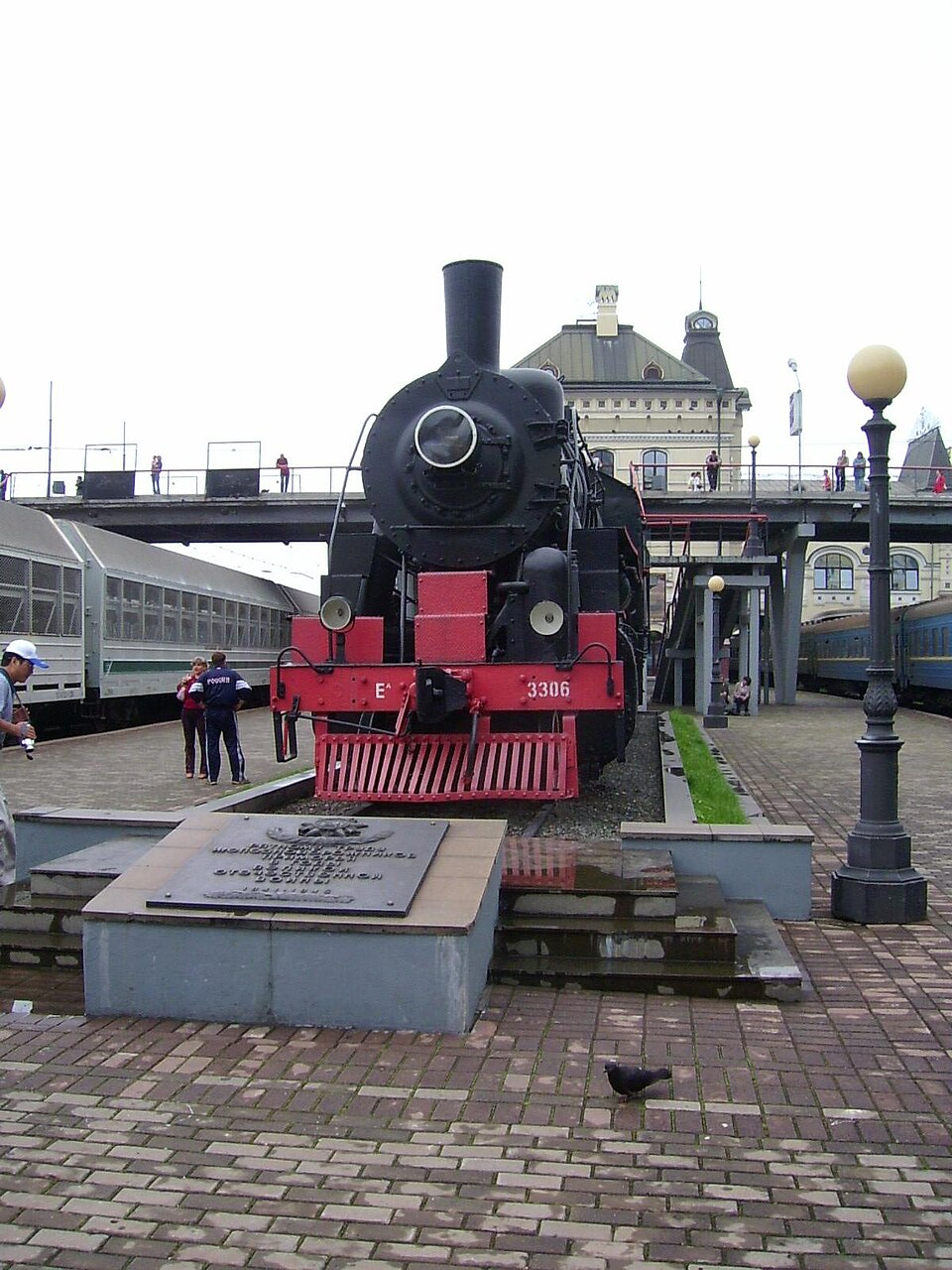
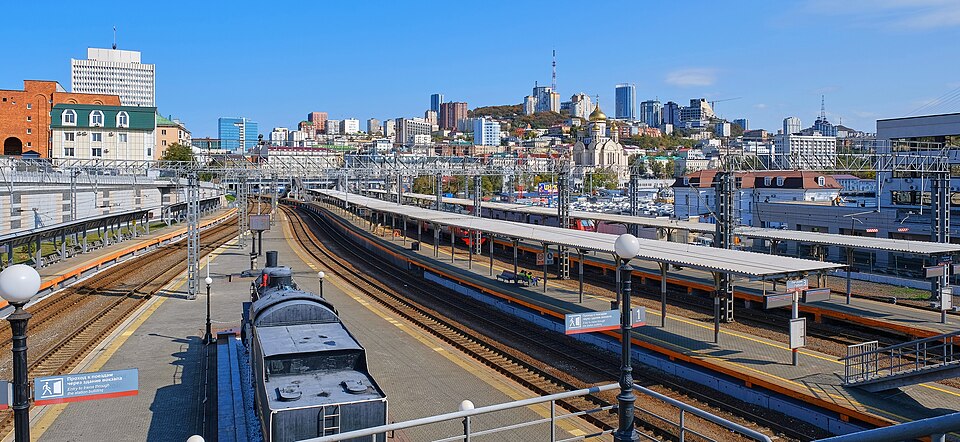
Two great routes meet here: the railway arriving across a continent and the sea routes opening from the port. Vladivostok’s station feels particularly strongly like a place of transition. Tracks and long-distance journeys lie on one side; a city beside Pacific waters lies on the other. Even if you arrived by air, imagine reaching this point after several days on a train.
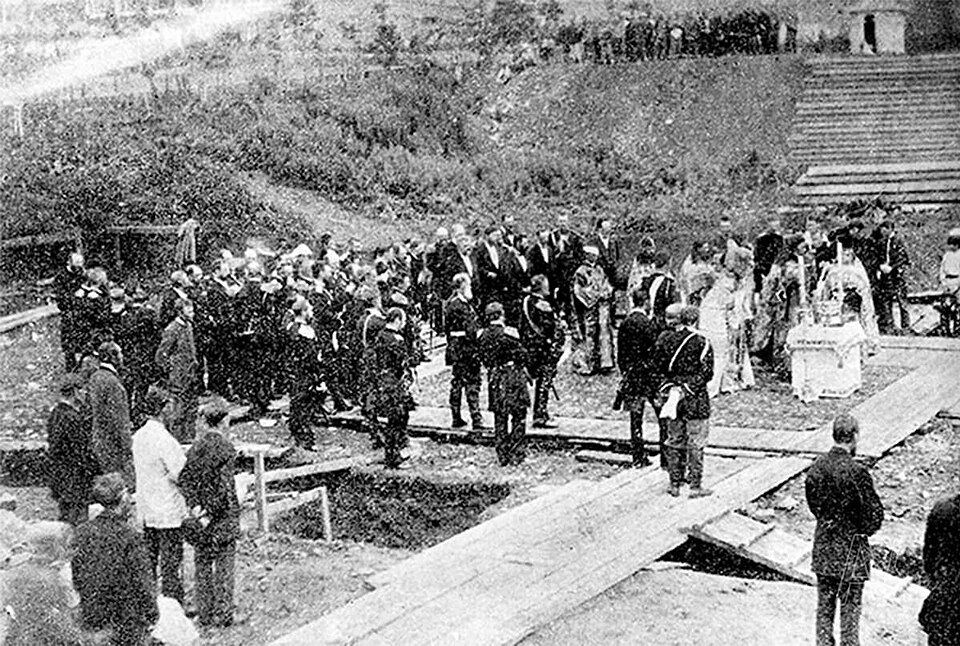
Construction of the first station began in 1891 as the railway developed in the southern Russian Far East. That original building was more modest than the one before you. By 1912 it had been enlarged and given a distinctive Russian-style appearance. What looks like a unified historic palace developed through the adaptation of an earlier structure to growing transport needs.
Its architecture deliberately looks towards the other side of the country. The remodelled building echoed the character of Moscow’s Yaroslavsky Station. Think of the railway journey as a long sentence, with related architectural punctuation at each end. For someone crossing such a vast territory, that resemblance could express a connection between distant cities without requiring a map.
Study the roofline and the smaller decorative features. They give the station a celebratory appearance, but behind them is a practical transport system of entrances, halls, passages and platforms. This is a different kind of visit from exploring a museum palace. People may be hurrying for trains, so choose a position outside the main flow before pausing to look.
A commemorative marker associated with the Trans-Siberian Railway bears the number 9288. It is widely recognised as a symbol of the distance between Moscow and Vladivostok. Treat it as a way of imagining geographical scale, rather than the measured length of every present-day service. Railway routes and conventions for counting distance can vary; the marker turns an immense journey into a memorable number.
The nearby sea adds another meaning. The railway does not simply stop at an empty edge of the map. It reaches a port, where other connections begin. For some travellers this station marked the completion of a long journey. For others, it was one stage in a journey that continued elsewhere.
Replace the familiar phrase “end of the Trans-Siberian” with “beginning” for a moment. The view remains the same, but your sense of the place changes. Heading west, a journey across the country starts here. This station can represent arrival, departure and the meeting of land and sea at once.
Learn more
Rail travel offers a particular way of experiencing distance. From an aircraft, much of the space between cities remains hidden beneath clouds. From a train, changes in vegetation, light and settlement unfold gradually. That sequence can make arrival at a terminus feel especially significant.
Your visit may last only a few minutes, but consider that slower timescale. For every passenger with luggage, the station occupies a different point in a personal story: departure, return or reunion. We do not know the details, and there is no need to invent them.
Simply notice how several kinds of time meet here. To a visitor, the station is an architectural landmark. To someone catching a train, it may be the last few important minutes before departure. The best place to appreciate the building is one where your interest leaves everyone else free to use it.