LISTEN TO THE PLACE
A story worth knowing
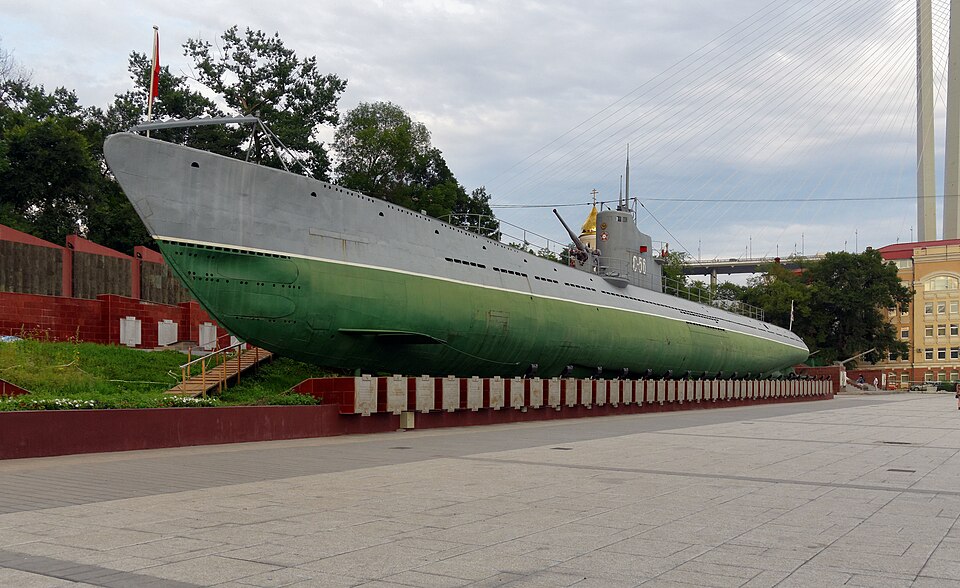
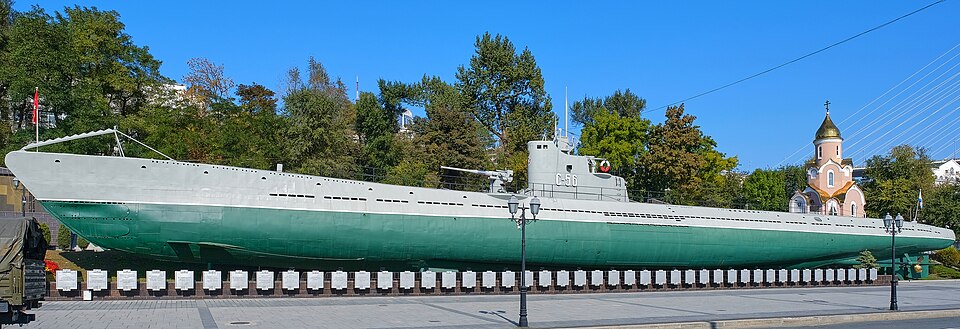
A submarine on land offers a view that the sea normally conceals. Its long hull becomes a complete structure rather than a narrow shape above the waterline. The more powerful comparison, however, is between that exterior size and the space available to the people inside.
Construction of S-56 began in Leningrad in 1936, after which sections were transported by railway to the Russian Far East. Assembly continued in Vladivostok, and the boat joined the Pacific Fleet in 1941. Even before a major ocean voyage, its history connected opposite ends of the country. Building a submarine was already the work of more than one city.
In 1942 and 1943, under Grigory Shchedrin, S-56 transferred to the Northern Fleet. The route crossed the Pacific, passed through the Panama Canal and continued across the Atlantic towards Polyarny. Trace that line mentally around a globe. To move from one Soviet port to another, the crew travelled around a substantial part of the world. A Vladivostok submarine entered the war in very different waters.
Combat patrols form an important part of its biography, but the museum also reveals what operational summaries can leave out: instruments, narrow passages, working positions and the close relationship between machinery and people. Space aboard a submarine cannot simply be enlarged or left whenever someone wishes. Professional cooperation had to coexist with the demands of living together for long periods.
The boat became a memorial museum here in 1975. Some compartments contain historical displays, while others show the vessel's working environment. Notice that distinction. You encounter both a real ship and a curated account of its past. The displays explain events; the physical arrangement helps communicate what those events required from the people involved.
If you go inside, compare expectation with experience. From outside, the hull can seem roomy. Within it, every movement must account for equipment and other visitors. Then replace a short museum visit in your imagination with weeks of service. That comparison matters as much as a list of patrols or decorations. S-56 remembers a particular crew while showing the precise collective effort needed to turn a complex machine into a habitable vessel. Stationary on the embankment, it still tells a story of enormous distances travelled within very confined space.
Learn more
The Panama Canal is an unexpected stop in the biography of a submarine built for the Pacific and sent to fight in northern waters. Looking at a map of Russia, it is tempting to draw a much shorter line between Vladivostok and Polyarny. The actual wartime voyage followed a very different course.
Apparent proximity on a flat map does not make a sea passage straightforward. Bases, seasons, sailing conditions and military circumstances all matter. The boat's story shows that a route is determined by more than distance alone.
After your visit, look at the hull again and place it mentally in different settings: a Pacific port, a tropical canal and a northern harbour. These belong to one biography, not three separate vessels. For the crew, they were stages of service rather than sightseeing. Knowing the route restores a sense of movement to an object now standing still.