LISTEN TO THE PLACE
A story worth knowing
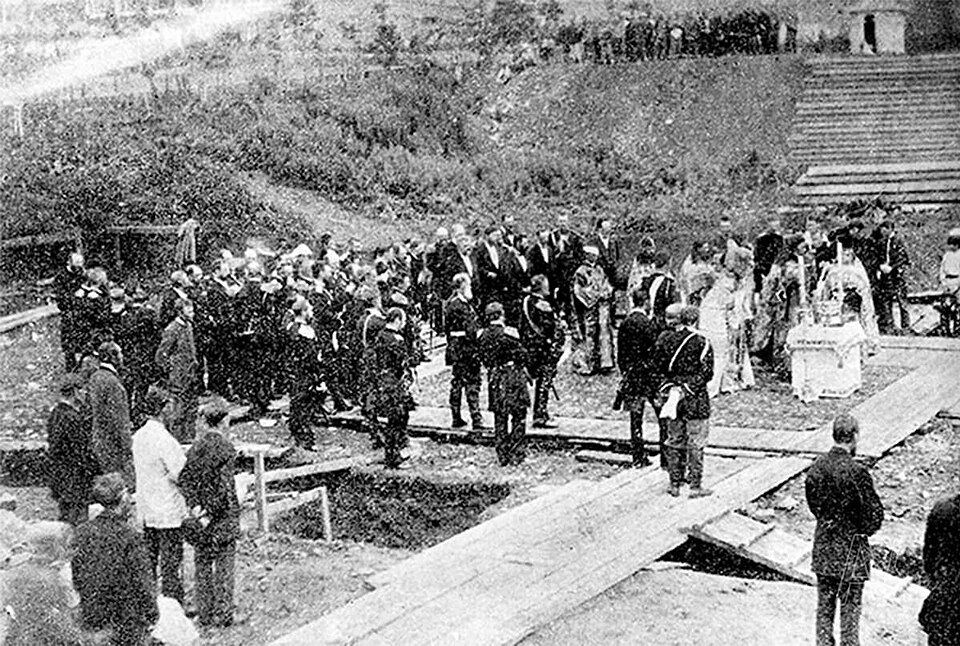
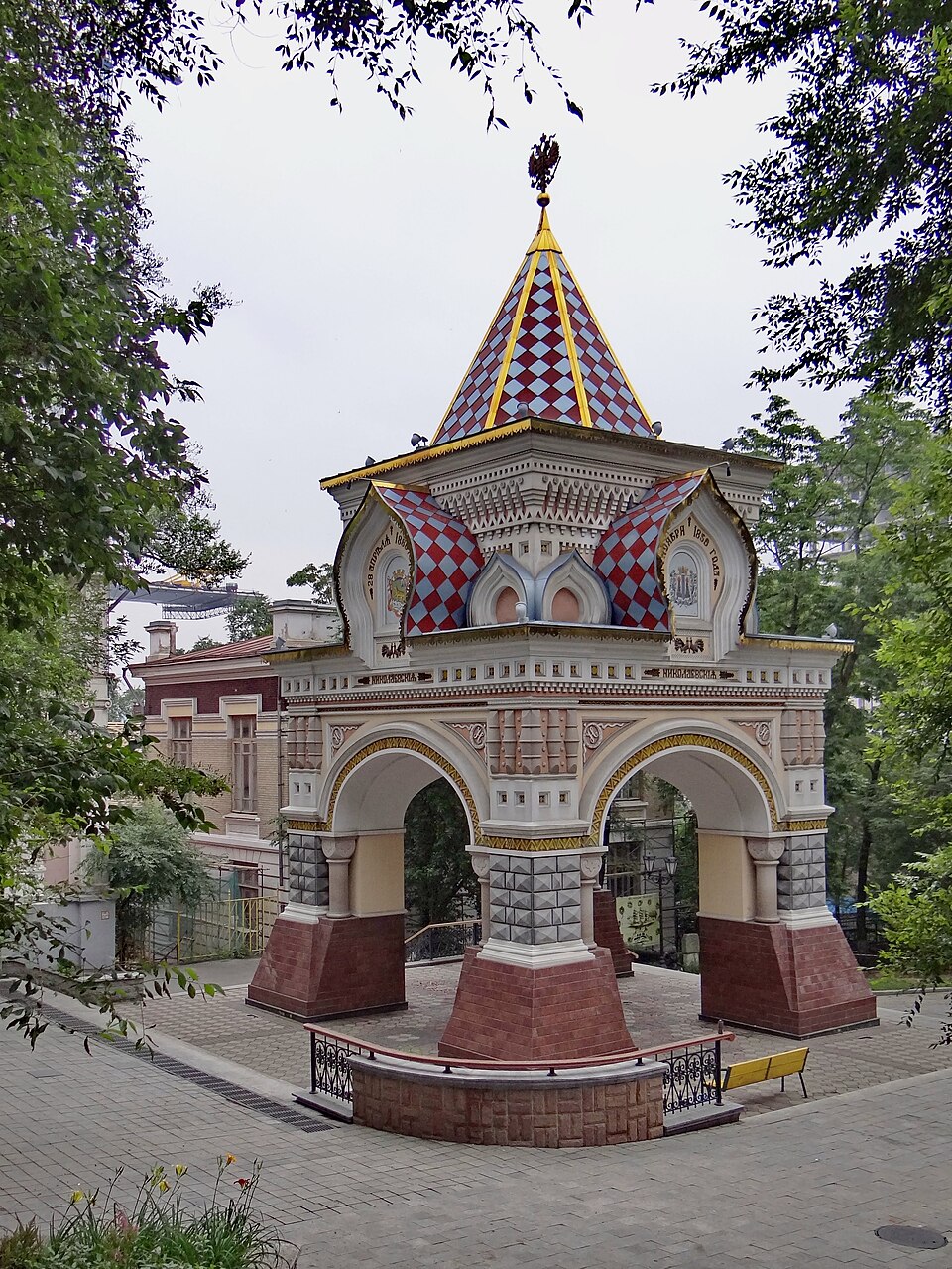
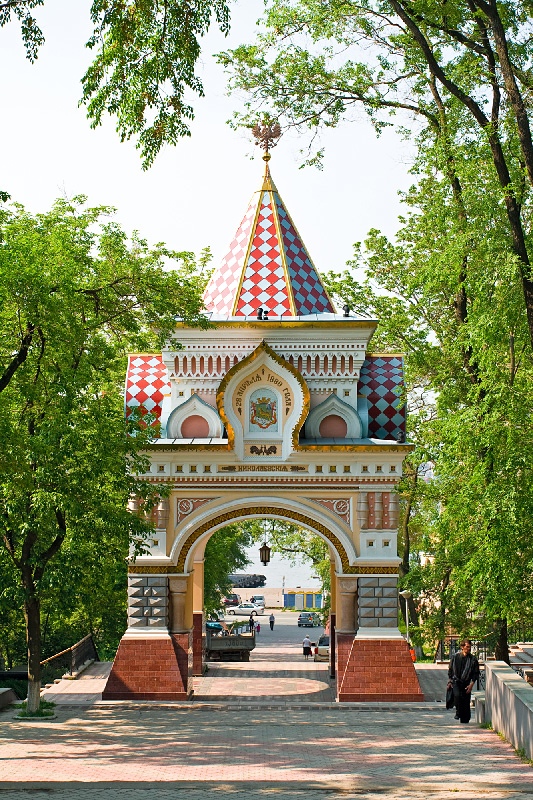
This colourful arch looks like a setting for a ceremonial arrival. That was exactly the purpose of its predecessor, built when Vladivostok prepared to welcome the heir to the throne, Nicholas Alexandrovich, in 1891.
The future Nicholas the Second was visiting the Far East during a much longer journey, in connection with the beginning of the Trans-Siberian Railway. For the young port, his arrival brought imperial attention. Architecture gave the occasion a visible, memorable form.
The structure in front of you, however, was not built in the nineteenth century. The original arch was demolished in 1930; the present version was recreated in 2003 using historical material. It is therefore a restored commemorative image rather than uninterrupted surviving fabric. Its significance includes both the royal visit and the modern city's decision to recover a lost part of its appearance.
Examine the openings, coloured details and upper silhouette. The arch can be viewed from several directions and creates a small space within itself. Passing through it turns an ordinary movement into something almost ceremonial.
It was never a defensive gateway. It did not close a fortress wall and was not designed to withstand attack. Its purpose was to mark an event and give that event a lasting presence in the city.
Compare the age of the story with the age of the materials. The visit of 1891, the Soviet-era loss and the reconstruction at the beginning of a new century all meet here. Those three periods explain the monument better than a single date could.
Learn more
A triumphal arch does not always commemorate a military victory. In imperial Russian towns, arches could also mark visits by rulers and heirs, and some were temporary. The word triumphal therefore does not imply that a battle took place nearby. Here the theme is a ceremonial welcome and the way a city presented itself to an important visitor.