LISTEN TO THE PLACE
A story worth knowing
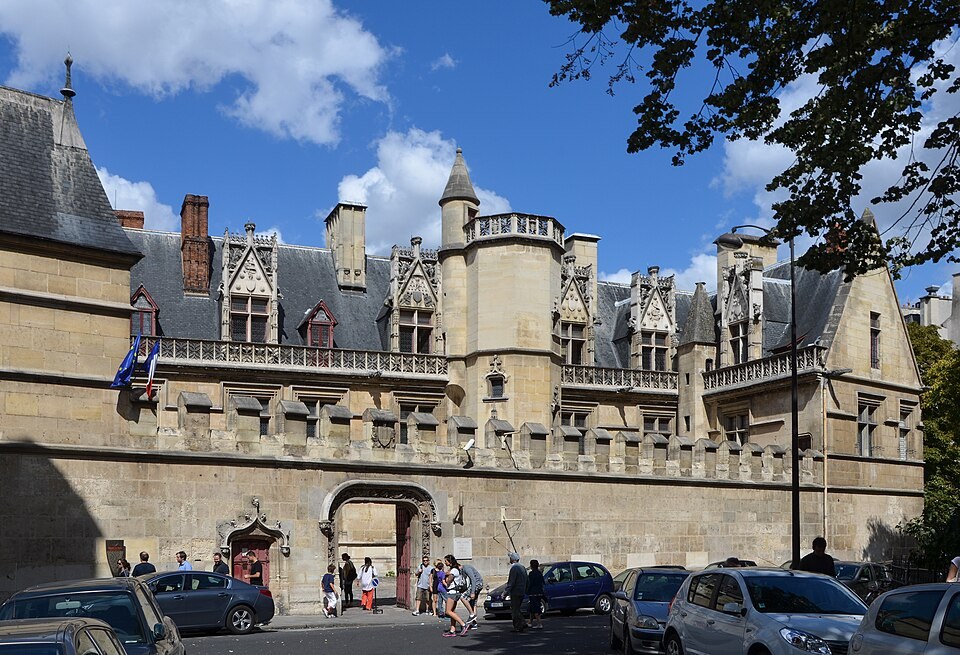
The Musée de Cluny allows several periods of Paris to appear together. A medieval mansion stands beside the remains of Roman baths. This is not an invented setting designed to look like an “old town”, but a genuine overlap of different ages on one site.
In antiquity, a bathing complex stood here. Roman baths were more than facilities for washing: they formed part of the city’s public life. The surviving spaces reveal the scale of construction in ancient Lutetia, before medieval Paris developed. The urban story at this address begins long before the Gothic cathedrals that many visitors associate with the city’s distant past.
Another major part of the ensemble is the fifteenth-century Paris residence of the Abbey of Cluny. The name does not mean that the great Burgundian abbey itself was located in Paris. This was its urban house. The distinction is useful because influential religious institutions maintained relationships and properties far beyond their principal monasteries.
The site now contains the National Museum of the Middle Ages. Its collection helps move beyond a simplified picture of the period as a world of castles, knights and dark legends. Sculpture, textiles, religious objects and items of everyday life reveal a sophisticated material culture. The Middle Ages were also an age of colour, skilled workmanship and sensitive use of different materials.
The museum’s most famous series is The Lady and the Unicorn, a group of six tapestries. Five are commonly associated with the senses, while the sixth leaves greater room for interpretation. It is important not to present one reading as a mystery definitively solved. The works remain compelling partly because familiar images combine with meanings that continue to be discussed. The unicorn belongs to the symbolic world of art, not to evidence that such an animal existed.
At this stop, distinguish three kinds of age: the age of the site, the age of the building and the age of an object displayed within it. They need not coincide. A museum can bring them together without making them all parts of the same historical moment.
That simple distinction makes Cluny particularly rewarding. It does not only preserve old things; it demonstrates how a city develops over its own past. Even a short exterior visit can reveal Paris as a layered environment rather than one unified architectural style.
If you go inside, allow those contrasts to guide your attention. Roman scale, medieval domestic and institutional life, and portable works of art offer different routes into the same long urban history.
Learn more
A tapestry is woven rather than embroidered onto a finished fabric. The image emerges through the interlacing of threads. This makes the complexity of large compositions easier to appreciate: artistic design is inseparable from a demanding method of production. When looking at The Lady and the Unicorn, notice plants, animals and the patterned background as well as the main figures. Small details establish their own rhythm within the larger symbolic scene.