LISTEN TO THE PLACE
A story worth knowing
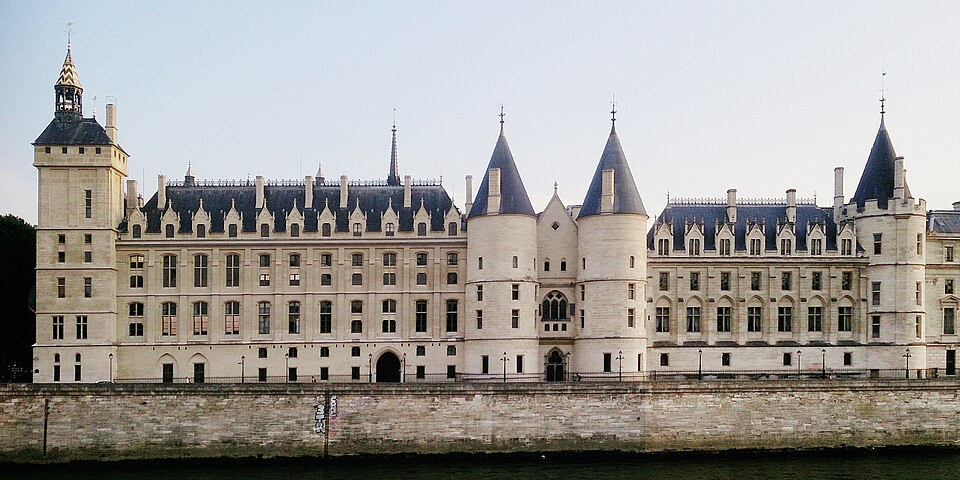
The towers of the Conciergerie beside the Seine can look like an illustration of medieval Paris. Behind that memorable silhouette lies a much less straightforward story. Spaces associated with a royal palace gradually became places of justice and imprisonment.
During the Middle Ages, the palace on the Île de la Cité was a major centre of the French monarchy. Large vaulted halls survive from that earlier complex. Their scale suggests more than the private life of a ruler. A palace was also an institution: people worked, served, administered and supplied the everyday needs of a substantial system of government.
When the royal residence moved elsewhere, judicial and administrative functions remained. The name Conciergerie is connected with the office of the palace’s custodian. To modern ears, a concierge may suggest someone at a hotel entrance, but the historic role was considerably broader. The name preserved a trace of how the complex had been managed, even as its uses changed.
Its most troubling chapter belongs to the French Revolution. People awaiting trial and sentence were held here, including Marie Antoinette. The Conciergerie formed part of the machinery of revolutionary justice and the Terror. It is important to distinguish imprisonment from execution: condemned prisoners were taken from here to other locations where the guillotine operated.
The queen’s name attracts particular attention, but the prison’s history is not the story of one famous inmate alone. Many people passed through this place within a rapidly changing political order. Remembering them helps shift the visit away from a collection of dramatic horror stories towards questions about authority, judgement and human vulnerability.
From outside, compare the imposing river frontage with what you now know about events behind it. Architecture does not always reveal a building’s use at first glance. A commanding façade can conceal very different experiences for the people who entered willingly and those who did not.
If you visit indoors, pay attention to the distinction between surviving medieval spaces, later alterations and museum reconstructions. Labels matter here, because they explain which layer of the building you are seeing. A recreated setting can help tell a story without being an untouched room from the period it represents.
The Conciergerie records a remarkable reversal: a place of royal power became a place of revolutionary confinement, and eventually a site where both histories are interpreted. Its value lies in keeping those uncomfortable layers together, rather than reducing the entire building to either a picturesque castle or the final address of a queen.
Learn more
Nearby Sainte-Chapelle also belonged to the former palace world of the Île de la Cité. The two monuments complement each other: one expresses sacred kingship, while the other reveals palace administration and later judicial history. Their proximity does not mean identical admission arrangements. Check which spaces your ticket includes. Seeing both from outside first can help you decide which interior experience best suits the time available.