LISTEN TO THE PLACE
A story worth knowing
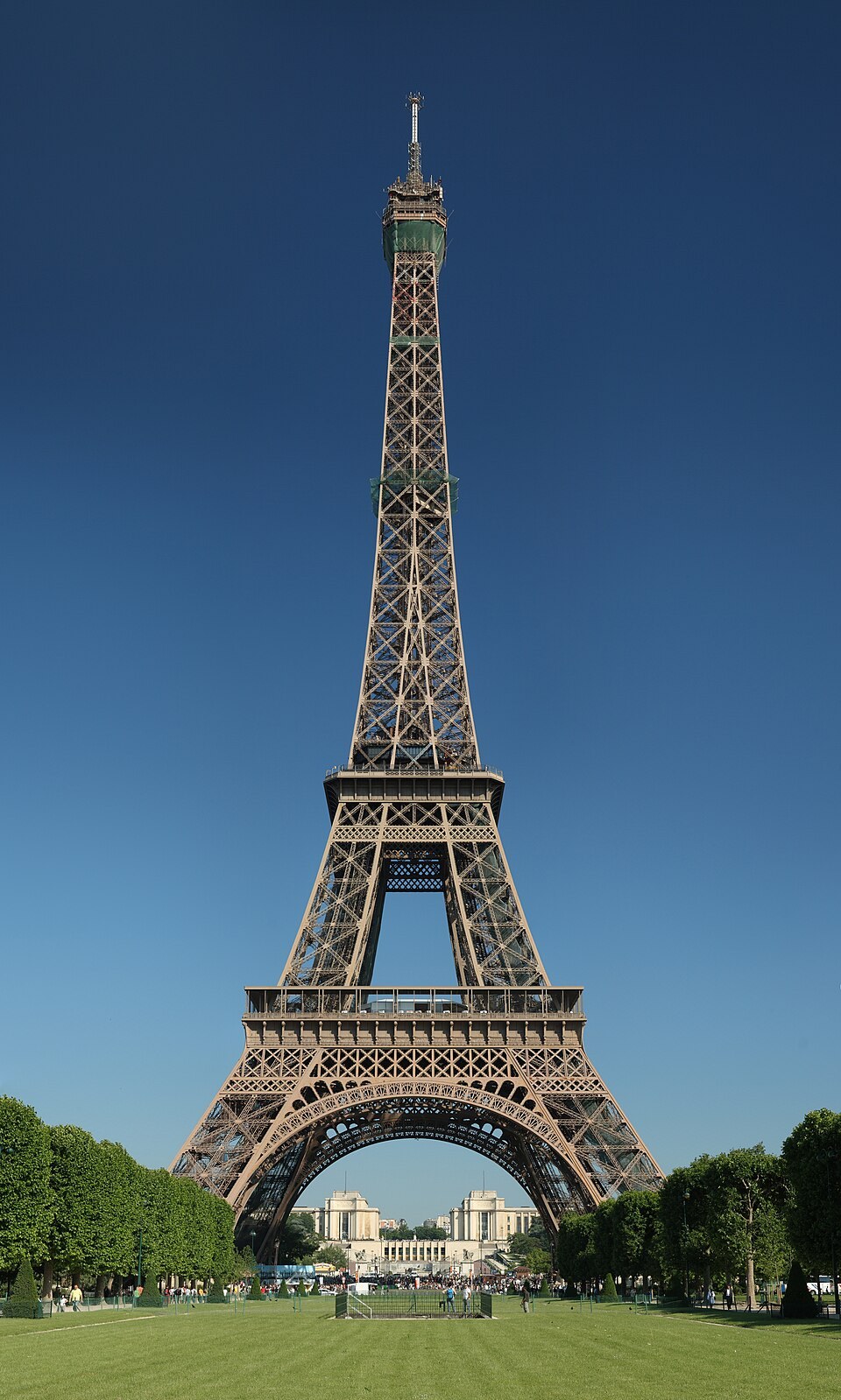
Begin by looking at the Eiffel Tower not as a famous outline, but as a large structure made from many small components. Sky remains visible between the metal members. From a distance, the tower seems like a continuous shape; nearby, it becomes a transparent network. That helps explain why its enormous size does not feel like a solid wall.
It was built for the World's Fair of eighteen eighty-nine. Gustave Eiffel's company demonstrated the possibilities of metal construction on a scale that had previously seemed extraordinary. The exhibition marked the centenary of the French Revolution, but its great vertical landmark spoke particularly of industry, calculation and a new image of the future.
Not everyone welcomed it. Prominent cultural figures protested that the metal structure was alien to Paris. That can be difficult to imagine now, when the tower feels almost like a natural part of the landscape. A civic symbol does not necessarily begin as a beloved object. Familiarity and changing generations can prove stronger than the original dispute.
Look at its four legs. Set widely apart at ground level, they converge as the structure rises. Here, beauty is connected with structural work. The curve is more than decoration: it helps you imagine the forces carried down to the ground. Even without engineering knowledge, you can read the transition from the broad base to the slender summit.
There are several ways to encounter the tower. From far away, you experience the outline; underneath, its scale; from above, a map of the city. One experience does not replace the others. If an ascent is not part of your plans, the accessible public spaces around it still offer plenty to discover. For entry to the tower itself, check ticketing and access arrangements separately.
Before leaving, include a person or a tree in your view. The comparison explains size more immediately than a measurement. Then put your phone away and look through the lattice towards the sky. Perhaps the tower's most remarkable quality is not how much space it occupies, but how much air it leaves within its outline.
Learn more
The name Eiffel Tower is a useful reminder that a major engineering project is never the work of one person alone. Behind a famous surname are designers, engineers, fabricators and construction workers. The monument is easy to remember through one name, but rewarding to understand as a collective achievement. Small repeated components had to fit into a single structure of exceptional size. That less visible human precision is part of the landmark too.