LISTEN TO THE PLACE
A story worth knowing
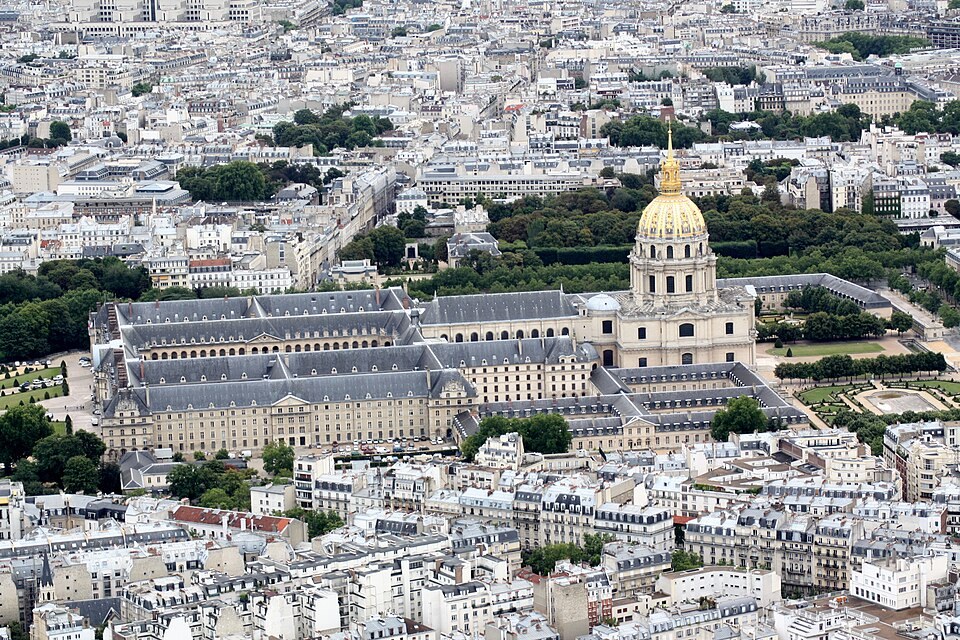
The golden dome of Les Invalides is visible from many parts of Paris. Today, it is often associated above all with Napoleon. Yet the complex was founded long before his rule, for a very different purpose: to house and care for soldiers who could no longer serve.
Louis XIV initiated the project in the seventeenth century. The historic name referred to military veterans, including men whose injuries or condition prevented further service. For royal government, the institution was both a practical social project and a public statement. Caring for former soldiers demonstrated the state’s power beyond the battlefield, showing what happened after active service ended.
Look at the scale of the ensemble. This is not simply a church with a courtyard attached. It is a network of buildings and courts that accommodated living quarters, medical care, practical services and worship. Military order continued into daily life. The regular architecture helps us imagine a large community organised around a shared institutional routine.
The domed church received a particularly grand design. Its brilliant summit rises above comparatively restrained ranges of buildings. That contrast is revealing. Practical provision for people existed beside an architectural expression of royal glory. The complex served its residents, but it also represented an image of the state to the wider city.
A later chapter introduced Napoleon’s tomb. His remains were returned to France in 1840, and the monumental treatment of his burial transformed the space beneath the dome into a major site of imperial remembrance. This was not the original reason for building Les Invalides. Confusing the two stories would erase almost a century and a half of its earlier life.
Today, museums and memorial spaces coexist with the site’s enduring military associations. As you walk, try to hold two scales in mind: the dazzling dome above, and the daily existence of people within the ranges below. This makes the complex more than a dramatic setting for an emperor’s biography.
Les Invalides tells a longer story about the relationship between an army, its government and society. Glory is part of that story, but so are injury, duty, care and remembrance. The name itself points towards lives that can easily disappear behind a famous monument.
If you plan to explore indoors, check the entry arrangements for the particular areas you want to see. Access to a courtyard, a museum collection and the domed church should not be assumed to follow the same rules. Even an exterior visit, however, can reveal the tension between useful institution and magnificent public symbol.
Learn more
The historic term “Invalides” needs to be understood in its original military context. It referred to an institution for former servicemen, rather than to a general modern hospital. The name survived as the functions of the complex expanded. Historic cities contain many such linguistic traces: a place name can preserve an earlier purpose long after the buildings themselves have acquired new uses and new public associations.