LISTEN TO THE PLACE
A story worth knowing
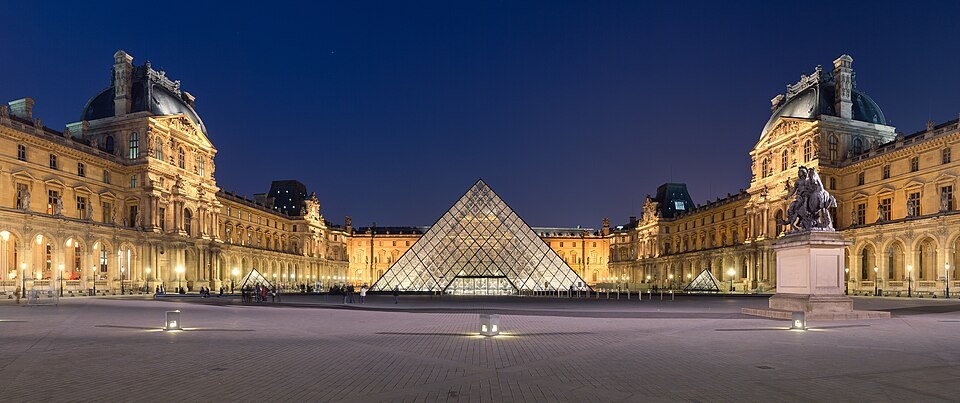
The Louvre begins long before a display case. Look at the extended façades: this is a former palace that grew and changed over centuries. You have to move to understand its extent. Even if you have come for one painting, the building already offers a story about power gathering space, art and people around itself.
A medieval royal fortress once occupied this site. As Paris expanded, its defensive role diminished and the Louvre became a residence. Successive rulers added buildings and ambitions. It is therefore better understood as a conversation between different periods than as the work of one architect.
A museum opened here in seventeen ninety-three. Royal holdings and other collections acquired a new public meaning. Yet the history of how objects arrived is complicated. Purchase, donation, archaeological excavation and wartime seizure are not the same process. Alongside works of art, the museum holds evidence of movement between countries and owners.
In the courtyard, the glass pyramid introduces a modern language into a stone setting. Its geometry is simple and its surface transparent. The repeated lines of its framework respond to the old façades differently from an additional palace wing. Whether or not you enjoy the contrast, it makes one point clear: a museum continues to change even when its collections belong to the distant past.
Inside, choosing a limited route can make the visit more rewarding. An ambition to see everything easily becomes an exhausting journey between famous names. One carefully observed object may offer more than dozens of photographs taken over other people's shoulders. Check the location of particular works and gallery access before visiting; a display is a living arrangement.
Outside, find two scales. One consists of vast courtyards and long perspectives. The other is an individual window, statue or carved detail. The palace exists between them, impressing at a distance while rewarding a closer look. The Louvre is not only what lies behind its doors. It is also an architectural frame within which ideas about ownership, public access and the meaning of art have changed over time.
Learn more
The pyramid separates the age of an institution from the age of its entrance. A modern visitor system serves a museum housed in a much older palace. Historic buildings often face this challenge: retain a recognisable identity while accommodating new patterns of use. Here, the solution is deliberately visible. The new element does not imitate old masonry, allowing the boundary between periods to be understood without a label.