LISTEN TO THE PLACE
A story worth knowing
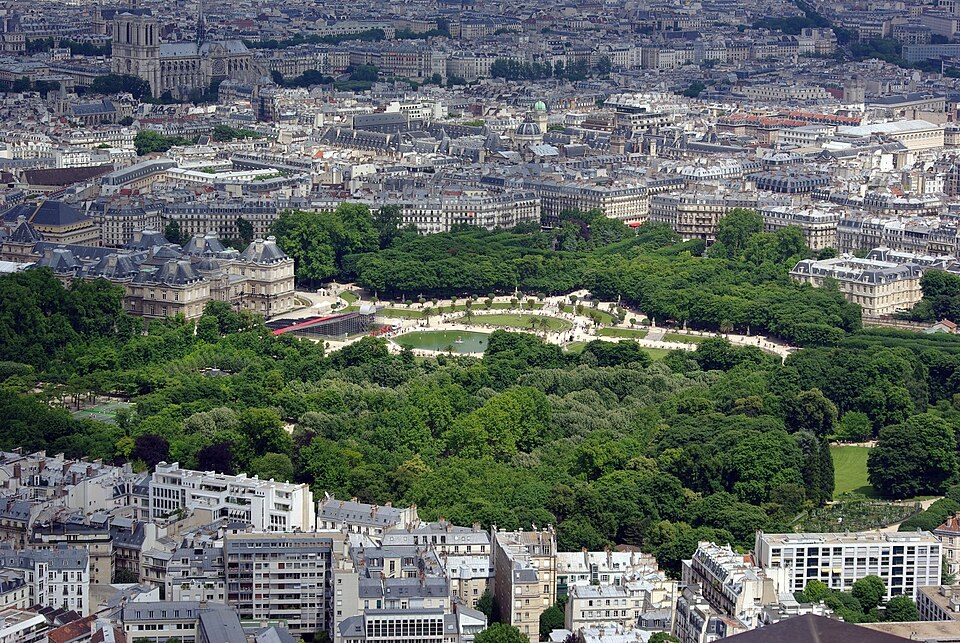
In the Luxembourg Garden, Paris seems to loosen its formal collar. There is still a palace, carefully arranged sculpture and plenty of symmetry. Yet your attention soon moves to the chairs beside the paths, people reading and small sailing boats on the water. The history of a royal residence has become intertwined with ordinary urban life.
The garden began in the early seventeenth century through the initiative of Marie de’ Medici, the widow of Henry IV. She wanted a new residence on the Left Bank. Her Italian background influenced the palace and its surroundings, but the place developed its own distinctly Parisian history. Its Luxembourg name comes from an earlier owner of the property; it does not mean the garden belongs to the modern country of Luxembourg.
The area facing the palace is especially formal, with open views, balanced lines and a central basin. Beyond it, the experience becomes more varied. Broad perspectives give way to shaded walks; substantial monuments share the grounds with quieter places to sit. What feels like a relaxed landscape is actually a carefully arranged sequence of spaces, maintained through continual gardening and deliberate design.
The palace now houses the French Senate. This creates a very Parisian contrast: a major institution of government stands beside a place used for uncomplicated daily pleasures. Students take breaks, friends meet, families watch toy boats, and visitors recover from long walks. A royal project survives, but its everyday meaning has changed dramatically.
One of the garden’s best-known features is the Medici Fountain. Its long reflecting pool and shaded setting create a more intimate atmosphere than the open ground in front of the palace. Moving between these areas reveals something important about the garden. It offers different ways of being in the city, not just different paths through it. You can choose a broad view, a social place or a relatively sheltered corner.
This stop does not require a particular photograph or an ambitious sightseeing plan. If a chair is available, sit for a few minutes and watch the surroundings. Notice how people make use of a historic place without treating every moment as a historical occasion. Public gardens are valuable partly because they allow us to have no immediate purpose.
Before continuing, check the signs for the current closing time and access arrangements. These can vary with the season. A quiet pause here can be as revealing as visiting a famous interior: you are seeing not only how Paris presents itself, but how people actually inhabit it.
Learn more
Movable garden chairs are an important part of the Parisian park experience. They let visitors choose their view, their distance from a companion and their position in the sun. Unlike a fixed bench, a chair gives each person a small role in arranging the space. Use available seating without blocking paths, and follow local signs: some lawns are intended for recreation, while others are maintained as ornamental areas.