LISTEN TO THE PLACE
A story worth knowing
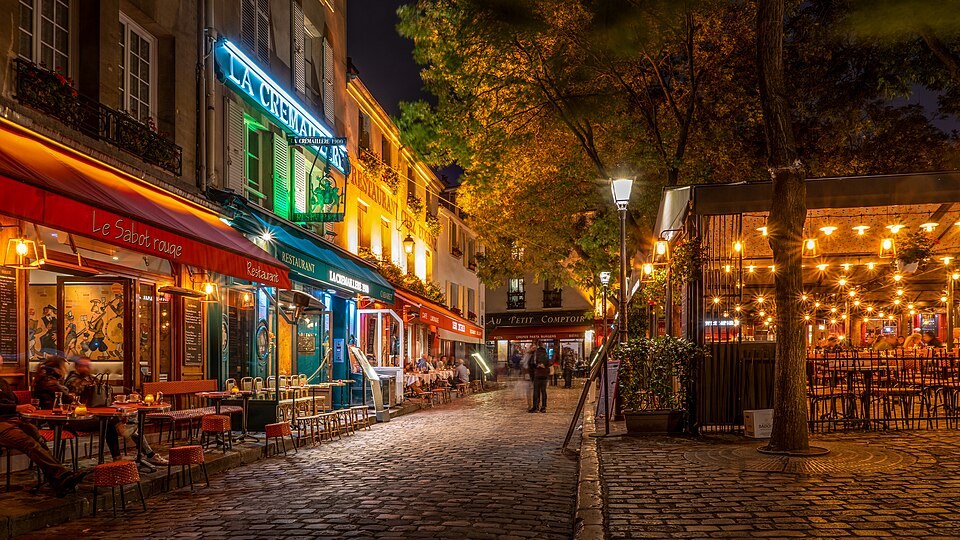
At Place du Tertre, Montmartre presents its most recognisable, almost postcard-like image: tables, easels, portraits and a steady movement of visitors. It is easy to see the square as a ready-made stage for “artistic Paris”. A more interesting approach is to ask how the district’s real history became an image the city continues to use.
Montmartre retained a distinctive character partly because of its hilltop position and distance from the ceremonial centre. In the late nineteenth and early twentieth centuries, the area was associated with artists, studios and experimentation. That creative life was not confined to one small square. It took place in different buildings, cafés and workshops across the neighbourhood. Place du Tertre became a convenient symbol for a much wider environment.
Artists working here today continue the practice of public portrait-making and selling pictures. That does not mean every easel has a direct line of descent from a celebrated master. This is contemporary professional life shaped by tourism, existing alongside the district’s historic reputation. It involves real work, agreements with customers and competition for attention.
Look at the scale of the square. It is far more intimate than the grand formal spaces of central Paris. Lower façades and short views preserve a sense of a neighbourhood on a hill. Even large crowds do not entirely erase that spatial framework. Looking above the signs helps reveal the structure that contains the activity.
If you are considering a portrait, establish the price and conditions before agreeing. Watching an artist work can be enjoyable, but a paid service should not begin through a misunderstanding. Be considerate when photographing people or their work, and respect requests. The square is a workplace as well as a visitor attraction, not an unpaid theatrical cast arranged for cameras.
For your walk, try making two different observations. First, take in the busy overall scene. Then find an available position at the edge and concentrate on one small activity: a moving hand, the selection of a colour, or a conversation between artist and customer. The postcard image becomes a living situation again.
Montmartre is not interesting because it has remained unchanged in one golden age. Its fascination lies in how the past continues to shape the present, sometimes sustaining a local activity and sometimes becoming something offered for sale. Place du Tertre makes that relationship unusually visible. You can enjoy its atmosphere while still recognising that the artistic history of the hill extends well beyond the boundaries of this square.
Learn more
Place du Tertre should not be treated as the exact address of every famous Montmartre artist. Studios and meeting places were spread across the district. A shared reputation works well as a visitor image, but individual biographies need specific locations. If you want to continue the artistic theme, choose a documented studio or a museum. The lively square can then become an introduction to the neighbourhood rather than a substitute for its entire history.