LISTEN TO THE PLACE
A story worth knowing
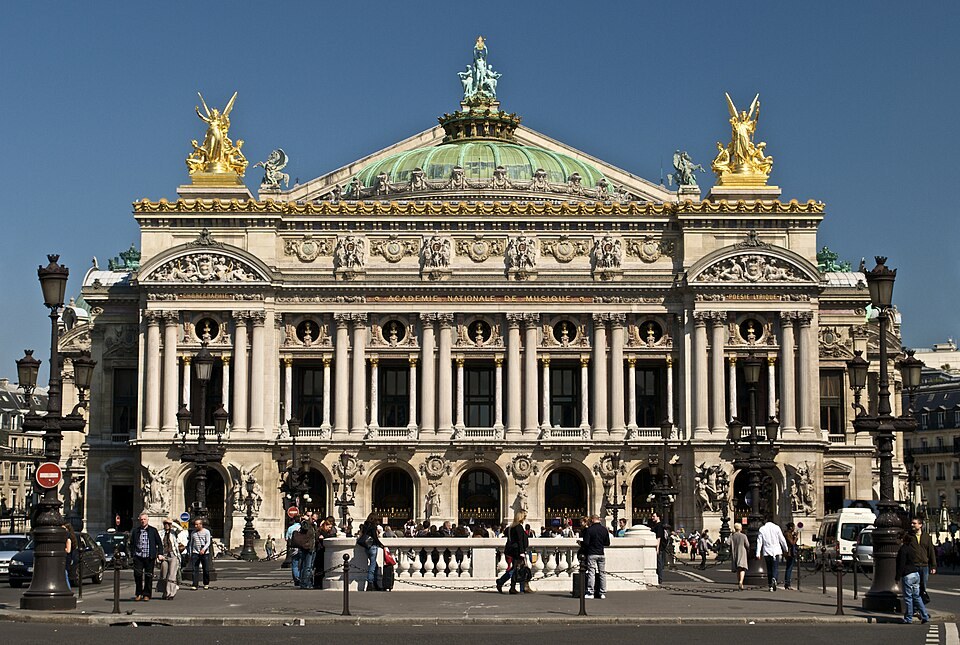
At the Palais Garnier, the performance begins long before the curtain rises. The façade already offers a spectacle of sculpture, columns, gilded details and richly varied materials. The building was meant to make a visit to the theatre feel like an important social occasion, not simply the purchase of a seat facing a stage.
Charles Garnier designed the opera house in the second half of the nineteenth century. The project began under Napoleon III, but construction outlasted the Second Empire. The theatre opened in 1875, in a changed political world. Its history therefore combines imperial ambition with a later Paris, and the architect’s name has proved more enduring than the regime that commissioned him.
Garnier paid extraordinary attention to how the audience would move and meet. The famous grand staircase is more than a means of going upstairs. It creates a setting where people can pause, look across at one another and watch arrivals from different levels. In nineteenth-century theatrical culture, the audience was also part of the spectacle. Clothing, conversation and being seen in society could carry almost as much weight as what happened on stage.
The richness of the exterior continues inside, but it is not merely decoration piled upon decoration. Materials, lighting and changing levels create a sequence of experiences. Architecture guides the visitor from the everyday city towards the auditorium, turning that transition into a ceremony. The building is carefully designed to heighten anticipation.
Gaston Leroux’s novel The Phantom of the Opera has permanently attached a fictional world to this real theatre. Hidden passages and mysterious spaces beneath the stage have become part of its popular image. The phantom, however, is a literary character, not a documented resident. The actual opera house needs no supernatural inhabitant to be intriguing. Its stage machinery, working rooms and service routes form a complex system behind the public splendour.
Since the opening of the Opéra Bastille, the Palais Garnier has become especially associated with ballet, although its activities are not limited to one art form. If you plan to enter, distinguish between a sightseeing visit and a performance ticket: they may provide access to different spaces, and arrangements depend on the theatre’s programme.
From outside, consider how successfully the building still creates a sense of arrival. Garnier designed more than a container for music and dance. He created a setting for public appearance, social movement and expectation. Even a visitor who only pauses before the façade takes part in that continuing architectural performance.
Learn more
A foyer may sound like a simple passage towards an auditorium. In a theatre of this kind, it was much more: a place for conversation, relaxation and the display of social position. Lavish spaces away from the stage were therefore not considered an irrelevant expense. They supported an essential part of theatrical life. The nineteenth-century opera house was both an artistic institution and a distinctive social arena with its own rules of behaviour.