LISTEN TO THE PLACE
A story worth knowing
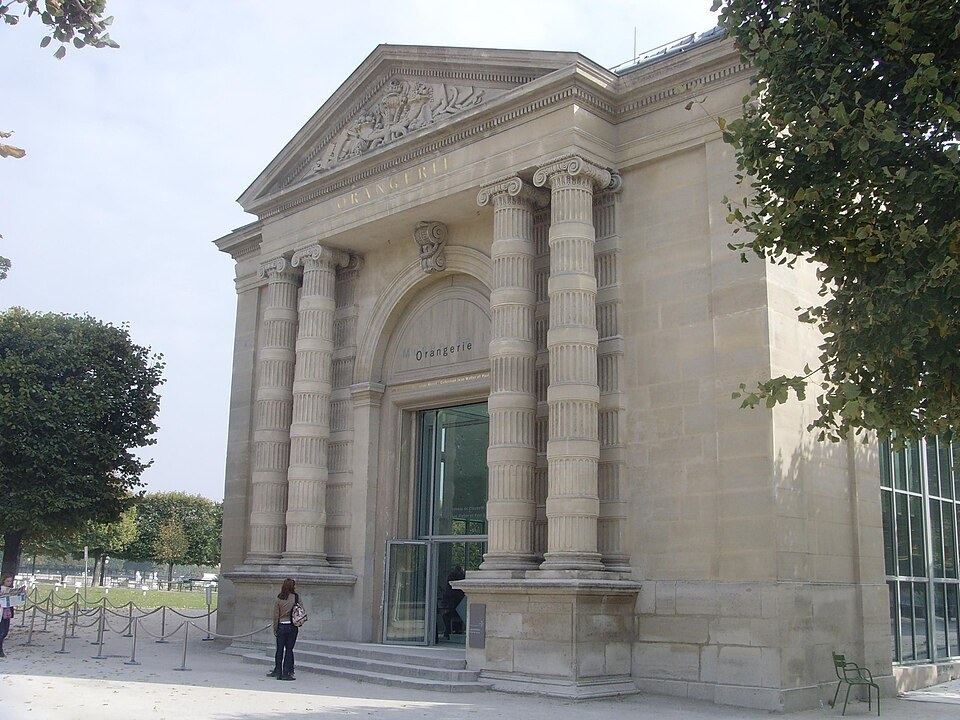
At the edge of the Tuileries stands a comparatively small building whose impact can be far larger than its façade suggests. The Musée de l’Orangerie is especially known for Claude Monet’s Water Lilies: large painted panels intended for more than a quick glance from a doorway. They create an environment in which the viewer spends time.
The name preserves the building’s original practical role. An orangery sheltered plants vulnerable to winter cold. Such structures belonged to the working life of formal gardens: attractive outdoor displays depended on places where plants could be protected and cared for during the colder season. The building later acquired a museum function.
Monet returned for many years to the subject of his water garden at Giverny. He was not creating a botanical catalogue of water lilies. His concerns included reflections, changing light, the surface of water and the uncertain boundary between a recognisable object and a visual impression. In the great panels, these interests expand to an unusual scale. A painting no longer feels like a small window onto a separate landscape; it begins to surround the viewer.
At the Orangerie, eight celebrated panels are arranged in two oval rooms. The shape discourages the usual habit of moving along a straight wall from one framed object to the next. Your gaze can continue, circle back and notice transitions of colour. It is particularly useful to abandon the search for a single obvious centre. The act of looking has been organised differently.
The museum is not limited to Monet. Other artists associated with the late nineteenth and first half of the twentieth century are represented too. The familiar idea of a “Water Lilies museum” is a good introduction, but not a complete description of the collection. A visit made for one artistic world can lead into several others.
If you enter, allow time to sit before the panels where permitted. Change the distance of your attention: from farther away, colours and forms combine; closer looking reveals the activity of the painted surface. The work rewards patience rather than the rapid confirmation that you have seen a famous image.
If you remain outside, consider the building’s change of purpose. A place once used to protect living plants now preserves an artist’s painted water garden. The connection is not literal, but it is wonderfully appropriate at this point between the Tuileries paths and the bustle of Place de la Concorde. The modest exterior conceals a very different scale of visual experience.
Learn more
Late Monet can be approached without immediately naming every object. Begin with the direction of light and large areas of colour, then look for reflections and plants. This is not a recognition test. The paintings reveal how visual experience changes with attention. A photograph of one section may be beautiful, but it cannot fully reproduce the relationship between the panels, the oval room and the viewer’s moving gaze.