LISTEN TO THE PLACE
A story worth knowing
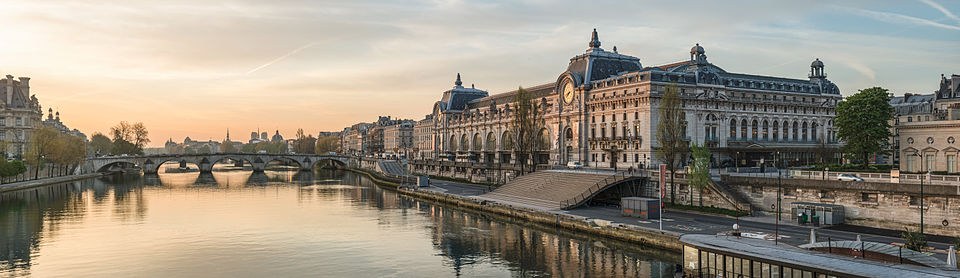
The great clocks on the façade offer a clue to this building’s first purpose. Before people came here to look at paintings, they came to catch trains. The Gare d’Orsay opened for the Paris Universal Exhibition of 1900, bringing railway passengers almost into the city’s ceremonial heart, across the Seine from the Tuileries Garden.
Architect Victor Laloux faced an unusual challenge. A major railway terminus was a thoroughly modern piece of infrastructure, yet its neighbours belonged to the prestigious stone-built landscape of central Paris. His solution combined a grand exterior with the metal and glass of the industrial age. Behind the dressed stone was a vast space designed around movement, light and practical engineering. The complex also included a hotel.
For a while, the station embodied the confidence of a city welcoming the world. But railway technology did not stand still. As trains became longer, the platforms proved too short for the services the station was meant to handle. Its original role declined, and the building’s future eventually became uncertain. Instead of being demolished, it was given a different public life. The Musée d’Orsay opened here in 1986.
Its collections focus mainly on art made between 1848 and 1914. These dates frame a period of enormous change: expanding cities, new industries, altered patterns of work and leisure, and fresh arguments about what a painting should show. Ordinary streets, dancers, workers, cafés and rapidly changing light could become serious artistic subjects. The Impressionists are among the museum’s best-known attractions, but they are only part of its story. Sculpture, photography and decorative arts help reveal a much broader creative world.
The building and the collection speak to each other particularly well. Railways changed people’s experience of distance and time. Many of the artists represented here were trying to understand the changing world that railways helped create. Their work now occupies a former station rather than a palace designed for royal possessions. That difference gives the museum a character of its own.
Look back at the clock. Once, it reminded travellers how little time they had before departure. Today, visitors stop beneath it and try to spend time rather than save it. This reversal is a useful way to approach Orsay. You do not need to race through every room. If you go inside, choose a few works that interest you and give them your full attention. The station has already finished its journey; you can afford to slow down.
Learn more
Orsay is often described as a bridge between the Louvre and museums devoted to twentieth-century art. That is a useful introduction, but artistic history does not fit into perfectly separate compartments. Decorative objects deserve attention alongside famous paintings: furniture and ornamental panels can reveal how people imagined modern living. The station’s surviving architecture is also part of the experience, rather than a neutral container for the collection.