LISTEN TO THE PLACE
A story worth knowing
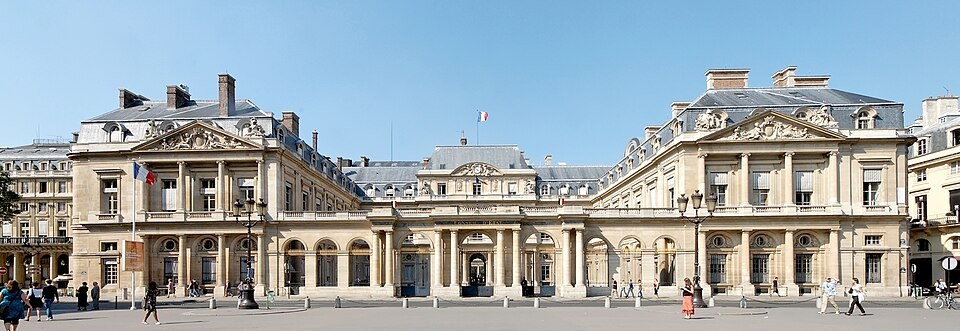
Palais-Royal means “Royal Palace”, but its story began with a different owner. In the seventeenth century, Cardinal Richelieu created a residence here. After his death, it passed to the royal family, and the former cardinal’s palace acquired the name that has remained ever since.
The attraction of this place lies not in a single façade, but in the arrangement of an entire world within a city block. Courtyards, galleries and a garden lead you gradually away from street traffic. The dense fabric of Paris opens from within. From outside, it is difficult to guess how many different spaces lie behind the surrounding buildings.
During the eighteenth century, the Palais-Royal became a lively setting for public life. Businesses operated beneath the galleries, people gathered and news circulated through conversation and printed material. In the period leading up to the Revolution, such places were especially significant. A complex with aristocratic origins could become a setting for debates and behaviour very different from the controlled atmosphere of a royal court.
The garden offers another rhythm today. Repeated trees, paths, a fountain and surrounding façades create a sense of enclosure. Notice how the sound of the city changes after only a short walk from the street. This is not a rural landscape transported intact into Paris. It is an urban refuge whose calm becomes more noticeable because busy roads and major attractions are so close.
One courtyard is particularly associated with Daniel Buren’s installation of black-and-white striped columns at different heights. Contemporary art enters into a direct conversation with the classical architecture. Some of its vertical lines echo the older colonnades; its unexpected levels interrupt their regularity. The work provoked debate when introduced in the 1980s. For many visitors today, it has become the most recognisable image of the Palais-Royal.
Try not to stop at a photograph of the striped columns. Look at their relationship with the windows, galleries and surrounding proportions, then move towards the garden. You will encounter two distinct ways of arranging space: one through ordered repetition and shelter, the other through a deliberate visual intervention.
Together, they suggest that a historic setting does not have to remain motionless. New art can alter how people see an old place without erasing its earlier history. The Palais-Royal is particularly good at showing this layered life: a cardinal’s residence, a royal address, a public meeting ground and a contemporary art destination all occupy the same small part of Paris.
Learn more
Photographs often turn Buren’s columns into an isolated pattern, leaving out most of the courtyard. Try the reverse while you are here: study the older architecture first, then bring the striped forms into your field of vision. The work was conceived for a particular setting. Height, rhythm and the viewer’s movement matter as much as the black-and-white surfaces. Its relationships change as you move through the space.