LISTEN TO THE PLACE
A story worth knowing
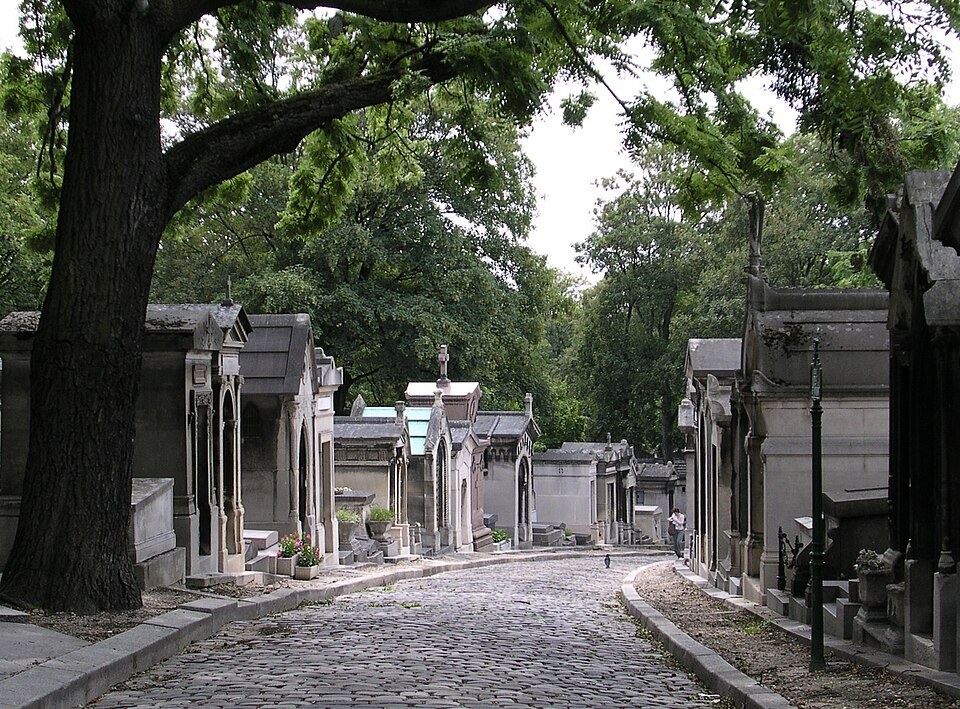
Père Lachaise feels like a separate city within Paris. It has streets and junctions, sloping paths, family chapels and modest individual monuments. Yet it asks for a different manner of walking. This is a working place of remembrance, not a park created only for sightseeing and photographs.
The cemetery opened in the early nineteenth century, during a transformation of burial arrangements in Paris. Older cemeteries within densely built neighbourhoods had become overcrowded and problematic. New sites beyond the centre of the time allowed burials to be organised differently. As the city expanded, what had once felt peripheral became part of the larger urban area.
Père Lachaise is famous for people associated with art, literature and public life. But concentrating only on celebrated names can obscure its most revealing quality: the extraordinary variety of ways people choose to remember. Some families selected a simple slab, others a sculpture, while others built a tomb resembling a small chapel. Architectural taste and social difference are visible here almost as clearly as on residential streets.
Trees and changes of level prevent the cemetery from feeling like a flat grid. Perspectives shift around corners, and monuments emerge from or disappear into shade. The setting encourages a slow walk, but it also requires attention to navigation. Paths can be uneven, and a particular grave may be far from the entrance you have chosen.
Collective remembrance is present alongside individual burials. Memorials address wars, violence and historical catastrophes. The place therefore cannot be reduced to a romantic “cemetery of celebrities”. Personal loss and public history occupy the same landscape. Sometimes a short inscription on an unfamiliar monument can reveal more about an era than a name you already know.
Choose a few points of interest using the official plan, and leave time to notice what lies between them. There is no need to turn the visit into a competition to locate graves. The routes themselves reveal how forms of remembrance changed across generations.
Keep your voice low near ceremonies and people visiting loved ones. Do not touch, mark or leave traces on monuments. These are not merely old architectural objects without continuing meaning.
Père Lachaise is remarkable as a historic landscape, but its importance rests first on respect for the people remembered here. A successful visit is attentive rather than noisy: it allows the setting to communicate its range of personal stories without treating those stories as entertainment alone.
Learn more
Check opening hours and the location of your intended entrance before visiting. The cemetery covers a large area, and its slopes mean that the shortest line on a map may not be the easiest walking route. If a particular grave matters to you, locate it on the official plan in advance. Be prepared to change course around a ceremony: historical interest should not interfere with the place’s continuing purpose.