LISTEN TO THE PLACE
A story worth knowing
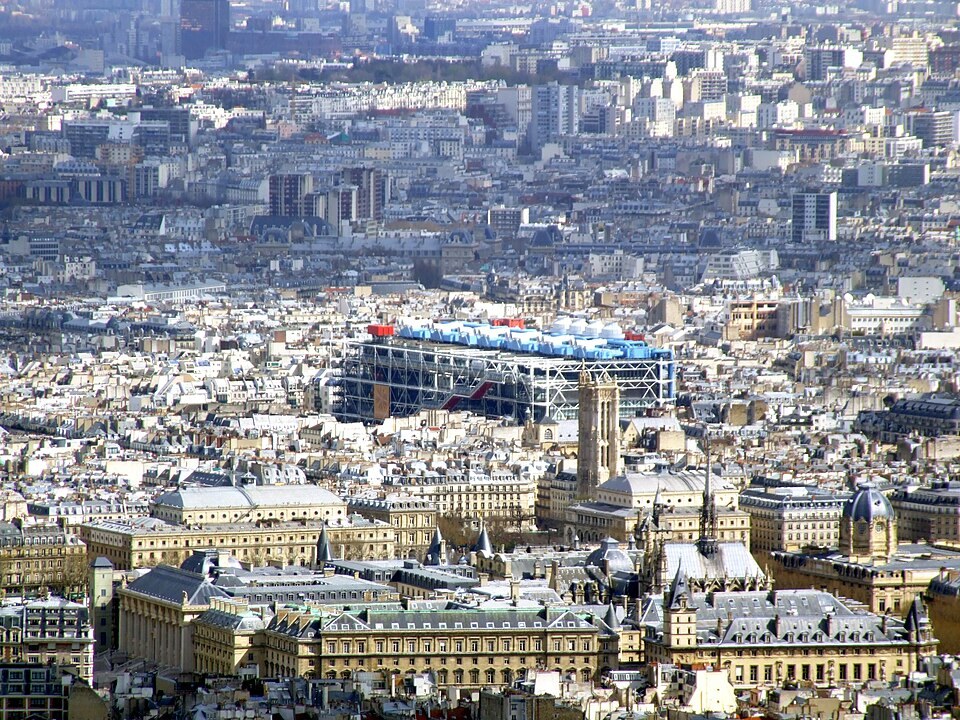
The Centre Pompidou can make you wonder whether a building has been turned inside out. Pipes, structural elements and routes for moving people are not hidden behind a calm stone façade. They are the façade’s main subject. The architecture invites us to see a cultural institution as a working system rather than a closed palace.
The centre opened in 1977 and was named after President Georges Pompidou, who supported the creation of a new cultural complex. Architects Renzo Piano and Richard Rogers proposed something radically different from the conventional museum image. By placing technical systems outside, they freed interior space and made normally invisible service elements part of the public experience.
Colour also helps explain the building. Different systems were given recognisable colours, allowing the exterior to resemble a diagram. Visitors do not have to understand every engineering detail. The larger point is that a modern cultural institution can display its technological framework instead of disguising it.
The proposal provoked strong reactions. Within the historic fabric of the Beaubourg area, some people saw an exciting, open structure; others saw an intrusion. That argument itself demonstrates how fully the building entered urban life. Paris does not only preserve established forms. At certain moments, it admits a radical intervention that reopens questions about what a museum should look like and whom cultural space should serve.
The centre brings together several activities, including modern and contemporary art and a public library. Its significance has never been limited to a collection of paintings. The ambition was to create a place where different audiences and cultural practices could meet. The space in front of the building also became part of that exchange, linking the everyday street with the institution.
There is an important practical limitation at this stop now. The main building is closed for a major renovation, with reopening planned for 2030. Do not expect the normal museum or library visit, or the former route up the exterior escalator. Programmes may take place at other venues, and access around the construction area can change. Observe the building only from permitted public space and follow the current barriers and signs.
Even from outside, the story remains compelling. A structure that once presented a striking image of the future now needs renewal to continue serving future visitors. This does not contradict its original ambition. It shows that cultural buildings are working places, not timeless pictures: their equipment, public uses and responsibilities must evolve along with the city around them.
Learn more
The access information follows the Centre Pompidou’s own renovation announcement. A planned reopening date is a project target, not a guarantee of a future timetable. Before making a special journey, check the official website for activities taking place away from the main building. An audioguide needs to distinguish the history of an institution from access today: describing an important collection should never imply that its usual doors are currently open.