LISTEN TO THE PLACE
A story worth knowing
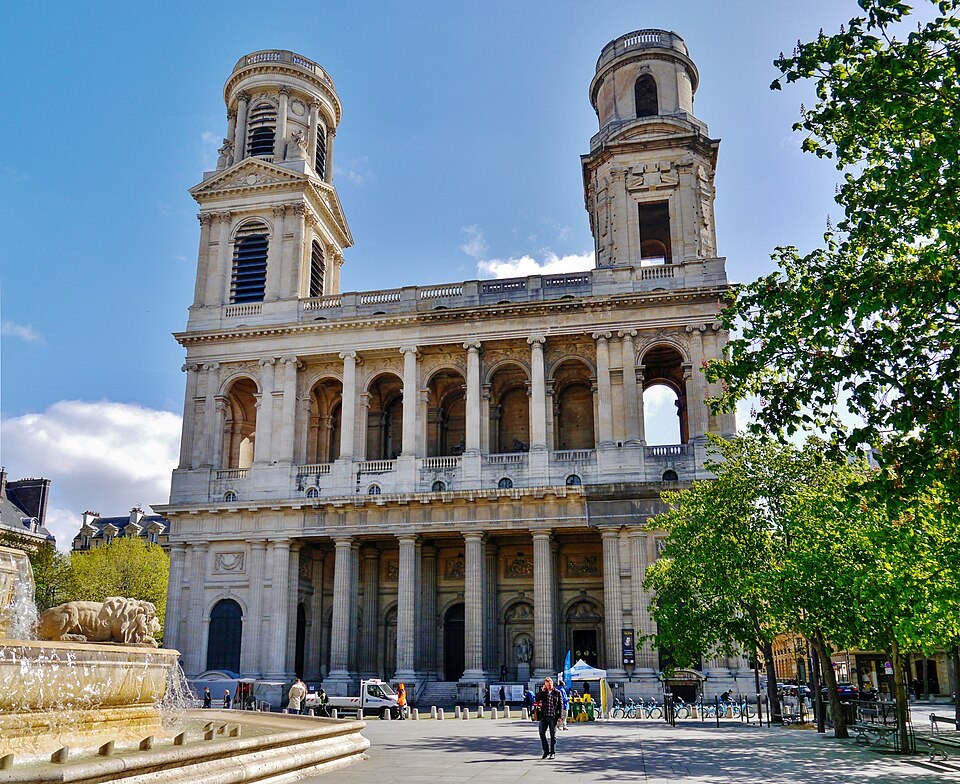
Saint-Sulpice is recognisable by the two towers above its broad façade. Look closely and you will notice that they are not identical. That small asymmetry already suggests something important: a major historic building rarely emerges in one uninterrupted act as a perfect copy of its first design.
Construction of the present church began in the seventeenth century on the site of an earlier place of worship. Work continued over a long period, with different designers leaving their marks. This is not the Gothic ambition to dissolve walls into stained glass. Its monumental character comes through broad horizontal lines, columns, substantial masses and a measured sense of dignity. Saint-Sulpice reveals the variety within Parisian church architecture.
Inside is a celebrated astronomical gnomon. The device was used to observe the position of the Sun and establish calendar-related moments. A beam of light and a marked line turn part of the church into a measuring instrument. Science and religion may seem an unexpected combination to a modern visitor, but the calendar and accurate seasonal observations mattered to ecclesiastical life.
Popular fiction gave the device a different kind of fame. Following The Da Vinci Code, many visitors began looking for hidden signs here. The novel’s narrative should not be confused with the history of the building. The gnomon is a real scientific instrument; conspiratorial interpretations belong to fiction. Its actual purpose is interesting without an invented secret attached to it.
The church also contains important artistic decoration, including work by Eugène Delacroix. In a large interior, it is worth changing the scale of your attention. A chapel may invite close consideration of painted figures and movement after the broad experience of looking down the nave. That variation keeps a visit from becoming only an exercise in appreciating size and solemnity.
From the square, find a place where both towers are visible and compare their upper sections. Then look at the repeated lines of the lower façade. Unity and historical difference exist together; the building’s long development has not been completely disguised.
If you enter, remember that this is an active church. Worship and quiet take priority over sightseeing convenience. Check that the particular areas you want to see are available rather than assuming unrestricted access.
Saint-Sulpice does not require a sensational mystery to hold attention. Its real stories are already rich: prolonged construction, observation of sunlight, changing architectural choices and the encounter between monumental space and painting. Looking carefully at what is actually here is more rewarding than searching for evidence of a fictional plot.
Learn more
A gnomon uses the movement of sunlight, but it is not simply an ordinary clock with a circular dial. Its purpose involves observing the Sun’s position in relation to a marked line and answering calendar-related questions. A patch of light seen during one visit does not explain the whole system. Read the site’s explanations if it interests you; they help distinguish the physical principle from interpretations borrowed from popular fiction.