LISTEN TO THE PLACE
A story worth knowing
Sainte-Chapelle keeps its greatest surprise out of sight. From outside, among the buildings of the former royal palace on the Île de la Cité, it does not have the overwhelming scale of a cathedral. It was not designed to accommodate an entire city. It was a palace chapel, and an exceptionally precious setting for Christian relics.
Its patron was King Louis IX, later recognised as a saint. In the thirteenth century, he acquired relics associated in Christian tradition with the Passion of Christ, most famously the Crown of Thorns. Their significance was both religious and political. Possessing such objects increased the spiritual standing of Paris and reinforced the prestige of the monarchy. The chapel created to house them was consecrated in 1248.
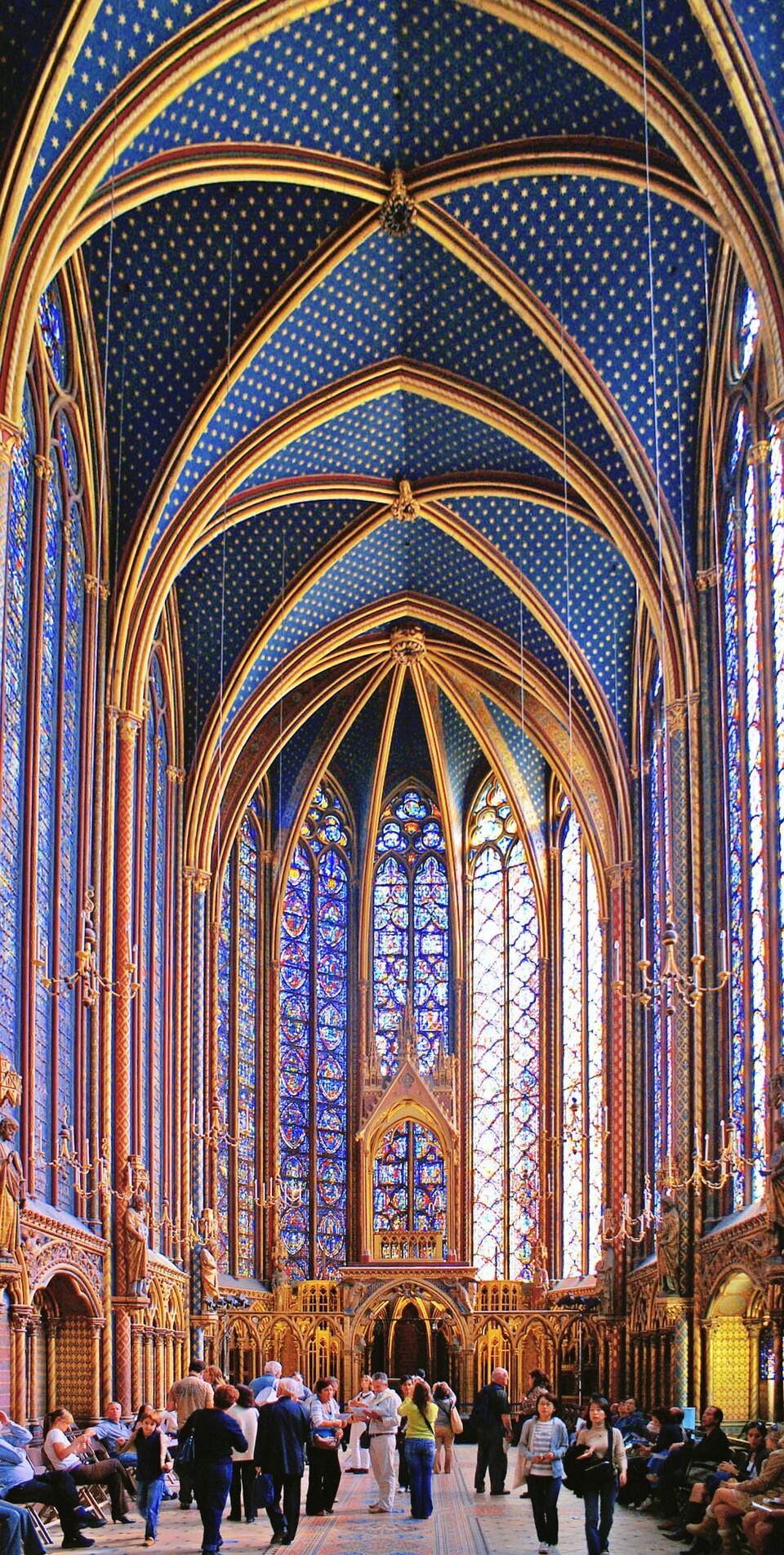
The building has two levels. The lower chapel served members of the palace community, while the upper chapel provided the royal setting for the relics and ceremonial worship. The difference is expressed through architecture as well as social hierarchy. Upstairs, the stone structure seems determined to step out of the way. Tall stained-glass windows rise between slender supports, creating an extraordinary impression of walls made from light.
The windows were never simply colourful decoration. Their many individual scenes form biblical narratives, understood by medieval viewers within a deeply religious view of the world. You do not have to recognise every episode to appreciate the larger idea. Light passes through the glass and transforms the room: solid boundaries become colour, and a relatively compact chapel can feel almost limitless.
It is worth remembering that this is not an untouched fragment of the thirteenth century. Sainte-Chapelle has endured political upheaval, damage and major restoration campaigns. What we see today combines surviving historic material with the efforts of later conservators. That history does not weaken the experience. It reveals how much care was necessary to preserve such a vulnerable environment of glass, stone and paint.
If you enter, allow your eyes a moment to adjust before taking photographs. Then choose one narrow vertical section of a window and follow it upwards. The immense overall effect is built from many small stories, each held within a carefully organised framework. Looking closely can be as rewarding as taking in the whole room.
If you are staying outside, this stop still offers a useful Paris lesson: an apparently modest silhouette may conceal something remarkable. The chapel’s defining experience is indoors, and visiting it requires separate admission and a check of the current entry arrangements. The exterior alone cannot reveal the full ambition of the building.
Learn more
Religious veneration and historically verifiable provenance are different questions. The Crown of Thorns was identified and revered as such within Christian tradition; the chapel demonstrates the power of that belief. Louis IX also presented kingship through the language of faith. Sainte-Chapelle therefore tells a story about more than Gothic architecture: it shows how medieval society connected earthly authority with a sacred understanding of the world.