LISTEN TO THE PLACE
A story worth knowing
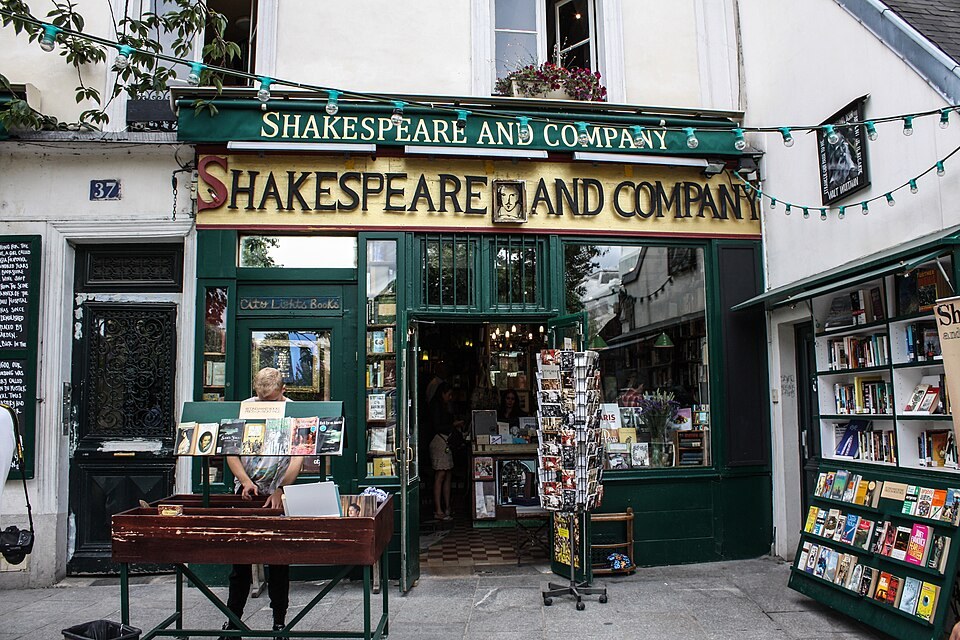
At Shakespeare and Company, it is easy to feel that you have reached more than a bookshop window. English-language books, compact surroundings and the nearby Seine create the atmosphere of a literary Paris address. Yet the name belongs to two distinct histories that are often mistakenly merged.
The first Shakespeare and Company was opened by Sylvia Beach in 1919. It stood elsewhere and became an important centre for the English-speaking literary community. Among its major associations was the publication of James Joyce’s Ulysses. That shop closed during the Second World War. The people and events connected with the original address should not automatically be transferred to the façade in front of us.
The present shop was opened by George Whitman in 1951. It was initially called Le Mistral and adopted the name Shakespeare and Company in 1964, honouring the tradition associated with Sylvia Beach. This is not one room operating continuously since 1919, but a deliberate continuation of a literary idea in another place and another period.
Whitman created an environment where books were connected with hospitality, conversation and encounters. The shop became known for its relationship with travelling writers and an international reading community. That helps explain its reputation. The attraction is not limited to the range of books on the shelves: visitors also seek a sense of participation in literary life, even if they buy only one small volume.
The romantic image does not remove the practical reality of a working bookshop. There are staff, customers, queues and rules. Respect for the place means more than admiration for a famous name. It includes allowing others to browse and read without obstruction, being patient in a small interior and taking photographs only where permitted.
Look at the window as an invitation rather than proof of a personal encounter with every great writer of the past. The documented story is more interesting than the convenient myth. One cultural address inspired another, and a name became a means of passing on a tradition.
If you enter, consider choosing a book you had not planned to find. That can turn the stop from an exercise in collecting literary associations into a personal experience. A particular text may travel onwards with you and become part of your own memory of Paris.
The shop’s significance lies in this continuing possibility. It honours an earlier world without being identical to it, and each new reader adds another ordinary, living moment to an address already surrounded by stories.
Learn more
When you read that a writer visited “Shakespeare and Company”, first check which shop is meant. The name continued, but the addresses, owners and periods differ. With Hemingway and Sylvia Beach’s circle, it is especially important not to substitute today’s popular façade for the original location. This does not diminish George Whitman’s shop. It makes its own contribution clearer, rather than explaining it entirely through the borrowed fame of its predecessor.