LISTEN TO THE PLACE
A story worth knowing
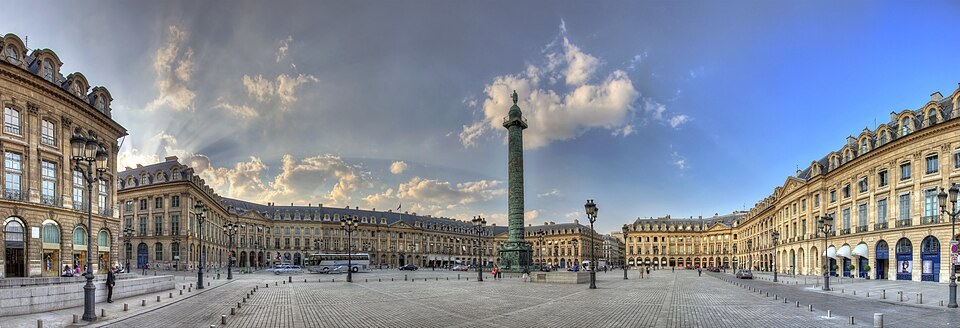
Place Vendôme can feel like the courtyard of a single palace, even though it is a public square bordered by separate buildings. That impression is deliberate. A shared architectural composition brings different properties together within one ceremonial image.
The square took shape under Louis XIV, with an important role played by Jules Hardouin-Mansart, a leading architect of French Classicism. Look at the rhythm of windows, columns and rooflines. Repetition creates order, while the cut-off corners soften the rectangular plan. Imagine removing the shop windows and contemporary signs: the underlying structure becomes easier to read.
The original royal monument did not survive the revolutionary transformation of France. Later, the centre was occupied by a column associated with Napoleon and the victory at Austerlitz. Its spiralling relief follows the example of ancient Roman triumphal columns. A story of military glory wraps around the shaft, turning a vertical object into a continuous historical narrative.
This symbol was not permanent either. During the Paris Commune of 1871, the column was pulled down. It was subsequently restored. Its changing fortunes remind us that monuments take part in politics rather than simply illustrating events after they are over. The same object could represent national achievement to one group and the glorification of war and empire to another.
Today, Place Vendôme is strongly associated with jewellery houses, watches and luxurious hotels. That setting explains its contemporary reputation, but not the origins of its form. Commercial displays occupy a space whose architectural language was established much earlier. The result is a revealing combination: an image once tied to royal and state authority now provides a setting for private aspirations and expensive purchases.
Try looking along one side of the square rather than concentrating only on the column. Can you see where one building ends and the next begins? The individual properties are present, but the shared rhythm keeps the ensemble together. This is an important way of understanding Parisian architecture: the relationship between buildings can matter as much as the beauty of a single façade.
Think of the square as a large outdoor room. Its owners, political symbols and social uses have changed, yet its enclosing composition still shapes the experience of standing here. You can appreciate that design without entering a shop. A slow look at the corners, rooflines and repeated details reveals a history much larger than the luxury brands now associated with the address.
Learn more
A triumphal column differs from an obelisk in more than shape. Its spiralling relief offers an extended narrative, while an obelisk is usually experienced as a single inscribed vertical form. At Vendôme, the ancient Roman model helped present Napoleonic power as an heir to imperial grandeur. It is an architectural quotation with a political purpose. Even without identifying every scene, the arrangement tells you what kind of glory the monument was intended to preserve.