LISTEN TO THE PLACE
A story worth knowing
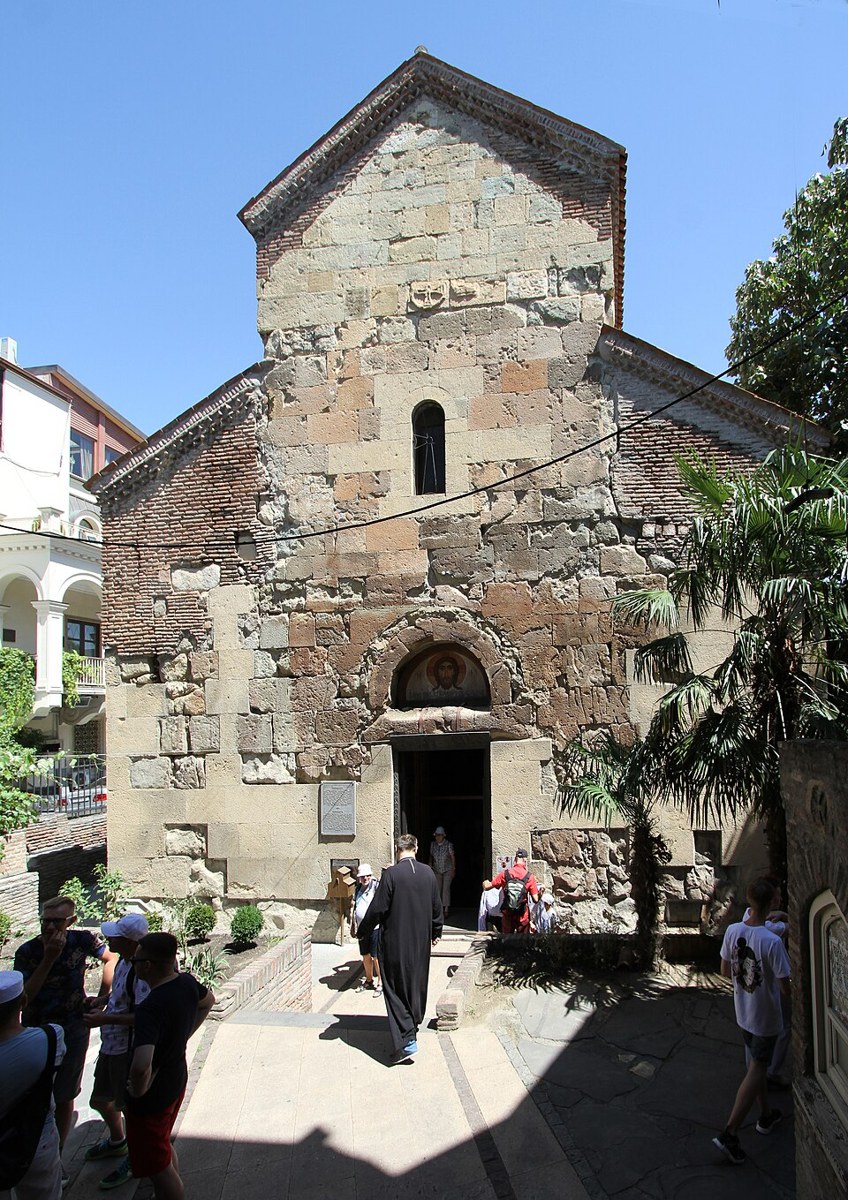
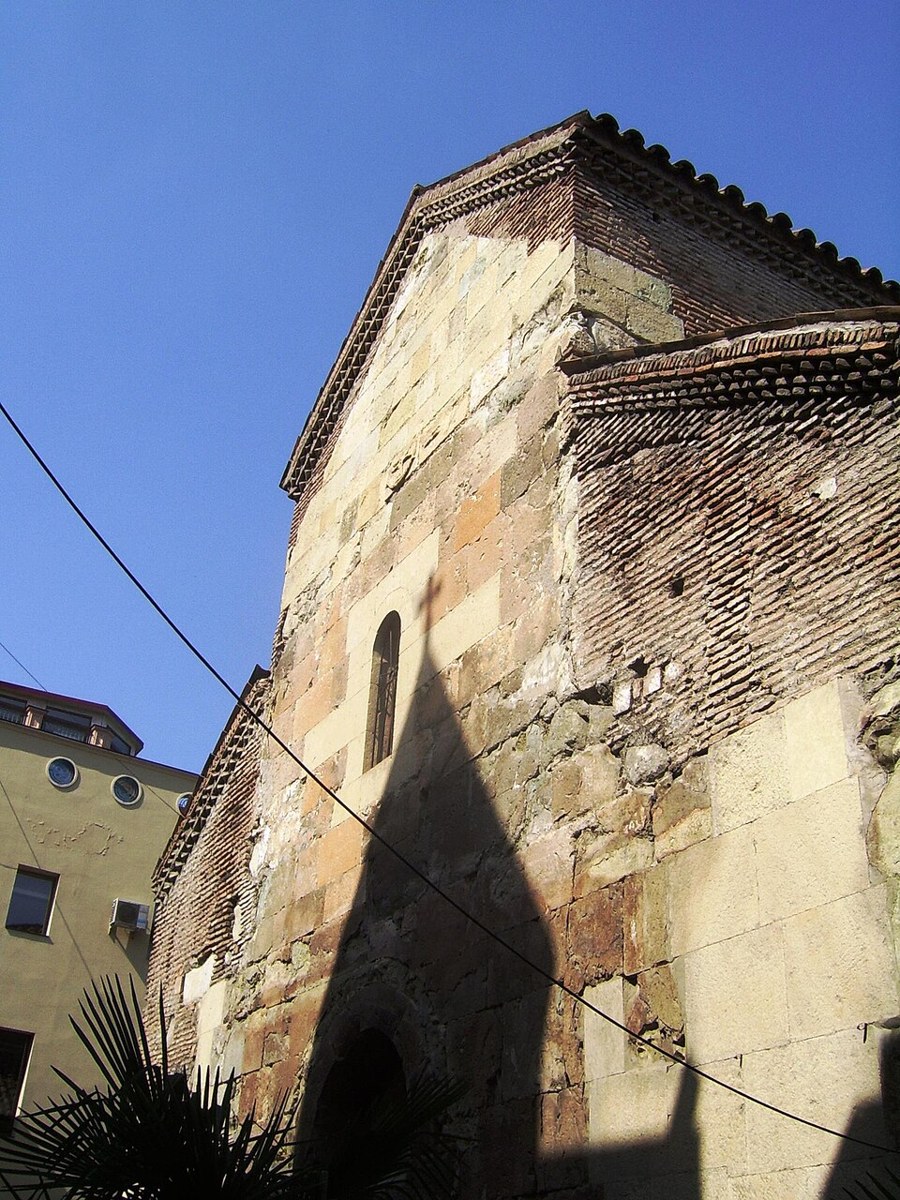
After Tbilisi's tall domes, Anchiskhati may seem surprisingly modest. It makes little attempt to impress through height. This small church stays close to the ground, and its restraint helps you notice its age. It is regarded as the city's oldest surviving church, with origins in the sixth century, during the time of King Dachi, the son of Vakhtang Gorgasali.
This is a basilica. For our walk, the essential idea is straightforward: the building extends lengthwise, with its interior divided into longitudinal spaces called aisles and a nave. A succession of supports and arches draws the eye forward. The effect differs from a church whose whole composition gathers under a tall central dome. Here, the architecture seems to invite your gaze to travel quietly from the entrance towards the eastern end.
The present name is much younger than the church. In the seventeenth century, a revered icon was brought here from the monastery of Anchi. Anchiskhati is a name connected with that icon. A church in one place therefore acquired its familiar identity through a sacred object from somewhere else. The building and its name run on different historical clocks: the walls predate the story told by the sign.
Damage, alterations and restoration have also shaped the church. Being ancient does not mean surviving entirely unchanged. This matters when you look at the masonry. Uneven surfaces, differences between sections and simple forms should not automatically be assigned to the first phase of construction. Yet the clarity of a small, lengthwise interior remains one of the building's most distinctive qualities.
Nearby stands the Gabriadze Theatre with its whimsical clock tower. The distance between these two stops is short, but the change in mood is striking. One draws attention through surprise and play; the other through repetition, stillness and concentration. Their proximity makes it difficult to describe Tbilisi with a single adjective. The city can be theatrical and deeply restrained within the space of a few steps.
If the church is open, enter quietly and avoid interrupting worship. Notice the human scale. A person does not disappear into an enormous volume here. Even a brief visit offers something different from a photograph of the façade. Anchiskhati is worth remembering not merely as the oldest stop on a checklist, but as a place where simple architectural forms still create quiet beside a lively street.
Learn more
Compare Anchiskhati with Sioni or Sameba to understand the difference between a basilica and a domed church. A basilica strongly directs your attention along the building. A domed space often draws it upward and towards the centre. Neither solution wins a competition for beauty or complexity. They organise light, movement and the visitor's position differently. Once you notice that, an unfamiliar church becomes easier to read: decoration is only one part of how the building works.